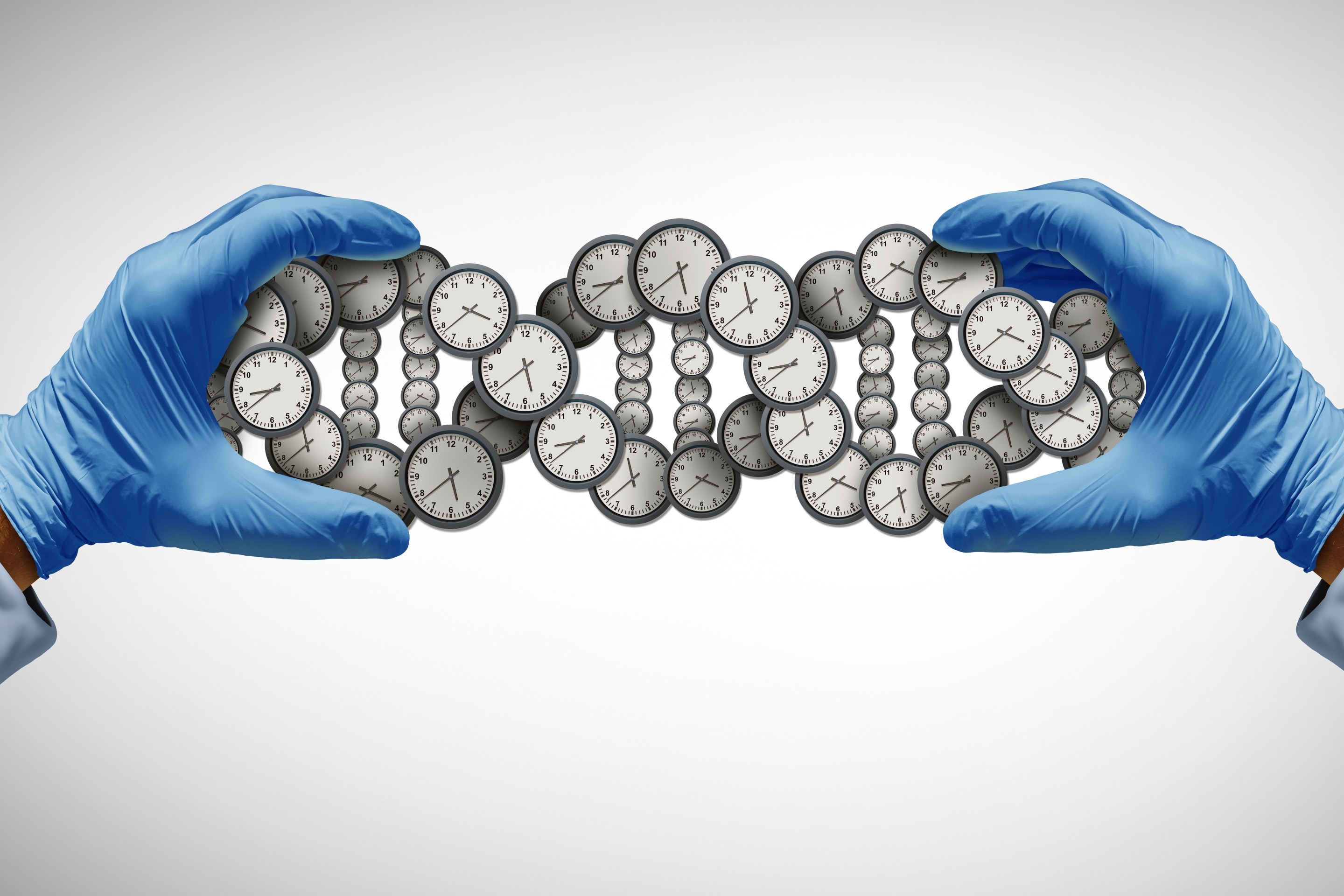
Since their development around 15 years ago, epigenetic clocks have become vital tools for studying aging. And for good reason—they’re great at estimating biological age, which can vary quite a bit compared to chronological age. Still, because they were created with machine learning relying on genome-wide data, their inner workings are somewhat mysterious. Now a new study published in the journal npj Aging is opening up the black box.
Epigenetic clocks are tests (usually from a blood sample) that estimate biological age by measuring the accumulation of methyl groups (CH3) at sites on our DNA that block transcription. The methylated sites detected by epigenetic clocks are usually found in gene promoters and enhancers—sites that themselves regulate genetic expression. That means there are some questions about what’s happening downstream in the process, and a team led by geneticists from the University of Southern California set out to answer them.
Read more: “Longevity Might Be All In Your Head”
The team examined blood samples taken from more than 3,000 participants as part of the Health and Retirement Study in the United States, comparing methylation patterns in the samples (as measured by five different epigenetic clocks) to gene expression. By combining the two measures, they were able to identify which general biological pathways each clock was measuring.
They found some fascinating differences. There were no pathways that all the clocks shared in common, but 14 were shared by at least two. Among the key pathways were immune system functions (like inflammation), metabolism, and cell communication.
The team hopes these findings will help future researchers choose the right clock to use for their studies. “By uncovering the molecular programs behind these biomarkers, our findings improve their interpretability and help guide their use in geroscience, epidemiology, and future clinical applications,” study author T. Em Arpawong explained in a statement.
Using the information they learned, the team also developed a new tool to improve the predictive power of epigenetic clocks called transcriptomic aging gene scores (TAGS). Combining TAGS with epigenetic clocks led to more accurate predictions for health outcomes like walking speed, heart disease, diabetes, and even death, which, of course, is the ultimate black box. 
Enjoying Nautilus? Subscribe to our free newsletter.
Lead image: okalinichenko / Adobe Stock