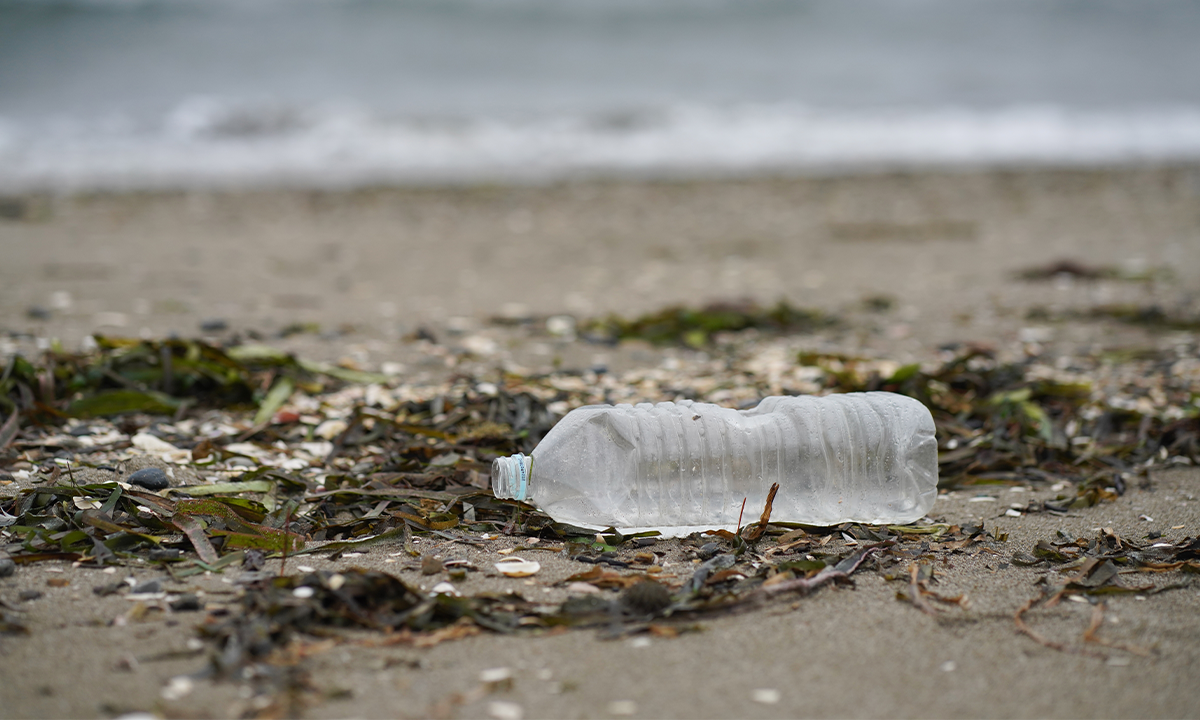
We produce tens of millions of tons of polyethylene terephthalate (PET) plastic per year, primarily for water bottles, and what doesn’t get recycled winds up in landfills or as pollution that will persist for centuries. It doesn’t have to be this way, though. New research published in Nature Sustainability points to another future for discarded PET plastic—a fresh start as a life-saving drug.
Biologists at the University of Edinburgh have figured out how to turn waste PET into the drug L-DOPA. L-DOPA, which is naturally produced in our bodies as a precursor to dopamine, norepinephrine, and epinephrine, is used to treat Parkinson’s disease and restless leg syndrome.
To begin the process, researchers first broke down the plastic into the more manageable chemical terephthalic acid. They then fed the acid to genetically engineered E.coli bacteria, which completed the dramatic transformation.
Read more: “The Ocean Odyssey of Wilson”
It’s a major milestone in upcycling technology. Because the hydrocarbon ring that forms the bulk of both PET and L-DOPA remained intact, there was no need for extra petrochemicals. And, just to put a cherry on top, the researchers used another bacteria (Chlamydomonas reinhardtii) to capture any excess carbon dioxide generated by the process.
“This feels like just the beginning. If we can create medicines for neurological disease from a waste plastic bottle, it’s exciting to imagine what else this technology could achieve,” study author Stephen Wallace said in a statement. “Plastic waste is often seen as an environmental problem, but it also represents a vast, untapped source of carbon.”
Plastic production doesn’t show any signs of slowing down, but it’s nice to know our trash could get a new lease on life giving us a new lease on life. 
Enjoying Nautilus? Subscribe to our free newsletter.
Lead image: yamasan0708 / Shutterstock