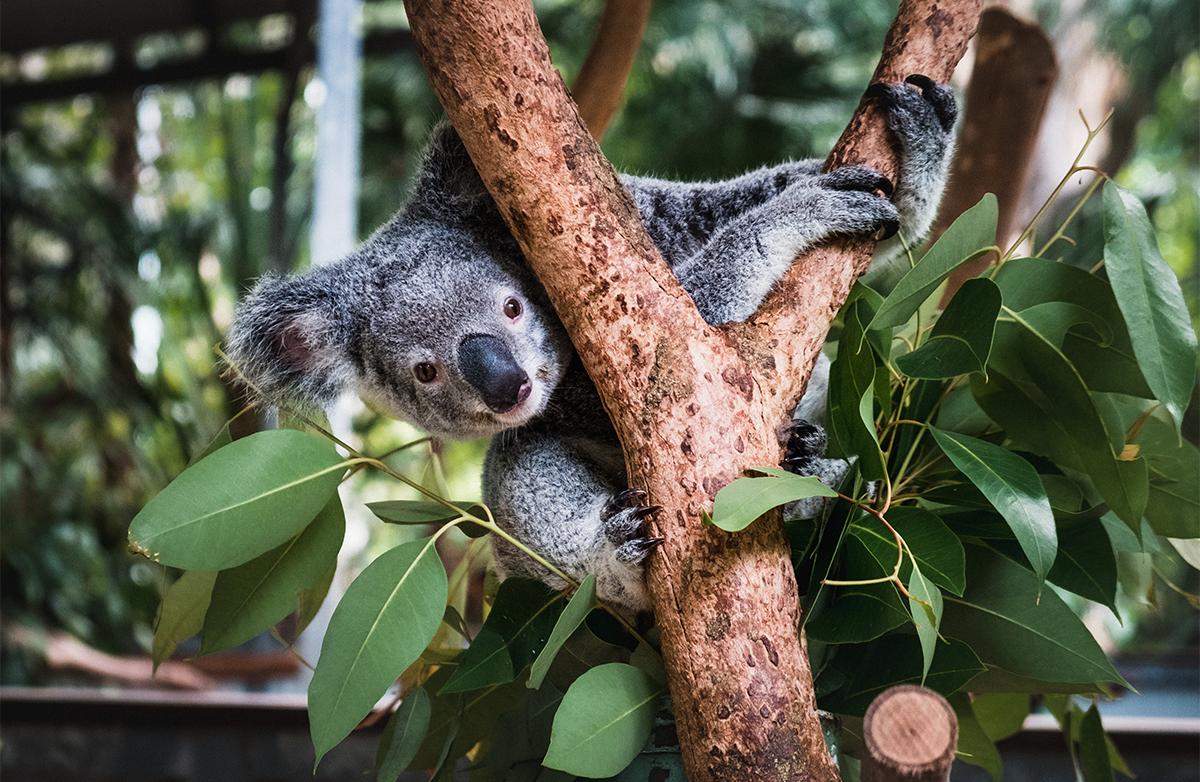
The fact that koalas are still on Earth is a bit of a miracle, given the severe population bottlenecks they experienced during the Pleistocene. Yet, as they’ve expanded to reoccupy portions of their former range, koalas (Phascolarctos cinereus) have encountered a new survival challenge—sexually transmitted disease—that’s caused their endangerment in several Australian states.
In 2020, 70 percent of koalas landing in a wildlife hospital in Currumbin, a suburb in Queensland, had chlamydia infections, according to a recent report by veterinary scientists at the Queensland University of Technology. Chlamydia, thought to have spread in koalas at least in part from domestic livestock, causes blindness, infertility, and even premature death.
Thankfully, a concerted program of vaccine development and administration to hundreds of wild koalas over the past decade reduced the incidence of chlamydia by three-quarters, giving them a significant reproductive boost. Each wild-caught koala was captured for a first vaccine, then recaptured a month later for a booster.
Read more: “Koalas Recover Genetic Diversity as Populations Expand”
The female koala “Bamse” was the first to receive a novel chlamydia vaccine implant that’s designed to break down after 30 days and automatically deliver the second dose. This obviously eliminates the need to stress koalas by recapturing them to administer the second dose. Still, the researchers recaptured Bamse for a one-month check-up and found her to be chlamydia-free, showing that the vaccine was doing its job.
The implants have since been deployed on four other individuals as well. “We’ve seen such devastation from chlamydial disease in koalas in South East Queensland and New South Wales,” explained Currumbin Wildlife Hospital’s senior veterinarian Michael Pyne in a press release. “It’s absolutely critical the vaccine is rolled out en masse to at-risk populations to protect them.”
This automatic delivery vaccine device will likely also prove useful in other species. For example, the study authors reported that they’ve been in contact with livestock groups, who think the technology “would be life-changing by reducing the effort it takes to vaccinate cattle.”
As for us humans, despite our own high rates of chlamydia, we’ve yet to benefit from a vaccine, but breakthroughs are seemingly imminent there as well. 
Enjoying Nautilus? Subscribe to our free newsletter.
Lead image: Klara / Adobe Stock