Before European explorers arrived in the United States, the native Mississippian culture thrived across the midwestern and southeastern parts of the country. Known for the mounds they built and their intricate pottery designs, several of these cultural variants flourished for centuries, from 1,000 to around 1,600 CE. How far south they ranged has been the subject of some debate, but a new study published in American Antiquity finds compelling evidence of Mississippian migrants ranging as far south as Tampa Bay for the first time.
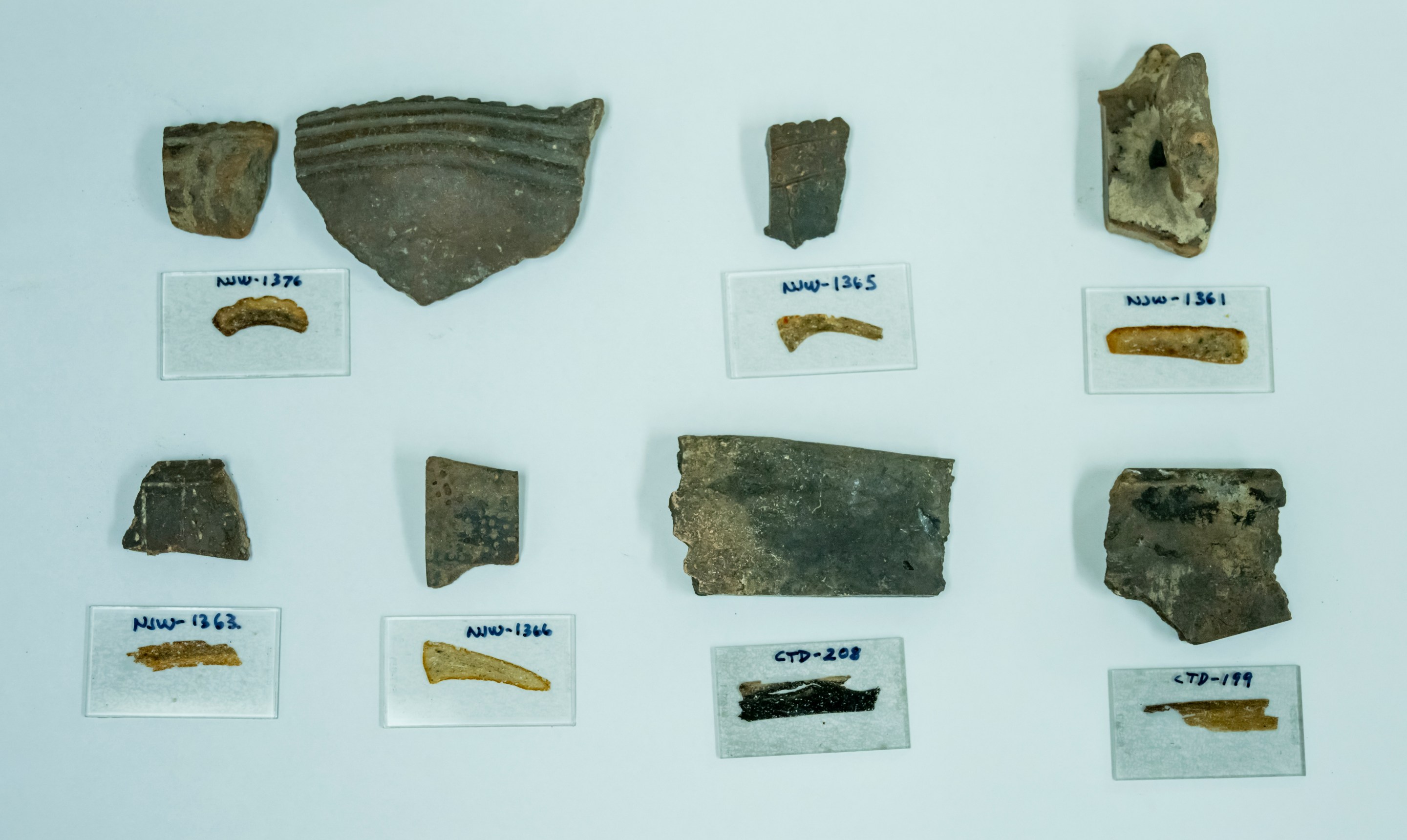
Anthropologists from the University of Florida and the Florida Museum of Natural History came to that conclusion after meticulously studying pottery shards recovered from the area nearly a century ago. They stood apart from the typical plain earthenware vessels of the dominant culture in the region (the Safety Harbor culture), instead bearing elaborate Mississippian-style decorations.
Read more: “Did Wildfires Spark the Invention of Pottery?”
“It’s been this open debate for a century,” study author Neill Wallis of the University of Florida said in a statement. “The Mississippian-looking pottery has always begged the question: How did this stuff wind up in Tampa Bay?”
There were a few plausible scenarios to sift through. The pottery may have originated with Mississippian artisans, making its way south on one of the many extensive trade routes. It’s also possible indigenous people in the area learned to mimic the Mississippian motifs. Finally, Mississippian migrants may have actually settled in the area, bringing their pottery making secrets with them.
To find out, the research team undertook a painstaking analysis of the shards themselves. Their analysis of the chemical composition of the clay revealed it was locally sourced, which made the trade scenario unlikely.
To investigate whether Safety Harbor potters were influenced by the Mississippian style, they looked at the clay’s physical properties. Mississippian artisans tempered their clay with grog, fragments of older ceramic vessels that helped harden the new products. The Safety Harbor culture, on the other hand, used fine sand. After shaving samples of the Tampa Bay shards down to half the width of a human hair, they examined them under a microscope.
“Looking at the section under a microscope, you can identify the minerals in it based on their color and shape,” Wallis explained. “From that, we can figure out what was added to it. It’s a sort of fingerprint of the people who made it.”
Under the microscope, the team saw telltale signs of grog tempering and mica, suggesting the clay fragments were likely sourced from the panhandle region, a prominent hub of Mississippian culture. “It’s sort of like Russian nesting dolls because you have grog within grog within grog,” Wallis said. “You can trace this back several generations of pots. And they’re not using vessels from just anywhere. They’re crushing up the same decorated vessels that include pieces of decorated pottery from before.”
According to the team, the trade secrets the Mississippians brought with them may have allowed them to create a niche for themselves within the Safety Harbor settlement. “The group of potters making the decorated vessels likely had some kind of special status that they maintained through this secretive practice, even if it wasn’t a secret in the sense that no one knew about it,” Wallis said.
Just like the innovative pottery brought down by the Mississippian migrants, ancient Tampa Bay was a mix of the old and the new. 
Enjoying Nautilus? Subscribe to our free newsletter.
Lead Image: Florida Museum photo by Jeff Gage