

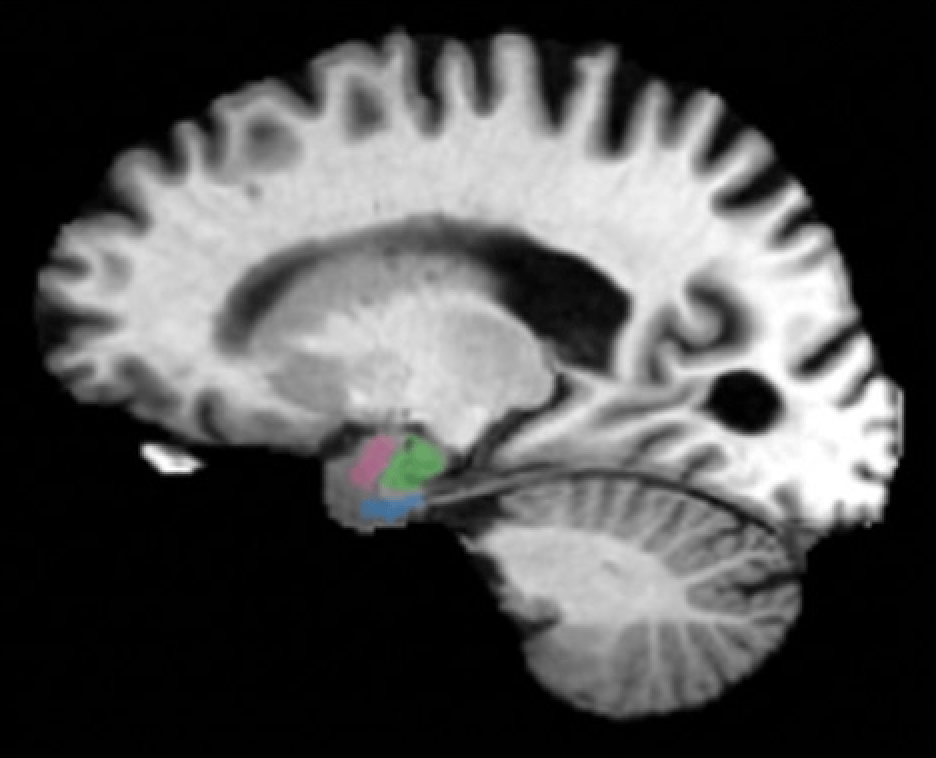
With no cure for Alzheimer’s on the horizon, and our best treatments only slowing the progression of the disease, there’s been an intense effort to find earlier means of detection. Now, a new study published in Neuroimage Reports is offering hope of diagnosis even before cognitive symptoms become noticeable.
A team of biomedical imaging specialists, pathologists, and neuroscientists from Johns Hopkins University studied how the brains of older adults changed over time by analyzing hundreds of MRI scans and PET scans. They relied on longitudinal data from two different studies (the Alzheimer’s Disease Neuroimaging Initiative and the Biomarkers of Cognitive Decline Among Normal Individuals study) that included people from across the Alzheimer’s spectrum, from cognitively healthy to full-blown dementia.
Read more: “How the Brain’s Failing Trash Compactor Can Contribute to Alzheimer’s Disease”
Two key brain regions started shrinking earlier and faster than the hippocampus: the entorhinal cortex, which functions as the brain’s interface between the hippocampus and the neocortex, and the amygdala, where emotions are processed. Both of these hippocampus-adjacent regions play a role in memory formation and consolidation. PET scans showed that the atrophy of these two areas was associated with local changes in tau protein, one of two proteins that accumulate in the brains of Alzheimer’s patients.
According to the team, these findings show promise for diagnosing the disease before symptoms manifest. “We’ve found that there are early changes in the brain manifesting the clinical biomarkers of atrophy as much as a decade before there are clinical symptoms,” study author Michael Miller explained in a statement.
Of course, providing earlier diagnosis means more time to delay the disease, which could translate to more cognitively healthy time with your loved ones. “It’s at least a 5-to-10-year play where your brain is changing,” Miller added. “Imagine if we could start to treat the neurodegenerative changes at the two-, three- or four-year point rather than after 15 years when the changes are manifesting in memory symptoms. That’s the great promise here for your loved ones who are at risk.” 
Enjoying Nautilus? Subscribe to our free newsletter.
Lead Image: Johns Hopkins University