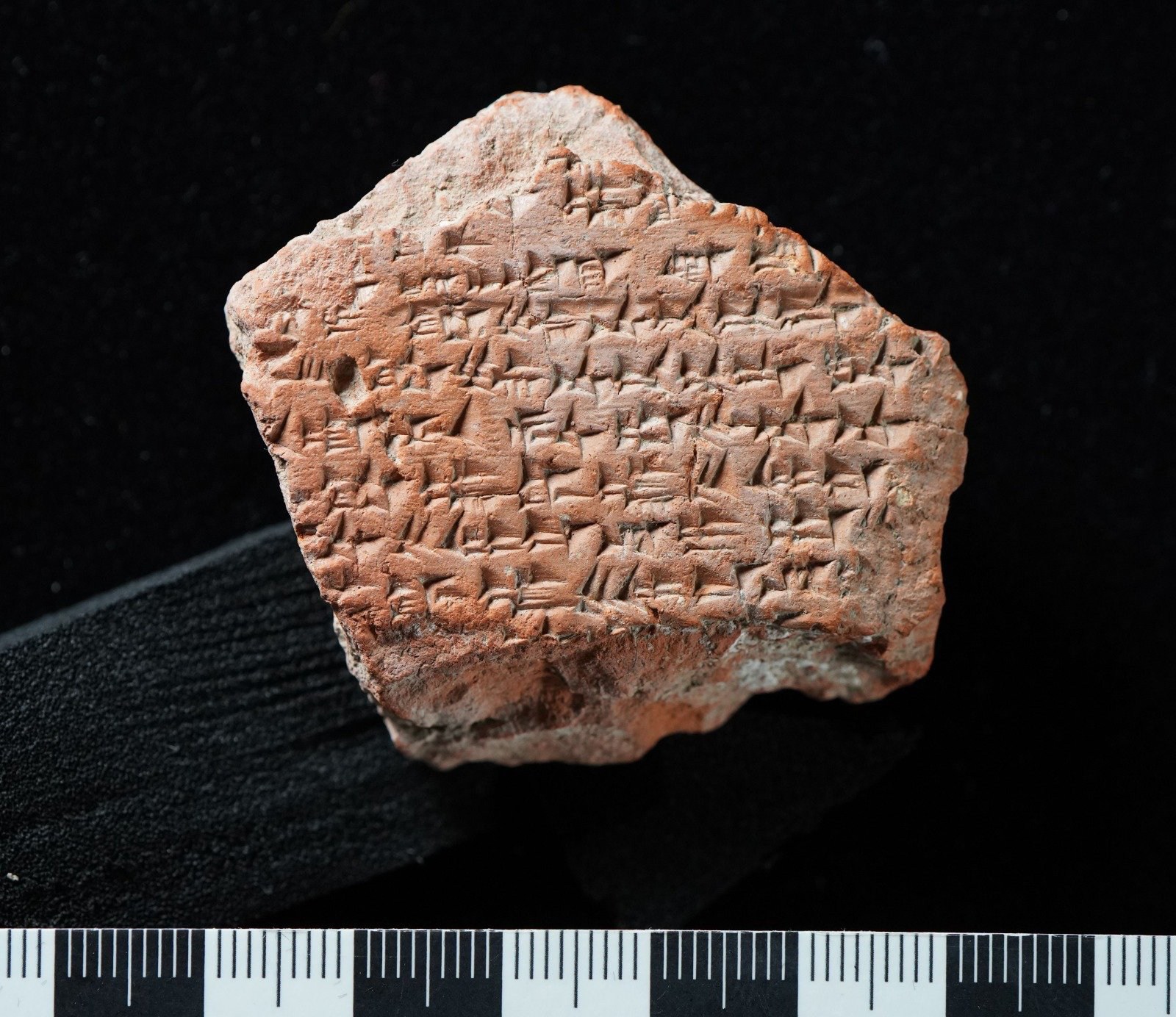
The history of peace treaties goes back to around 1269 BCE, when Pharaoh Ramses II of Egypt and King Hattusilli III of the Hittite Empire put together what’s thought to be the first ever agreement between nations that hostilities should cease: in this case, over disputed Syrian territories. Over the last 120 years, archaeologists have unearthed fragments of this treaty in the ruined Hittite capital—and they just turned up another piece of the original.
Discovered in the rocky Büyükkale site in modern-day Türkiye, it contains articles 12 though 20 of the agreement and covers rules around how refugees should be treated, specifically stating that their homes shouldn’t be destroyed.
Read more: “Eating for Peace”
The treaty came about after the epic Battle of Kadesh, a clash that involved thousands of chariots and tens of thousands of Egyptian and Hittite soldiers. While both sides claimed victory, it was effectively a bloody draw, and some 15 years later, the two sides decided to end their centuries-long conflict over Syrian and Mediterranean land.
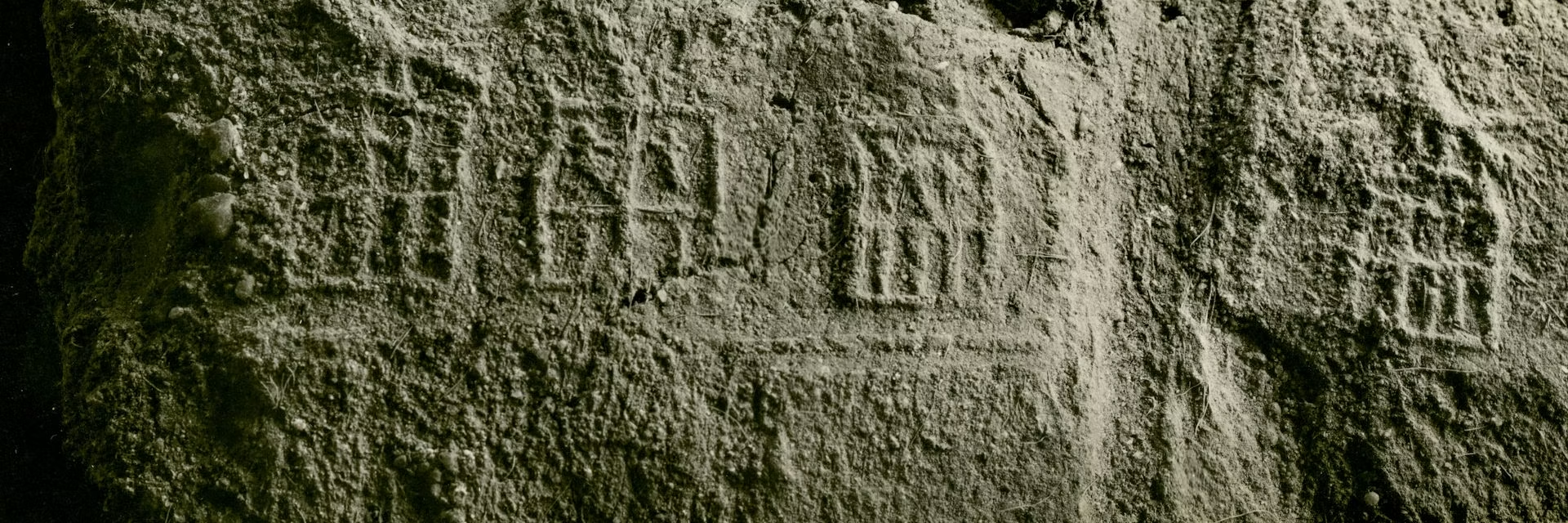
Originally written on silver tablets that have been lost to time, the treaty has survived thanks to copies made on clay tablets and written in the cuneiform system: wedges cut into a surface that, like hieroglyphics, represent words, sounds, or syllables. The specific language used is that of the Akkadians, considered to be the first empire builders, who lived in Iraq between roughly 2400 BCE and 2200 BCE. (It would’ve made sense for the Egyptians and Hittites to use a third language that both sides could understand, and Akkadian was recognized as the international language of diplomacy in the Late Bronze Age.)
There’s a copper replica of the peace treaty on display at the United Nations headquarters in New York City, though, again, it hasn’t been recovered in its entirety. Researchers are hoping that further excavations at the Büyükkale site will uncover more fragments.
The overall themes of the accord cover friendship, peace, territorial boundaries, extradition, and mutual support. “We are united, and a bond of fraternity already exists among us and of peace, and it is better than the bond of fraternity and of peace that existed between the country of Egypt and the country of Hatti,” reads part of the agreement, as per a translation.
“This valuable discovery ... once again highlights Anatolia’s deep-rooted place in the history of peace and diplomacy,” Mehmet Nuri Ersoy, the Türkiye Minister of Culture and Tourism, posted on social media. “This legacy, reaching from thousands of years ago to our present day, reminds us of our responsibility to protect human life and dignity.” 
Enjoying Nautilus? Subscribe to our free newsletter.
Lead Image: Türkiye Ministry of Culture and Tourism