Soil is alive. It’s chock-full of bacteria, fungi, earthworms, and other dirt-dwelling critters. These living things recycle organic matter, aerate the soil, and churn out nutrients, all of which contribute to a fertile ecosystem. Without them, plants struggle to grow.
But how do you tell just how alive your soil is? According to a new study in the journal Plants, People, Planet, you bury your underwear.
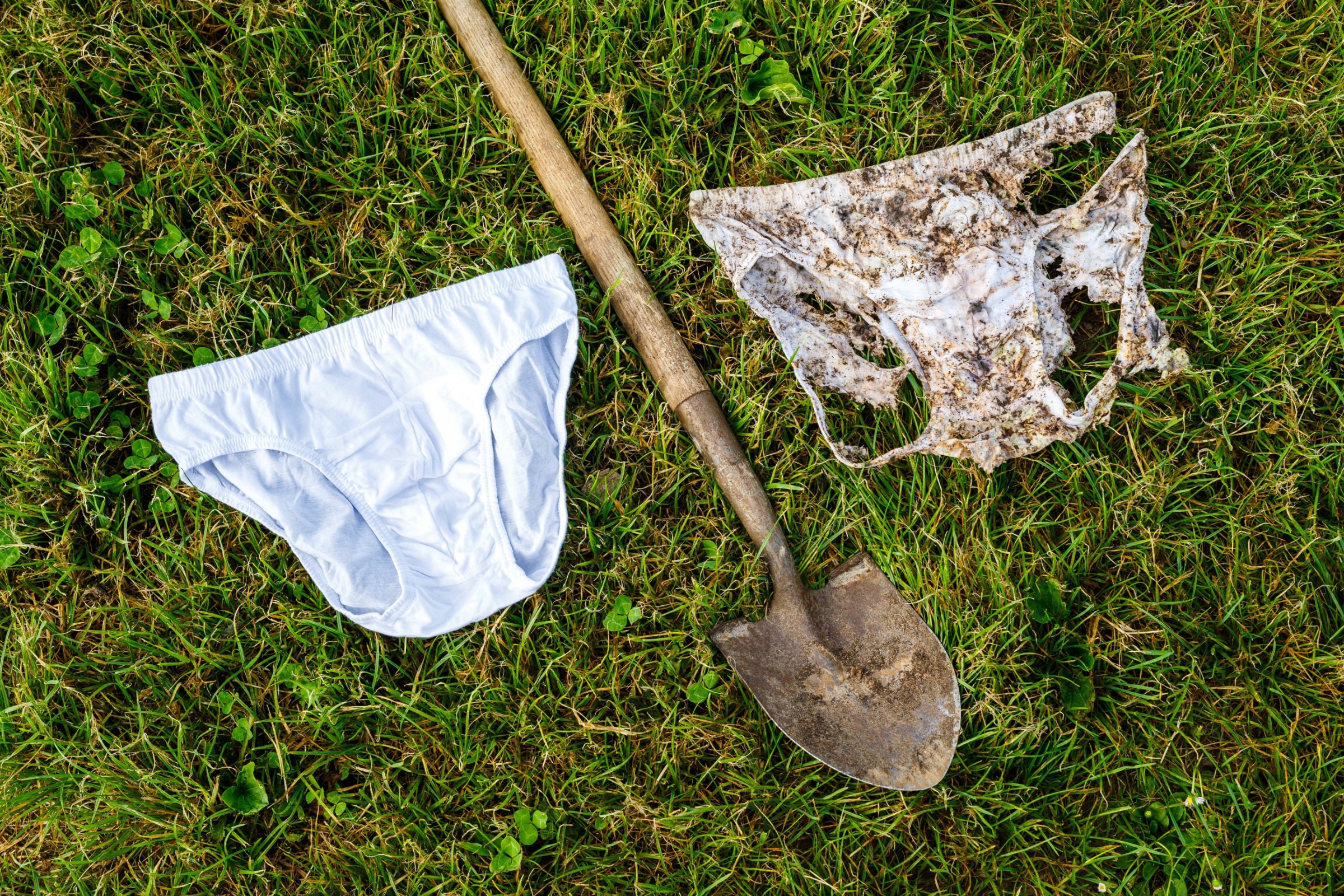
Ecologists from the University of Zurich enlisted more than 1,000 citizen scientists (half of them farmers) to participate in the project, designed to measure the health of soil across Switzerland. They were each mailed a packet containing two (clean) pairs of undies, 12 teabags, and a baggie for soil samples. They also received detailed instructions directing them to dig holes in different locations, take a soil sample, bury the underwear and tea bags, and then leave them for either 30 or 60 days. After that, they dug up their buried treasure, snapped some photos, and mailed everything to the lab.
Read more: “New Smart Underwear Unlocks the Science of Human Flatulence”
The researchers were then able to determine how active the soil was based on how much of the underwear had decomposed (teabag decomposition correlated strongly with the underwear data). Private gardens, which contained more organic matter, showed the highest rates of decomposition. On average, 58 percent of the cotton undies there were gone after two months. Underwear buried in lawns lasted longer, averaging only 40 percent decomposition. Fields and meadows fell somewhere in between. While land use stood out as the biggest factor in decomposition, nutrient levels also played a role.
“Our results show that how soil is managed can significantly affect both soil life and soil quality,” study co-study leader Marcel van der Heijden explained in a statement. “Healthy, biologically active soil is crucial for fertility, nutrient cycling, and many other ecosystem services.”
Based on their findings, the researchers say this “underwear index” can be used as a technique to determine the health of soil that’s easy to interpret, as well as engaging. “Underpants decomposed in soil provide a sensory experience of soil activity, making them an excellent outreach tool,” they wrote.
Speaking of sensory activities, they didn’t immediately toss the mouldering undies when they were done with their analysis. Once the skivvies had done their duty as tools of scientific investigation, they were returned to the world of fashion—someone turned them into a dress.
In other words, these 1,000 citizen scientists are now citizen artists too. That’s quite a collaboration. 
Enjoying Nautilus? Subscribe to our free newsletter.
Lead Image: Nicolas Zonvi