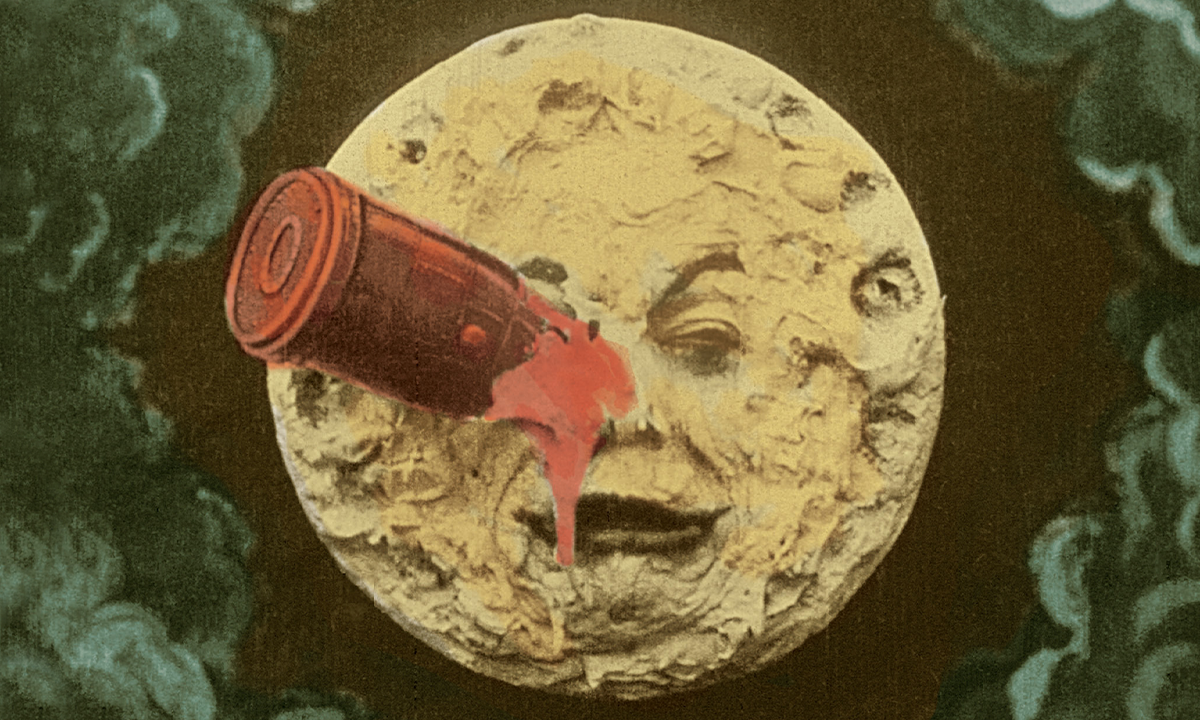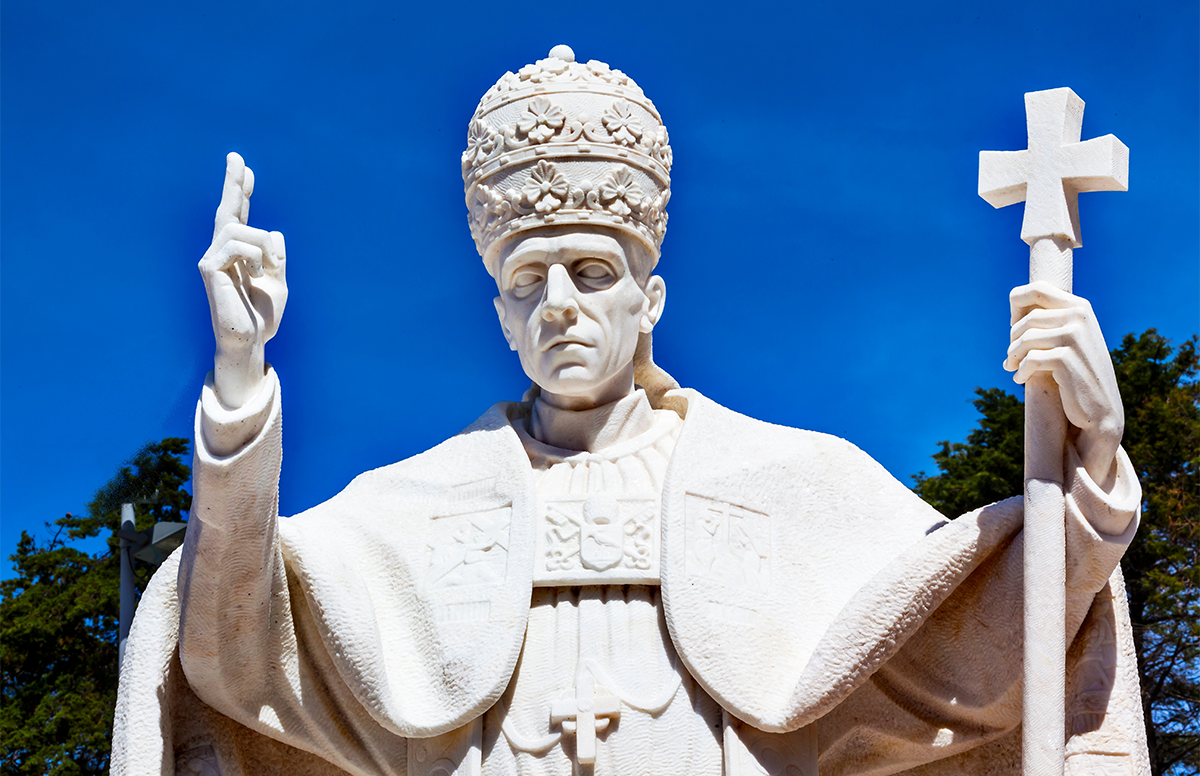
Almost 70 years before Pope Leo XIV weighed in on artificial intelligence this week, in his first encyclical, one of his predecessors wrote a papal letter that similarly warned of the dangers of technologies that were then poised to revolutionize the world: movies, radio, and television. These papal missives have long commented on the spiritual ramifications of advances that were changing the cultural landscape.
In 1957, Pope Pius XII enunciated the Catholic Church’s stance on the new media of that era. “Just as very great advantages can arise from the wonderful advances which have been made in our day, in technical knowledge concerning Motion Pictures, Radio and Television, so too can very great dangers,” the pontiff wrote. “For these new possessions and new instruments which are within almost everyone’s grasp, introduce a most powerful influence into men’s minds, both because they can flood them with light, raise them to nobility, adorn them with beauty, and because they can disfigure them by dimming their lustre, dishonour them by a process of corruption, and make them subject to uncontrolled passions, according as the subjects presented to the senses in these shows are praiseworthy or reprehensible.”
Pius XII went on to seemingly predict the rise of poor digital hygiene, warning that this unfettered access to new forms of entertainment might breed new addictions if not tethered by some deeper morality. If the wide dissemination of pictures, sounds, and ideas wasn’t somehow bound to the teachings of Jesus, the pope wrote, “it can be the source of countless evils, which appear to be all the more serious, because not only material forces but also the mind are unhappily enslaved, and man’s inventions are, to that extent, deprived of those advantages which, in the design of God’s Providence, ought to be their primary purpose.”
Read more: “The Ancient Rites That Gave Birth to Religion”
Similarly, Pope Leo expressed a concern that an emerging technology, in this case AI, has the potential to strip humans of their humanity, likening AI to the biblical Tower of Babel. “I ask everyone to abandon the construction of yet another Tower of Babel and to join forces in building up the common good,” Leo wrote, “so that humanity will never lose its beauty, and the world once again will come to recognize the human heart as the place where God desires to dwell.”
“This is a choice not only for our future but also for our present,” he later added, “since artificial intelligence and other emerging technologies are already part of our daily lives.”
Pope Leo continued to flesh out his hope for the “disarming” of AI. “To disarm does not mean rejecting technology, but preventing it from dominating humanity,” he wrote. “It means freeing technology from monopolistic control and opening it to discussion and debate, therefore making it human-friendly and restoring it to the plurality of human cultures and ways of life. Our task today is not only ethical or technical. It is ecological in the deepest sense, for it concerns a new dimension of our common home. AI is already an environment in which we are immersed, as well as a force with which we must engage.”
But Leo and Pius were far from the first popes to weigh in on the development of transformative technologies or social trends. In fact, Leo timed the signing of his first encyclical to come on the 135th anniversary (to the day!) of his namesake Pope Leo XIII publishing his Rerum Novarum, a treatise on the wave of industrial innovation, wealth inequality, and rabid capitalism cresting at the end of the 19th century. “That the spirit of revolutionary change, which has long been disturbing the nations of the world, should have passed beyond the sphere of politics and made its influence felt in the cognate sphere of practical economics is not surprising,” Leo XIII wrote. “The elements of the conflict now raging are unmistakable, in the vast expansion of industrial pursuits and the marvellous discoveries of science; in the changed relations between masters and workmen; in the enormous fortunes of some few individuals, and the utter poverty of the masses; the increased self reliance and closer mutual combination of the working classes; as also, finally, in the prevailing moral degeneracy.”
Regardless of one’s religious affiliation or tendencies toward spirituality, this long tradition of popes urging caution in the face of technological, economic, and social upheavals reminds us that our species advances not in a vacuum of scientific discovery but in the context of the ethical boundaries we set for ourselves. Even if these encyclicals are meant to guide the actions and reactions of followers of the Catholic Church, it might be worth considering the broader implications of new technologies as we rush headlong into an uncertain future. 
Enjoying Nautilus? Subscribe to our free newsletter.
Lead image: Bill Perry / Adobe Stock