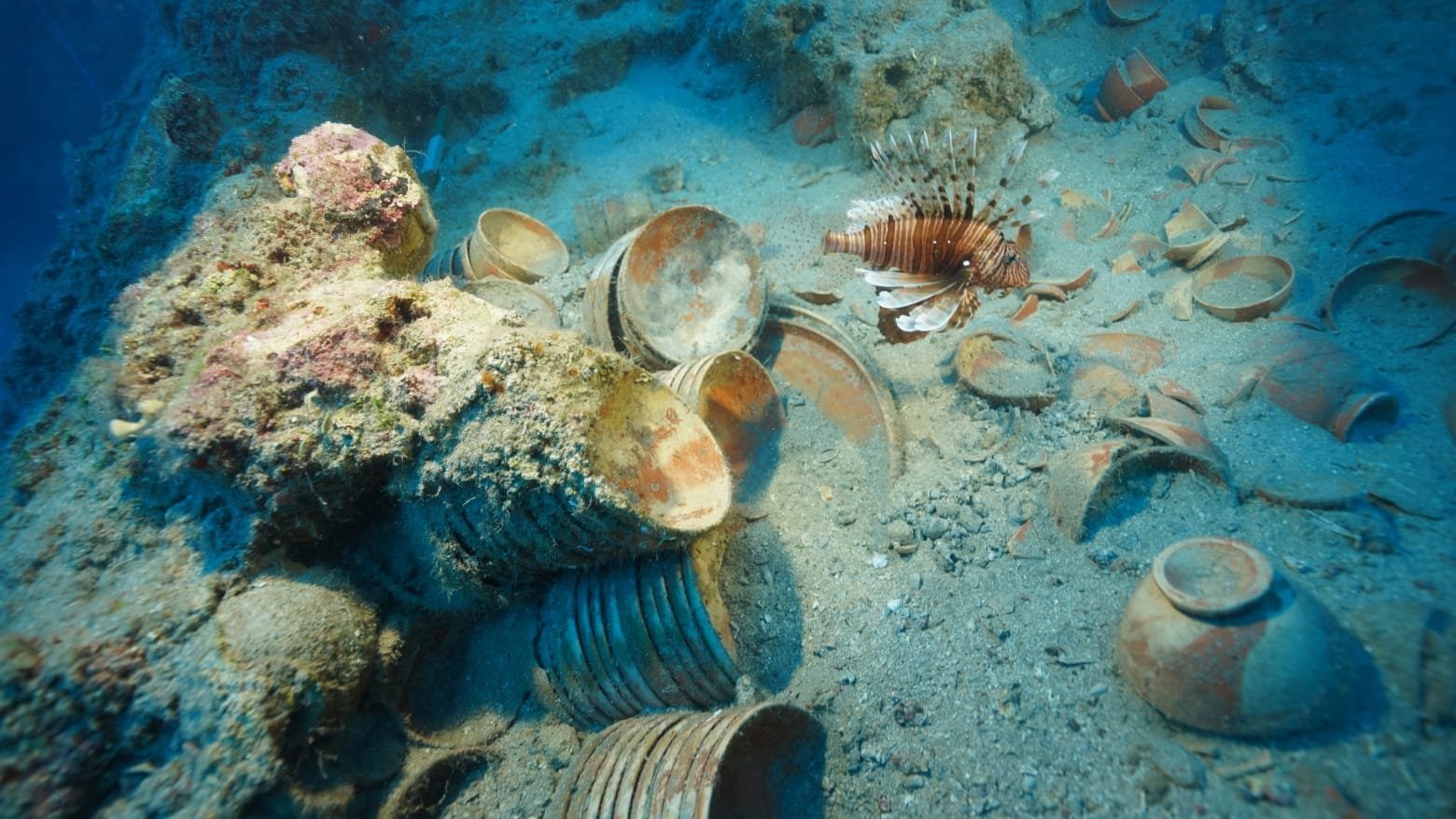
After spending 2,100 years at the bottom of the Mediterranean, you’d expect ship cargo to have decayed beyond recognition. But that’s not the case with the expensive freight of a wrecked boat recovered by a team from Akdeniz University in Türkiye.
To date, the haul includes 6,511 ceramic plates, bowls, and trays, in a total of 122 different forms and sizes. The pieces have now been transferred to the Antalya Museum, about 55 miles from the village of Adrasan, where the dishes were discovered.
What was the key to them being so well preserved?
It’s all in the packaging. The ceramic pieces were packed tightly into wooden crates with clay serving as a protective material. According to a 2023 study on the wreck, the site’s depth of 125-150 feet helped as well, deterring casual divers from exploring the location and its cargo.
It was, however, a member of a local dive club who first found the underwater ruin in 2007. Shortly after, it was surveyed and assessed by academics, with excavation beginning in 2025. Freshly published details from Akdeniz University have brought the wreck and its cargo back into the news, and work to retrieve the millennia-old payload is ongoing.
Experts believe the ceramics were made in what was once called Rhosus (now Arsuz) in the Hatay province of Türkiye. Apparently, the craftsmanship of the Rhosians was remarkable enough that it got a mention from the famous Roman governor Cicero in 50 BCE. Experts suspect these items were on their way to Rome, where wealthy citizens were known to accumulate expensive artwork, clothes, decorations, and pottery.
Unfortunately for wealthy Romans, though, experts believe the ship hit a shoal during a storm before drifting to its final resting place, luxury consumer goods left undisturbed for centuries.
So far at least, there’s no news of any wreck with matching cutlery. 
Enjoying Nautilus? Subscribe to our free newsletter.
Lead Image: Mehmet Nuri Ersoy/X