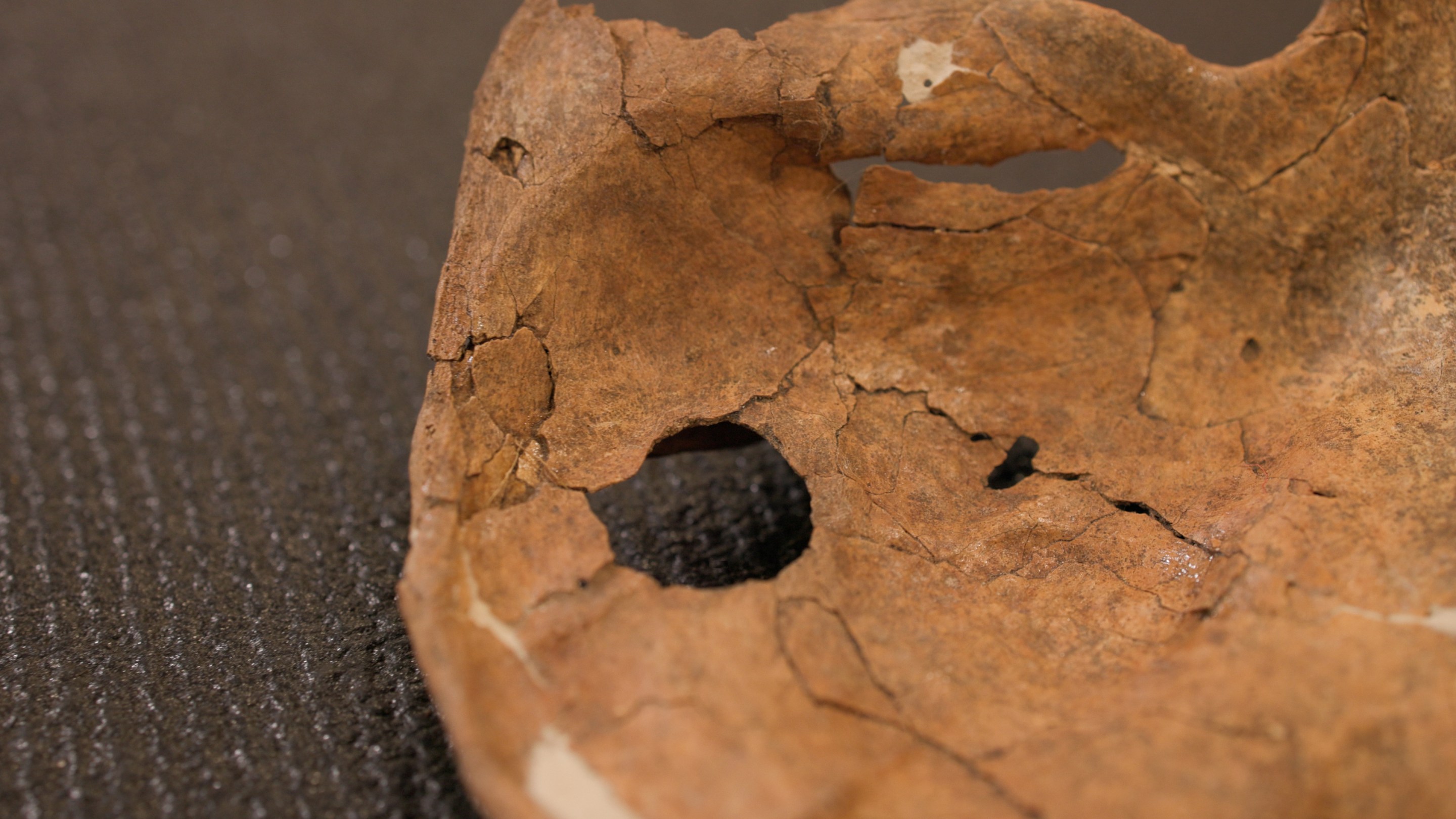
The Shanidar Cave system in Iraq provided some of the first evidence that Neanderthals, like us, buried their dead. Now, according to a new study published in Scientific Reports, it might also be the site of a prehistoric murder mystery.
Within the cave, archaeologists found a scapula (shoulder blade) buried underneath 25 feet of rock belonging to a roughly 45-year-old Neanderthal man who lived around 75,000 years ago called Shanidar A. This flat triangular bone is relatively thin, and Shanidar A’s had a circular hole a little wider than half an inch in his—a puncture wound. Was this murder most foul?
Read more: “People With This Neanderthal Hormone Receptor Have More Muscle Mass”
To find out, the team performed a little high-tech crime scene analysis using computer-generated 3D models of the bone. And they were able to learn quite a bit about what led to Shanidar A’s demise. First, the wound likely resulted from a sharpened wooden spear rather than a stone weapon, which would have left a more angular wound. Neanderthals were adept woodworkers, and while most of their handiwork has been lost to time, the round hole is consistent with spear tips unearthed in the United Kingdom. Other Neanderthal spears from Germany seem to have been carefully balanced and optimized for throwing.
Second, beveling on the scapula indicated the killing blow came from the front, and bits of bone point suggest it came from above at a downward trajectory, puncturing the left side. The spear likely pierced the lung and heart. “The position of the wound and the force required to push it right through the Neanderthal’s body bear the hallmarks of an intended kill shot directed towards the heart,” study author Emma Pomeroy of the University of Cambridge said in a statement.
So a shot to the heart, but who’s to blame?
This is where things get murky. While the team is confident the killing blow came from another Neanderthal (or even human), they’re not ready to rule it a homicide. It’s possible, researchers say, this was a tragic hunting accident. “Animals such as mammoths may have been hunted up close with thrusting spears, so it’s easy to imagine lethal injuries,” Pomeroy explained.
In other words, this 75,000-year-old cold case will likely go unsolved, but Shanidar A still had more clues to offer about Neanderthal life. The victim’s jaw was also found among his remains and his teeth showed signs of previous trauma. One front incisor had been split in half with the surrounding teeth rotated inward, and tartar buildup indicated the facial drubbing occurred at least a year before Shanidar A was killed.
According to the team, the agonizing injury would have made it difficult for Shanidar A to eat, which means someone likely cared for him. Previous research into the cave found evidence of soaking plants before cooking, and it’s possible this unfortunate Neanderthal benefitted from that food-softening technique.
“The remains of Shanidar A reflect the dual nature of so much of what we recognize as human,” Pomeroy said. “On the one hand, we have evidence of a terribly violent end. On the other, this was clearly an individual who was cared for during their lifetime.”
Just like us, Neanderthals contain multitudes. 
Enjoying Nautilus? Subscribe to our free newsletter.
Lead Image: Dr. Emma Pomeroy