
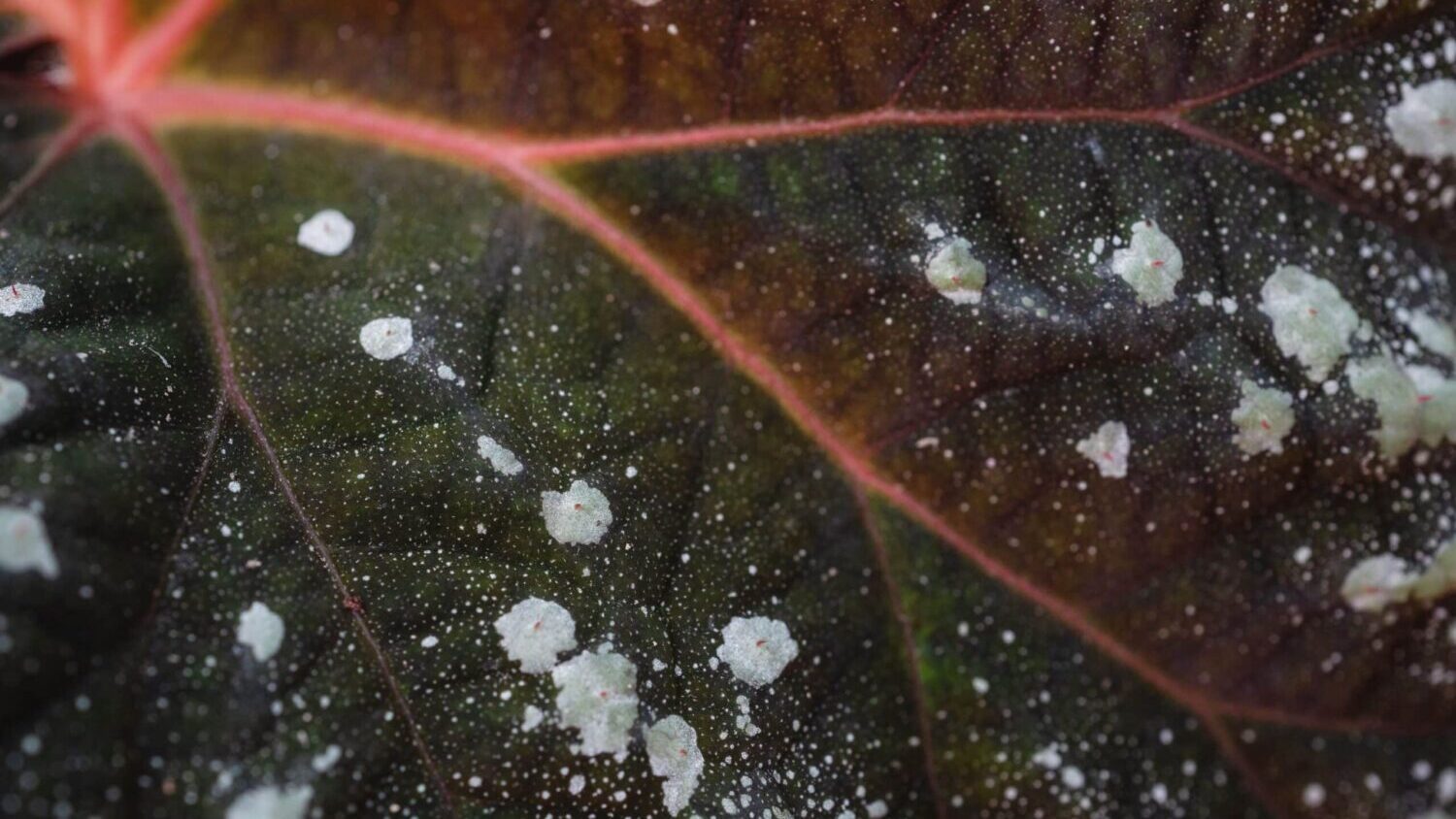
While it sounds like something from a sci-fi movie, “hyperparasitism” is a legit scientific term for when a parasite infects another parasite (as if one parasite wasn’t trouble enough). Although apparently widespread, the phenomenon is little studied. A recent paper published in Proceedings of the Royal Society B detailed the relationship between the fungi that cause powdery mildew in plants and another fungus (Ampelomyces spp.) that piggybacks on it.
The powdery mildew fungi (family Erysiphaceae) are infamous in the agricultural industry, since they’re obligate parasites—i.e., they can only survive on living plant tissue—of many crops, including wheat, grapes, and soybeans. In all, they attack 10,000 species of flowering plants. When you add Ampelomyces to the equation in a “parasite-on-parasite system,” however, crops have a better chance at survival.
Read more: “Parasites Can Also Be Friends”
“By understanding hyperparasite diversity and how many different strains are out there, it might give us insights on if some are better at controlling the fungus than others,” explained senior study author Michael Bradshaw, an entomologist and plant pathologist at North Carolina State University, in a press release.
Powdery mildews can’t be cultured, and so, Bradshaw and coauthors screened 609 samples of dried powdery mildews from herbarium specimens originally collected from 28 countries over the last 150 years. Hyperparasites can’t easily be detected with the naked eye, but DNA sequencing, followed by microscopy, revealed the presence of Ampelomyces parasites on 40 specimens. 671 more Ampelomyces gene sequences were found in the genetic repository GenBank.
This hyperparasite turns out to be much more common than previously thought, with about seven percent of all powdery mildews examined in the study carrying Ampelomyces. It was also more diverse than expected, with five distinct genera encompassing 47 different strains, including some possible new species. “Collectively, these results highlight the evolutionary and ecological complexity of the Ampelomyces-powdery mildew system,” wrote the study authors.
There’s not just a fungus among us—there are fungi on fungi. 
Enjoying Nautilus? Subscribe to our free newsletter.
Lead Image: NC State University