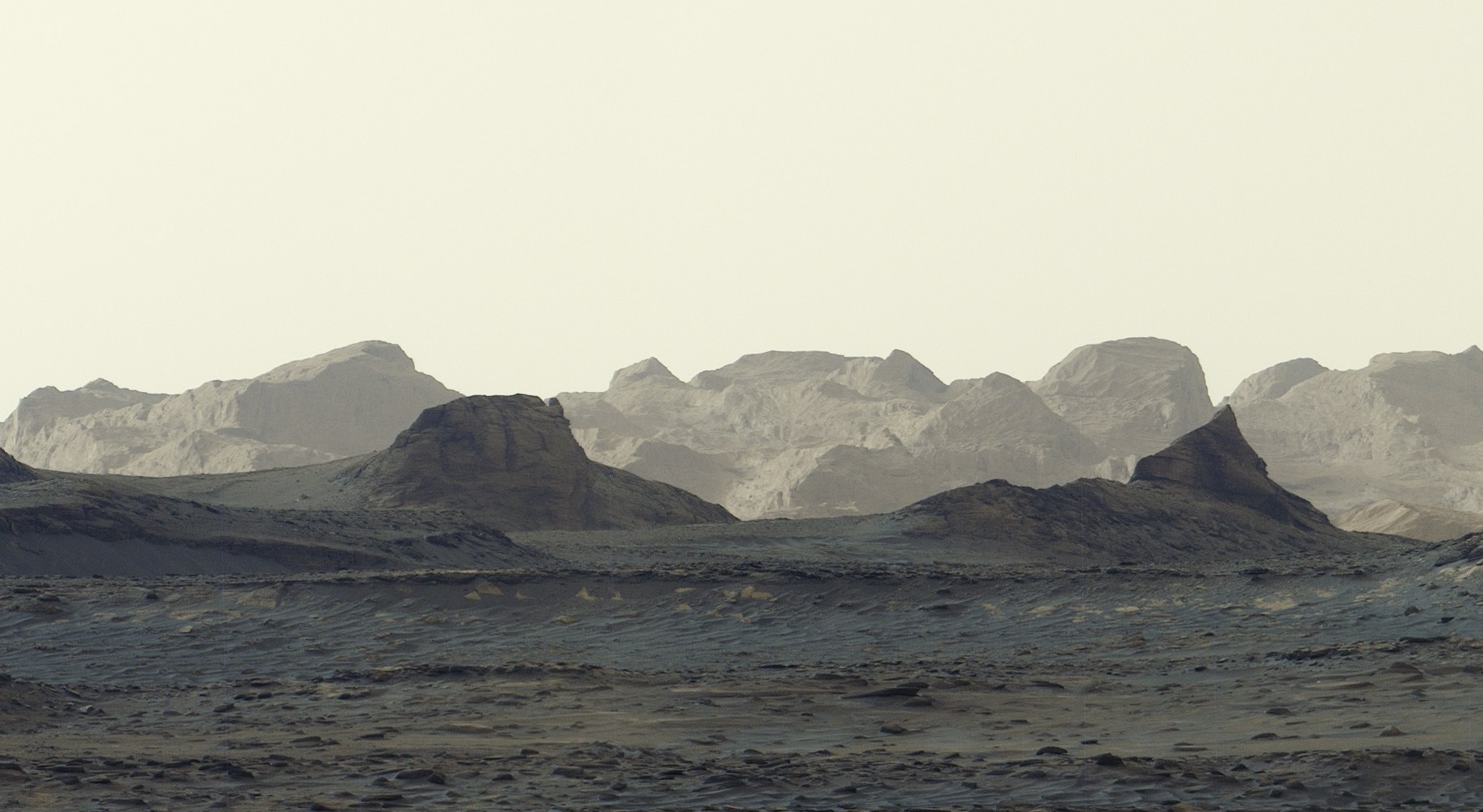
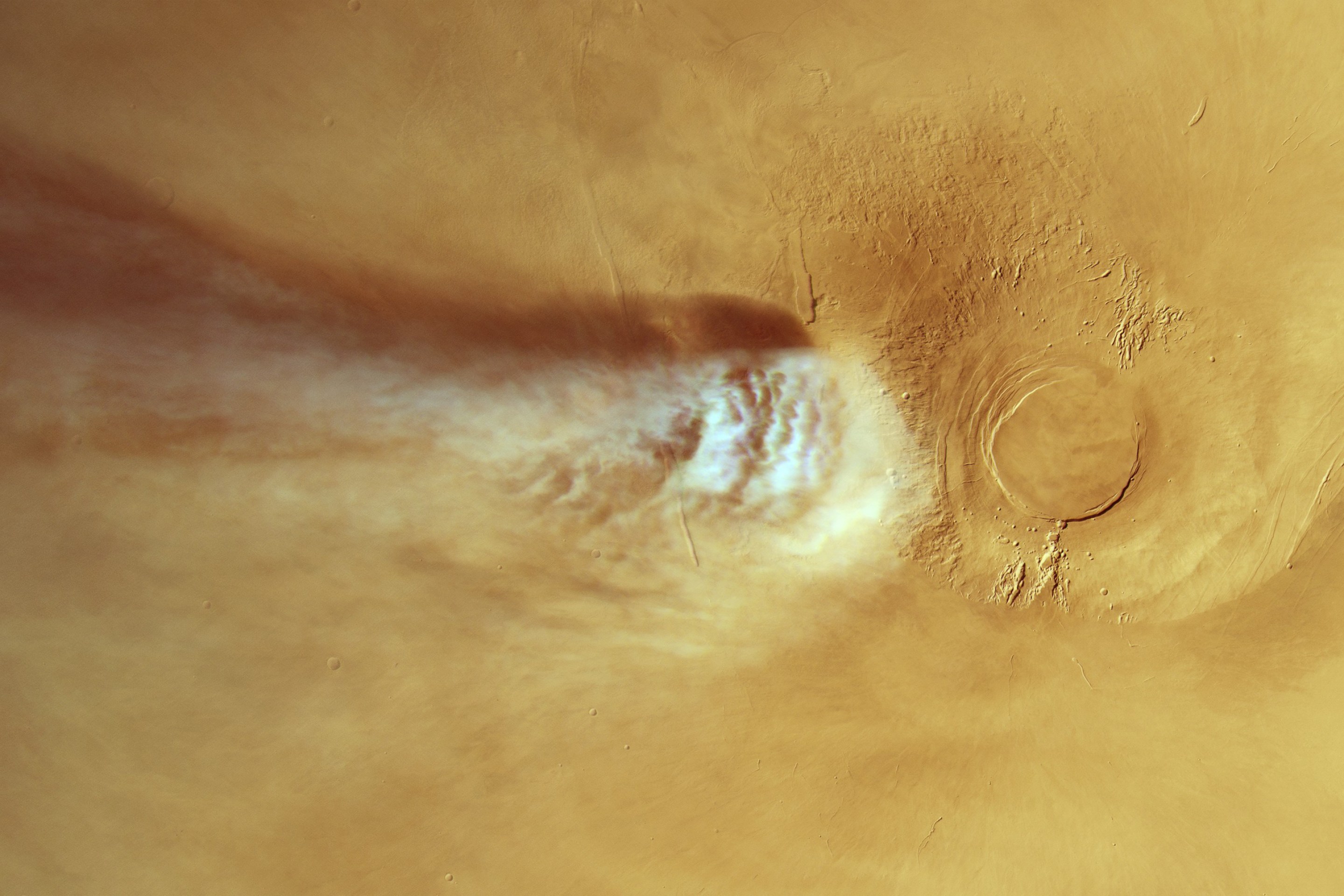
While this image might look like streaks of mascara absentmindedly left on a pillow, you’re actually glimpsing what appears to be the aftermath of dust avalanches on Mars.
Sometime between 2013 and 2017, a meteoroid slammed into the edge of Apollinaris Mons, a massive ancient volcano. Fine dust then cascaded down steep slopes of the crater and formed the dark streaks seen in this image, which was captured by the European Space Agency’s ExoMars Trace Gas Orbiter on Christmas Eve in 2023.
But it’s not the only such collection of these dark streaks on the Red Planet’s surface. More than 2 million streaks seem to exist around its globe, according to a new Nature Communications study by Valentin Tertius Bickel, a planetary geomorphology researcher at the University of Bern’s Center for Space and Habitability in Switzerland. According Bickel’s analysis of streak images, they rarely seem to result from dramatic events, such as meteoroid impacts and marsquakes. Instead, often, these streaks appear to emerge from something far more mundane: The seasons.
Read more: “Do Our Oceans Feel the Tug of Mars?”
In Mars’ southern summer and autumn, it gets windy enough to knock plenty of sand around. And at various spots on Mars, the most intense wind stresses seem to occur around sunrise and sunset. This could explain why scientists have rarely seen these streaks form, because most Mars orbiters aren’t capable of capturing images at these dimmer times. These streaks also tend to fade after a few years or decades.
The new study also adds to growing evidence that the streaks aren’t associated with liquid water on Mars. Scientists have posited this possibility since the 1970s, when the elusive features were first discovered by NASA’s Viking lander. This past May, a previous paper coauthored by Bickel, bluntly titled “Streaks on martian slopes are dry,” noted that the streaks may play “a major role in the martian dust cycle.”
While evidence throws cold water on features once associated with habitability on a dry planet, NASA’s Perseverance Mars rover has recently run into other findings that might point to previous life on the Red Planet. 
Enjoying Nautilus? Subscribe to our free newsletter.
Lead image: ESA/TGO/CaSSIS