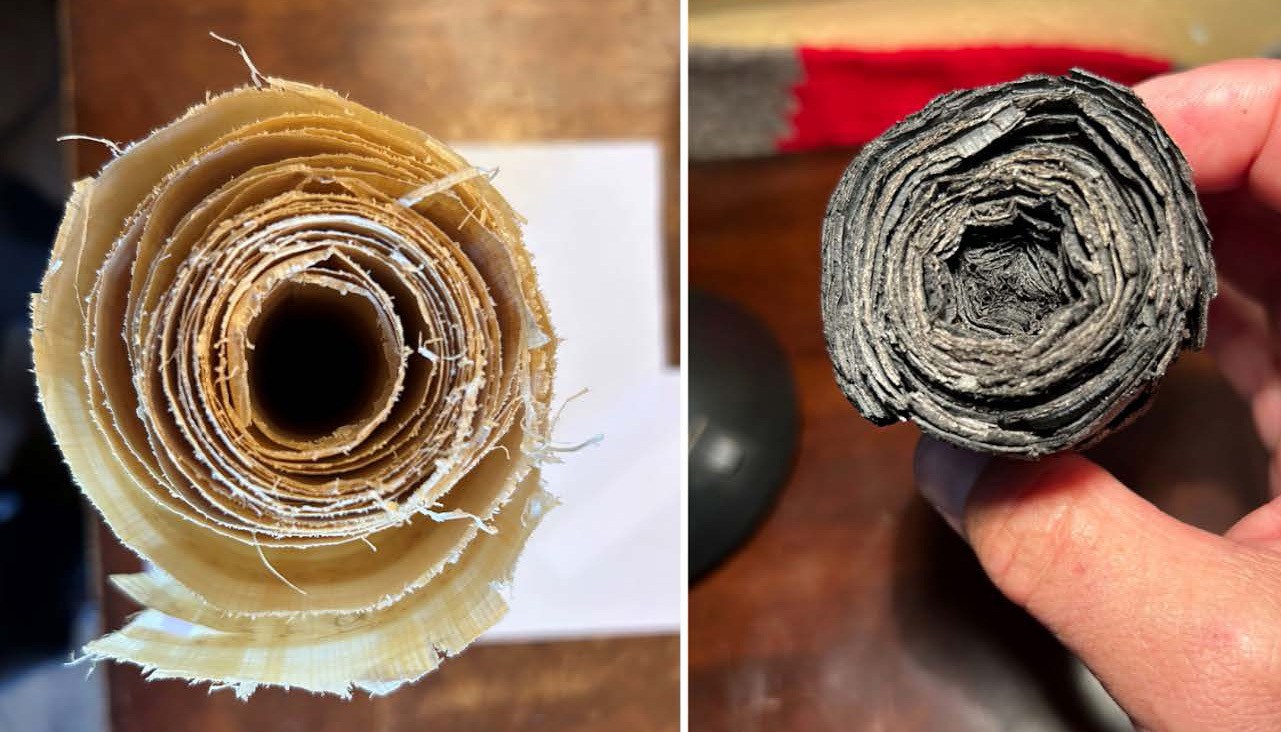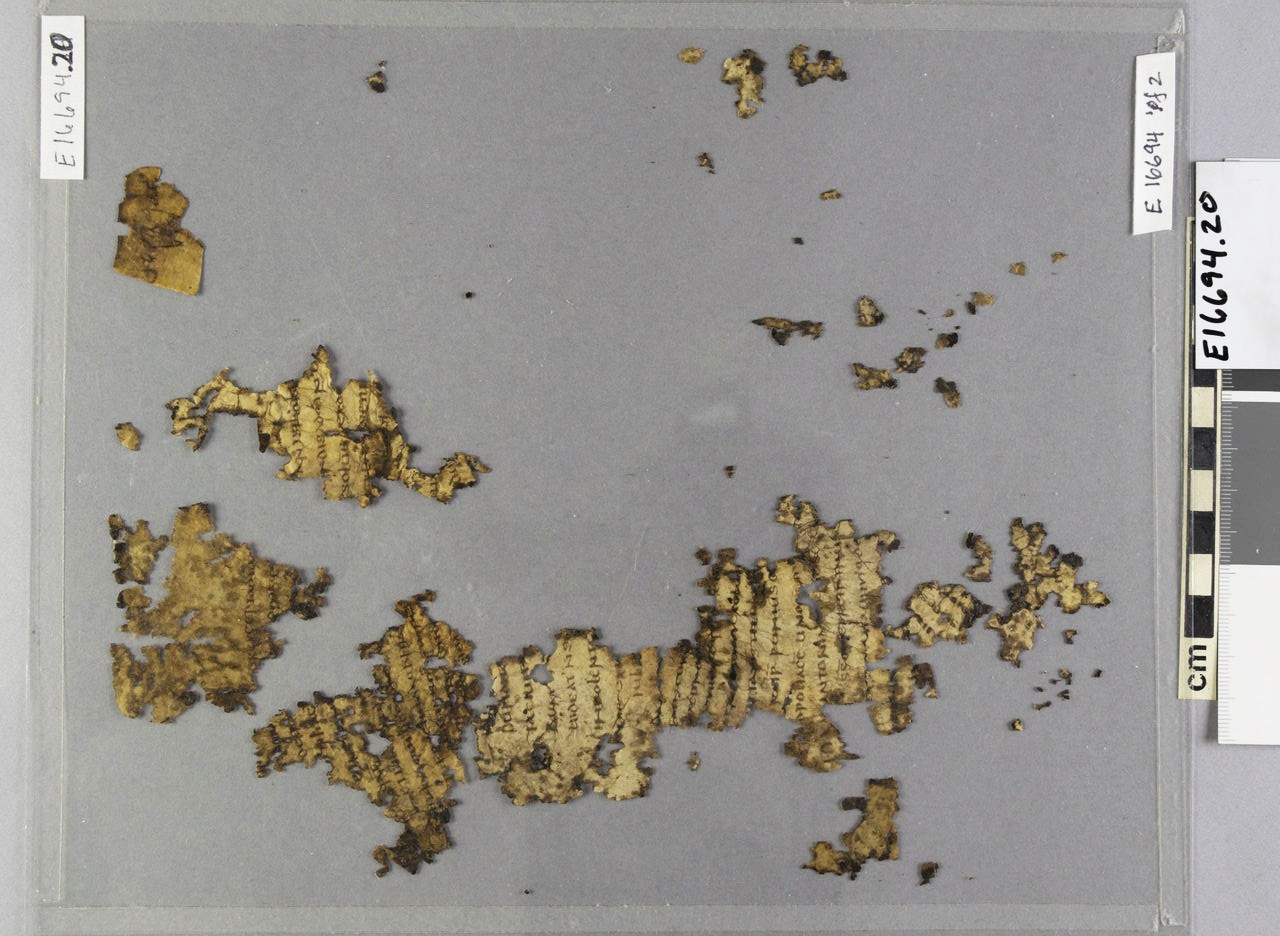
Sometimes ancient artifacts highlight how much societies have changed over the decades; other times, they reveal just how little things change at all—no matter the civilization or the era. Case in point: A 1,600-year-old double-sided parchment that University of Cincinnati Classics Professor Matthijs Wibier carefully reconstructed by piecing the 50 fragments together like a jigsaw puzzle. Turns out, it dealt with one of life’s inevitabilities—whether in Ancient Rome or contemporary America: taxes.
“We don’t have a book like this that we know of, which makes it the first of its kind,” Wibier said in a statement. “I don’t think it contained thousands of laws like most of the Roman codes we know. I think it was a book that traveling officials could put in their pocket.”
Read more: “Was This Mysterious Mountain Feature an Incan Tax Document?”
The book was most likely used by tax collectors or perhaps by wealthy landowners and their lawyers who were trying to avoid said taxes.
According to Wibier, the text includes laws around the public road system and how much citizens should contribute to its upkeep. One possibility is that the richer residents were asked to provide funds for keeping the roads well-maintained, as well as supplying grain for food stores. Not only would this have kept people fed and common infrastructure in good shape, it also would have kept private wealth levels down—something Roman Emperors needed to consider to avoid mercenary forces from rising up against them.
Speaking of which, the parchment is thought to date back to the reigns of emperors Constantius II and Julian the Apostate, who ruled between 337 and 363 AD. Very few texts from that period have survived, which makes the reconstruction and translation work here particularly important. In this period, the Roman Empire would’ve stretched from the U.K. across to Syria and Egypt, covering tens of millions of people.
Ultraviolet light was used to tease out some of the details of the text, Wibier reports, with other clues like the roughness of the parchment helping in the reconstruction. The document is written on animal skin, with one side rougher than the other, which offered some hints when putting the fragments together.
“I love languages, Latin in particular,” Wibier said. “Working on these pieces and seeing how they fit together was tremendously gratifying.”
It makes you wonder what historians will make of our records in another 1,600 years—no doubt references to taxes will be among them. 
Enjoying Nautilus? Subscribe to our free newsletter.
Lead Image: Penn Museum