
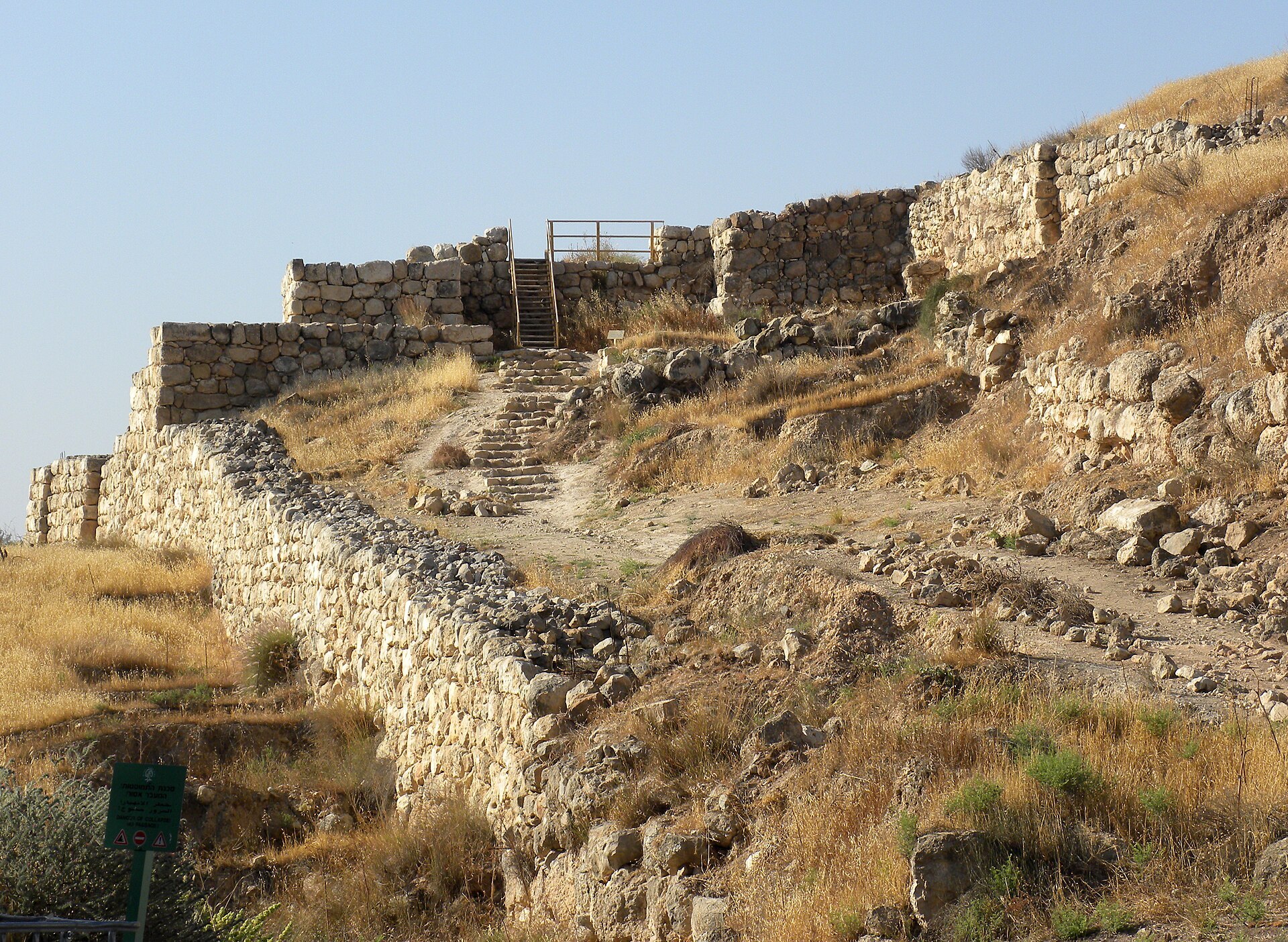
Around midday on January 10, 1938, renowned British archaeologist James Leslie Starkey called for a taxi to take him to the city of Jerusalem from Lasich, the ancient Canaanite and Israelite settlement he had been studying. Outside of Hebron, Starkey’s driver spotted five armed men with white headscarves covering their faces. They shot at the cab, and with the road too narrow to turn around, Starkey and the driver were trapped. The men beckoned the car to approach and then ordered both of them to exit. Once Starkey and the driver identified themselves, the band of brigands let the driver go. Starkey was later found dead.
British authorities investigating the murder focused on Issa al-Battat, a Palestinian rebel commander who had found himself on the wrong side of the ruling authority before. He commanded dozens of fighters, collected protection money from local villages, and had attacked a British police commander on a nearby road just a year earlier. Acting on a tip, British forces ambushed al-Battat in Hebron, killing him after a prolonged firefight.
Read more: “Was This Neanderthal Murdered?”
Starkey’s murder was ultimately chalked up to run-of-the-mill banditry by a gang of rebels—one of many amidst the diffuse violence that accompanied the 1936-1939 Arab Revolt. But now a new study published in the Bulletin of the History of Archaeology suggests his killing was a calculated assassination with a motive that complicates the story.
Archaeologists from the Hebrew University of Jerusalem and the Van Leer Jerusalem Institute reviewed British colonial records, Palestinian historical accounts, intelligence documents, and oral testimonies to paint a compelling picture of murder fueled by a desire for vengeance.
Starkey’s work, bankrolled by wealthy British patrons, focused on Lasich, the site of an Assyrian victory over the kingdom of Judah following a siege in 701 B.C. But his excavations led to conflicts with villagers of al-Qubayba currently living there—Starkey needed to dig beneath their farmland, and they needed their farmland to live. Negotiations dragged on for years before the al-Qubayba landowners finally agreed to sell. After receiving half their payment, the villagers tried to renege on the deal, leading British forces to forcibly expropriate their land.
The people of al-Qubayba were understandably angry at losing their livelihoods, something the researchers document in newly uncovered oral and written testimonies. One petition to the Director of Antiquities in Jerusalem by a “poor and weak” landowner complaining that he hadn’t received compensation years later was met with a dismissive letter instructing him to write to Starkey instead. Another report from a village historian “detailed the intense friction between local landowners and British excavators, framing the murder within the context of these agrarian grievances,” the researchers wrote.
To the researchers, this years-long grievance provides an undeniable motive for murder. According to the team, the site of the alleged assassination—miles from the village—was chosen to remove any suspicion. It seems to have worked. British authorities knew about the protracted conflict over land rights, but cleared any of the villagers of wrongdoing.
More importantly, the study offers a glimpse into a troubling history of colonial archaeology, providing “examples of how archaeological activity intersected with land disputes, social tensions, and anti-colonial sentiment in rural Palestine,” the researchers wrote.
Reliefs depicting the siege of Lasich were unearthed in the mid-19th century, but if you’d like to see them, you’ll have to travel to the British museum in London. 
Enjoying Nautilus? Subscribe to our free newsletter.
Lead Image: Wilson44691 / Wikimedia Commons