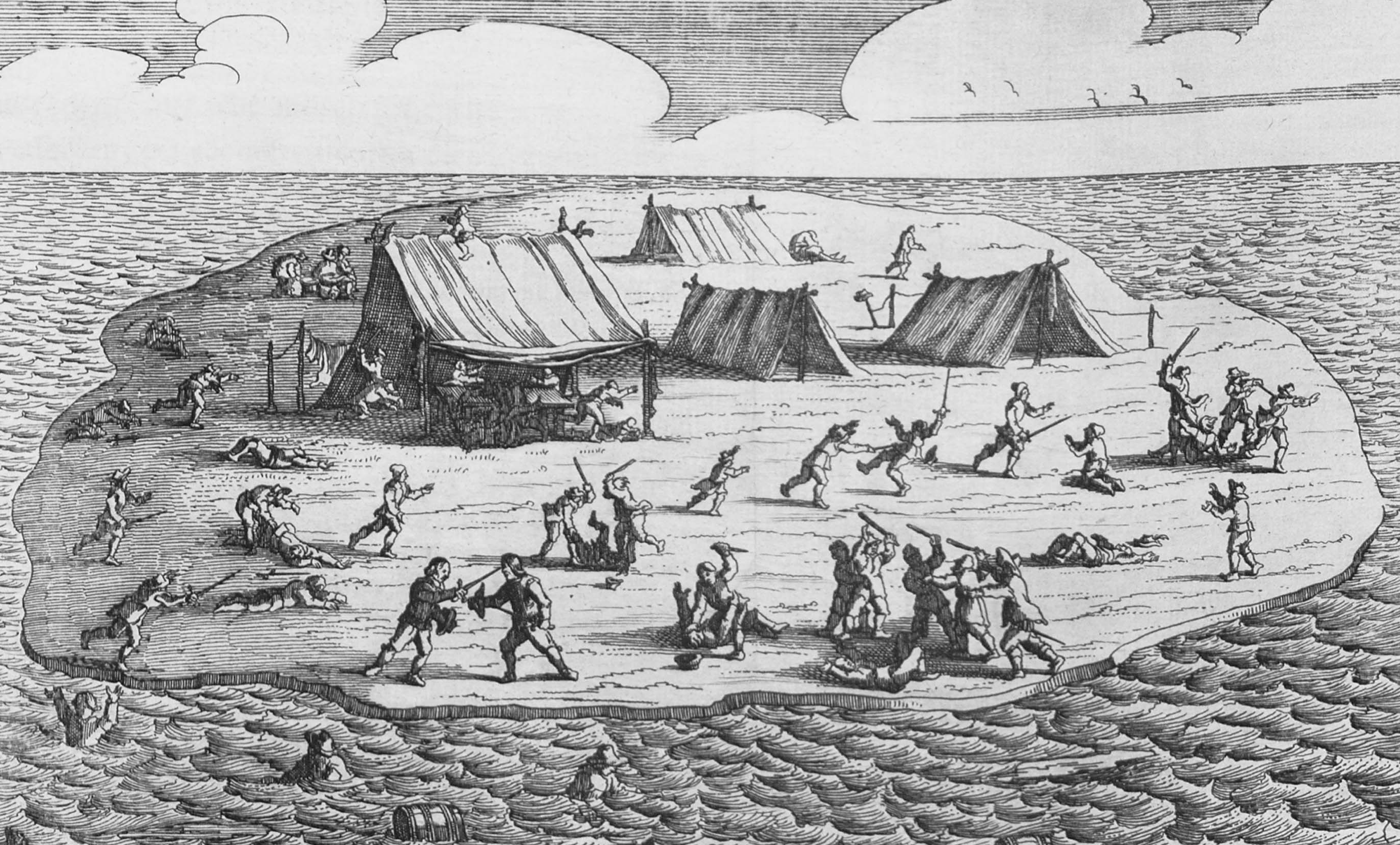
In 1629, the Dutch East India Company ship Batavia set sail for Java in the East Indies, but never made it to its final destination. Instead, it ran aground on the Abrolhos Islands, a chain of small islands off the west coast of Australia. Some 200 souls survived, but soon discovered both food and fresh water were lacking. To compound problems, the ship’s officers absconded in a sail boat pointed toward Java to get help, leaving a power vacuum.
That vacuum was filled by Jeronimus Cornelisz, a junior merchant on his first voyage who had abandoned his wife and child, and his reign was barbarous. According to a new historical case study published in the Asian Journal of Business Ethics, it also bore all the hallmarks of corporate psychopathy—perhaps the first such instance.
Read more: “Are You Smart Enough to Avoid Falling for “Corporate Bullsh*t”?”
True psychopaths are relatively rare, accounting for only around one percent of the population. In business, they’re a bit more common (conservative estimates put the incidence around three to four percent). According to study author Clive Boddy, a corporate psychopath displays some combination of different abhorrent characteristics: deploying superficial charm to gain trust, surrounding themselves with loyalists, creating a climate of fear, sowing discord among rivals, eliminating challengers, avoiding blame, and pursuing power, money, and control above all else (sound familiar?).
Cornelisz, Boddy says, did a speedrun of the corporate psychopathy checklist during his brief, murderous stint as self-proclaimed “Captain-General” of the island. Planning a mutiny even before the shipwreck, he quickly consolidated power, replacing any other lawful officials with his own mutineers. He demanded loyalty oaths from his freshly minted lieutenants, and his crew started hoarding resources.
Cornelisz then set about dividing his opposition. He tricked one potential rival, a Dutch soldier named Wiebbe Hayes, into leading a search with 20 other soldiers for fresh water on neighboring islands. While Cornelisz evidently believed the quest to be doomed from the start, Hayes located two water sources, organized hunts, and soon amassed enough food to provide for the entire group.
Unfortunately, Hayes’ smoke signals to the main group went unanswered. Back on his own island, Cornelisz was busy killing anyone who he perceived as a threat to his power—over 100 in total—and pressed the few remaining women into sex slavery. According to Boddy, the murder was justified as a way to conserve resources, but functioned as an intimidation tactic and a means to implicate Cornelisz’s underlings in his crimes, “bound together by being beyond redemption and the law.”
“What makes this case remarkable is that when we analyzed Cornelisz using a modern management psychopathy framework, he displayed every major characteristic associated with corporate psychopaths,” Boddy explained in a statement. “The same playbook we see in toxic workplaces today appears in this case from 1629. He removed opponents, rewarded loyalists, created fear, manipulated followers and pursued power at any cost.”
So how did this bloody experiment in corporate psychopathy shake out?
Hayes learned of the barbarity from survivors, used ship wreckage to fashion makeshift weapons, and built a small fort on a hilltop. From that fortification he was able to repel at least three assaults by Cornelisz’s forces. Cornelisz was eventually captured, and he was tortured and executed when the ship’s captain returned from Java.
“Perhaps the most striking finding is that another leader facing the same circumstances achieved completely different outcomes. Wiebbe Hayes built cooperation, discovered new resources, and kept people alive,” Boddy said. “This was effectively a natural experiment in leadership. One group prospered while the other descended into murder and abuse.”
It’s just too bad the “first corporate psychopath” wasn’t the last. 
Enjoying Nautilus? Subscribe to our free newsletter.
Lead Image: Wikimedia Commons