

Physics
The Cartoon Picture of Magnets That Has Transformed Science
One hundred years after it was proposed, the Ising model is used to understand everything from magnets to brains.

Dark Matter Experiment Finds Unexplained Signal
Researchers say there are three possible explanations for the anomalous data. One is mundane. Two would revolutionize physics.

Why Gravity Is Not Like the Other Forces
We asked four physicists why gravity stands out among the forces of nature. We got four different answers.

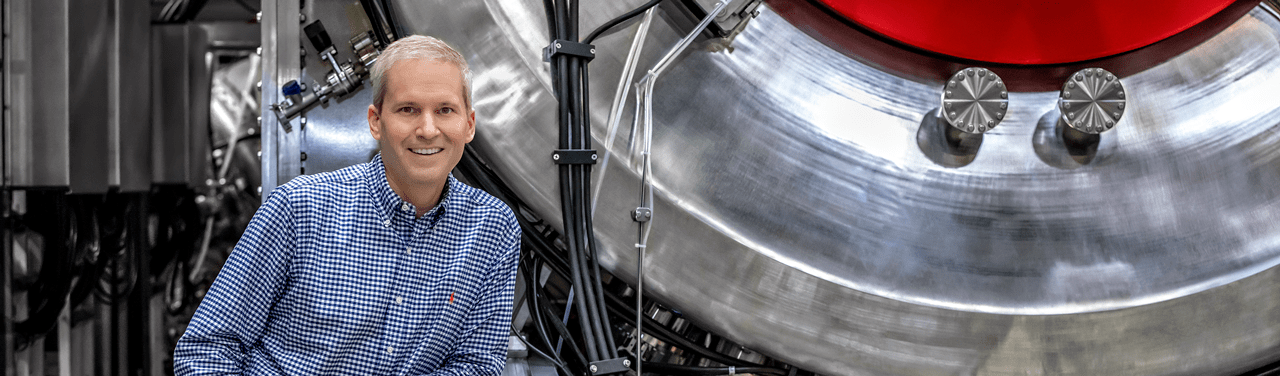
The Road Less Traveled to Fusion Energy
This privateer is developing a way to power the world with water and borax.
Growing Anomalies at the Large Hadron Collider Raise Hopes
Recent measurements of particles called B mesons deviate from predictions. Alone, each oddity looks like a fluke, but their collective drift is more suggestive.

‘Milestone’ Evidence for Anyons, a Third Kingdom of Particles
Anyons don’t fit into either of the two known particle kingdoms. To find them, physicists had to erase the third dimension.

What Goes On in a Proton? Quark Math Still Conflicts With Experiments.
Two ways of approximating the ultra-complicated math that governs quark particles have recently come into conflict, leaving physicists unsure what their decades-old theory predicts.

What Might Be Speeding Up the Universe’s Expansion?
Physicists have proposed extra cosmic ingredients that could explain the faster-than-expected expansion of space.

Why Are Black Holes So Bright?
And why is the black hole at the center of our own galaxy so dim?

Neutrino Asymmetry Passes Critical Threshold
The first official evidence of a key imbalance between neutrinos and antineutrinos provides one of the best clues for why the universe contains something rather than nothing.

To Make the Perfect Mirror, Physicists Confront the Mystery of Glass
Sometimes a mirror that reflects 99.9999% of light isn’t good enough.

Why Do Matter Particles Come in Threes? A Physics Titan Weighs In.
Three progressively heavier copies of each type of matter particle exist, and no one knows why. A paper by Steven Weinberg takes a stab at explaining the pattern.
