
It’s one of the most fundamental questions about life on Earth: How did water get here?
One possibility is that it was delivered as frozen ice by a bombardment of meteorites smashing into our planet’s surface. Another is that the chemistry of the early Earth somehow produced water from molten rock—a theory that’s the focus of a new study published in Nature Geoscience.
Read more: “This Paradoxical Desert Landscape Is Filled with Fresh Water”
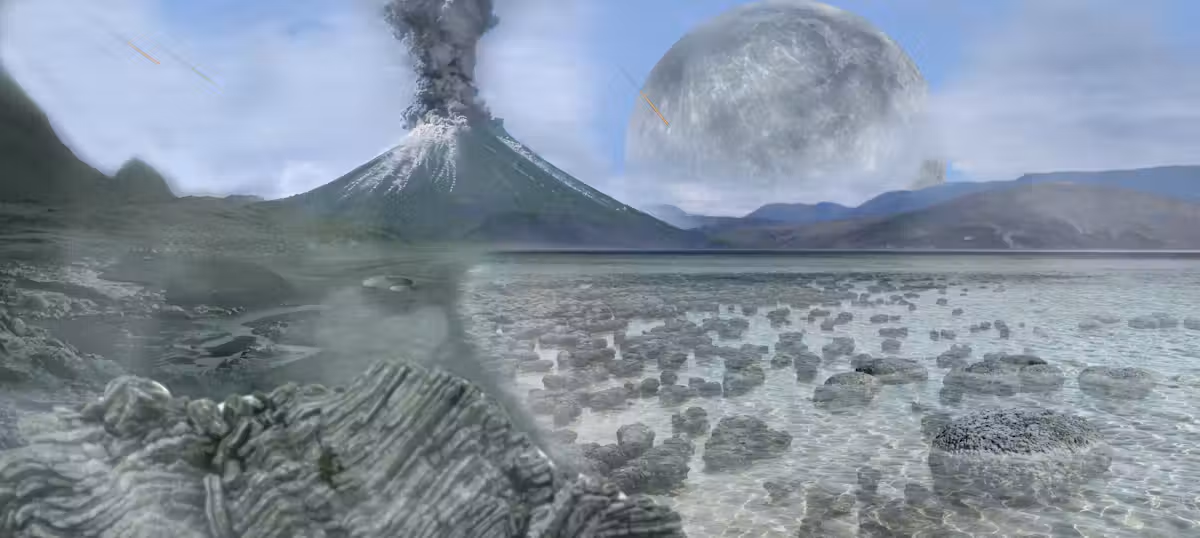
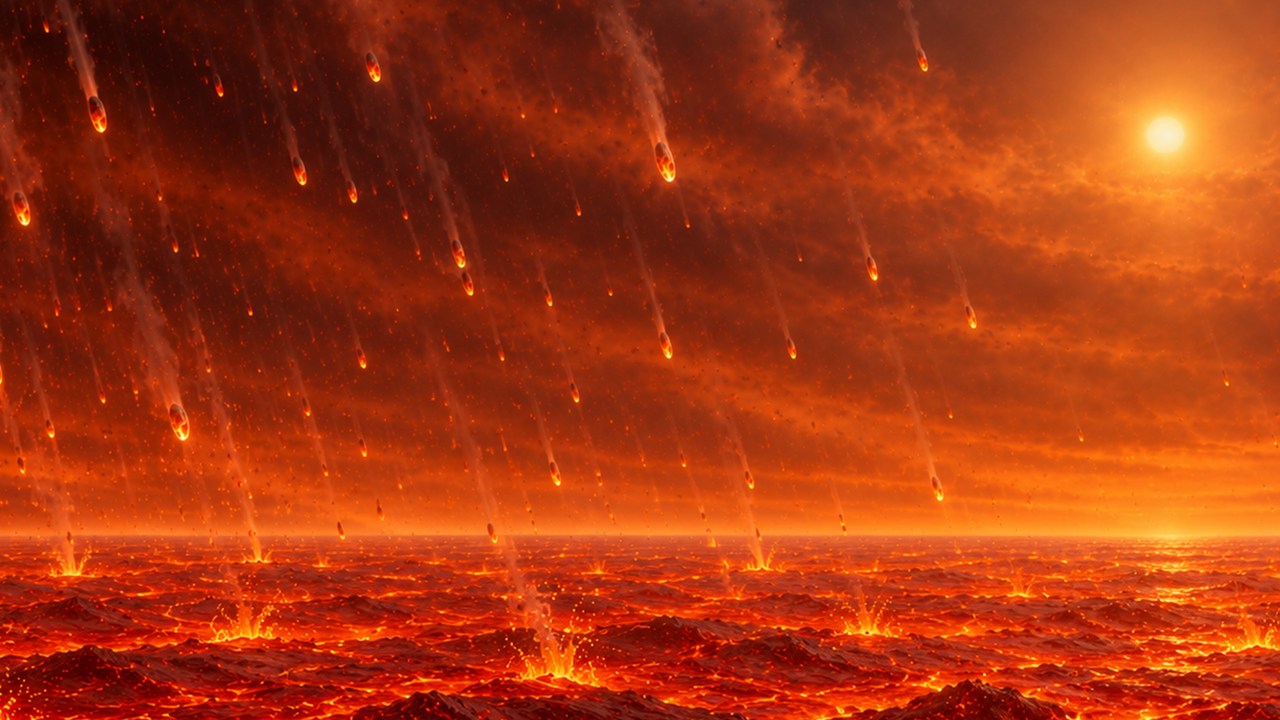
The researchers behind the hypothesis are calling it “pebble rain” (or “pebble accretion”). What happens is silicate rocks with iron inside, drawn toward Earth by its increasing mass and gravitational pull, react with hydrogen in the atmosphere. Given the high speeds, high pressure, and high volume of incoming rocks involved, the subsequent chemical reactions could have stripped away the oxygen from the iron in the pebble showers, releasing water vapor as a by-product.
The researchers estimate that around 200 oceans’ worth of H2O may have been released in this way, supplying the planet with the magic ingredient for life. These pebbles would have been external visitors, like meteorites, but the water would’ve been formed on Earth rather than in space.
What’s more, the same process could plausibly happen on other planets as they form too—opening up new possibilities in our search for extraterrestrial life. “Previous ideas about the source of water to Earth rely on an external source, such as comets or meteorites,” study author Zachary Sharp explained in a statement. “Here we show that virtually any Earth-sized planet should have water by this newly identified mechanism.”
The researchers simulated the conditions of the early Earth in their lab with temperatures of up to 2,552°F, and heating silicate rocks in streams of hydrogen. Almost 80 percent of the iron oxide in the samples turned into metallic iron, producing water vapor along the way.
“Looking out over a large body of water, it’s hard to imagine that that water may have been produced four-and-a-half billion years ago in a hell-like atmosphere,” Sharp said, “but it very well may have.” 
Enjoying Nautilus? Subscribe to our free newsletter.
Lead Image: University of New Mexico