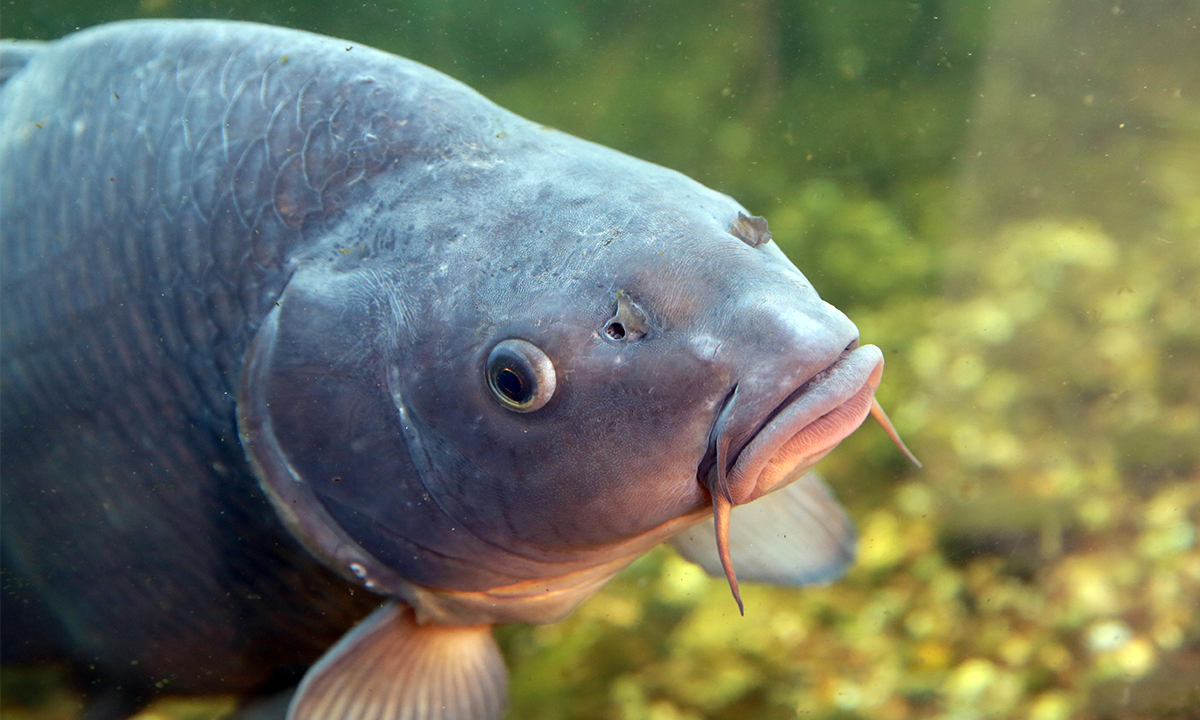
There’s a Far Side cartoon depicting a bunch of chickens splayed out flat on the ground unable to move, with a sign over them reading “Boneless Chicken Ranch.” According to research recently published in Science China Life Sciences, geneticists have brought the panel to life—using carp.
Grass carp are some of the most popular fish farmed across the globe, but for different reasons. In the United States and Europe, non-breeding triploid varieties are used to keep aquatic plant growth from choking waterways. In Asia, however, they’re farmed for food. Unfortunately, the 118 needle-like bones lining their bodies make the species a bit of a chore to eat, and can also throw 118 tiny wrenches into the processing pipeline.
Read more: “How Fishing Could Change the Evolution of Fish”
That’s why researchers from China’s Huazhong Agricultural University set out to create grass carp without any bones. By editing the gene runx2b, crucial for the development of bones, they were able to establish a stable population of grass carp without any of the annoying bones.
Of course, tinkering with genes comes with consequences. To find out if the fish were otherwise fine, the researchers subjected them to a battery of tests. Micro-CT scans showed no other major skeletal deformities or changes to the proportion of fat or muscle tissue volume. Similarly, a chemical analysis showed no significant differences in moisture, protein, fat, amino acids, sugars, collagen, or other nutrients, compared to wild grass carp. However they did find the boneless carp had less calcium in their muscles and more potassium, most likely related to the role bones play in balancing minerals in their bodies.
Basically, boneless carp could one day be coming to a grocery store near you—or at least a grocery store near those in Asia. 
Enjoying Nautilus? Subscribe to our free newsletter.
Lead image: bluejeansw / Adobe Stock