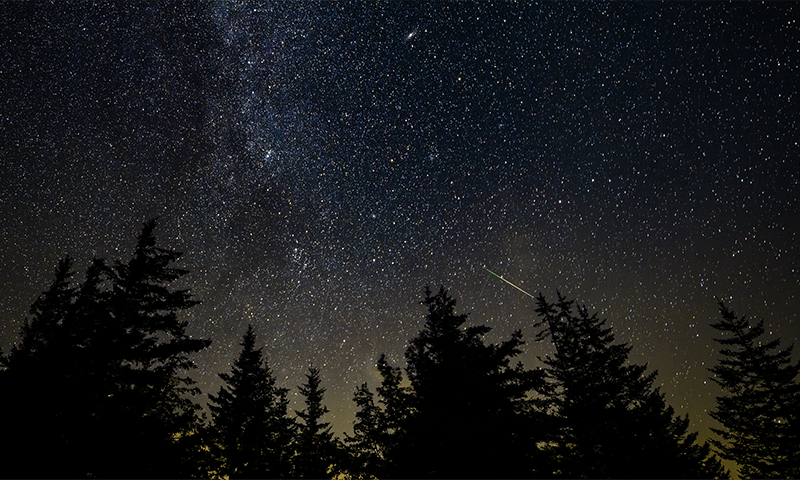
This year’s Perseid meteor shower peaks in the earliest hours of August 13 in the Northern Hemisphere. But Earth has been sailing through these fragments of the comet Swift-Tuttle since mid-July. This photo, taken over 30 seconds, shows a meteor streaking across the sky earlier this month.
Meteor showers have long been part of legend—and science. The first-known recorded observations of the Perseid were made in the year 36 A.D. in Han Dynasty China. “Though the myths and legends may make one think that ancient civilizations had little scientific understanding of what meteors, comets, and asteroids could be, this couldn’t be farther from the truth,” Eve MacDonald, a lecturer in ancient history at Cardiff University, wrote in The Conversation.
Courtesy of NASA, this preview of the meteor shower show was captured at Spruce Knob, the highest point in West Virginia. After the peak of Perseid on Wednesday, the show will taper off quickly—but can still be seen here and there, mostly far from light pollution—until August 23. The next substantial meteor shower to sail through Earth’s atmosphere will be the Orionids, in October. 
Lead photo: NASA/Bill Ingalls