
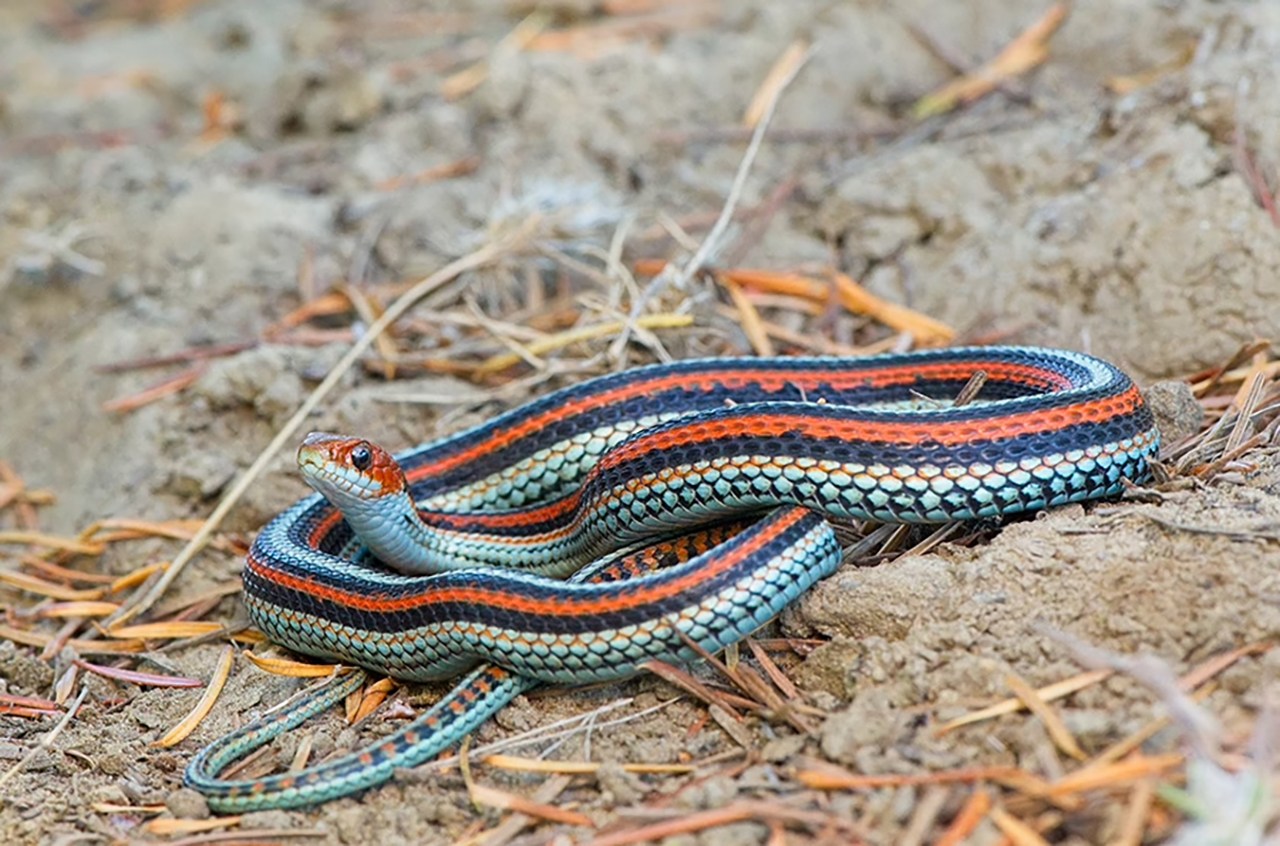
The distinctive-looking San Francisco garter snake (Thamnophis sirtalis tetrataenia) lives a perilous existence. Only a few thousand remain across San Mateo and Santa Cruz, and the species has been on the U.S. Fish and Wildlife Service’s endangered list since 1967 (the year the list originated).
But there’s new hope for the long-term survival of the species after 62 snakes were released into the wild from the San Francisco Zoo. It’s the first time that San Francisco garter snakes bred in captivity have been placed back into their natural habitat. The hope is that the reptiles will become self-sustaining.
Read more: “This Snake’s Tail Has a Fake ‘Spider’ at the Tip”
The approach is known as head-starting, where animals are born in a zoo or another managed conservation environment, protected when they’re at their most vulnerable stages of development, and then rewilded at an early age. Experts were strategic at picking the spots in San Francisco most in need of a fresh influx of young garter snakes, both in terms of population numbers and genetic diversity.
“This is an extraordinary accomplishment for everyone who has worked for generations to protect this remarkable species,” biologist Karine Tokatlian, from the Midpeninsula Regional Open Space District, said in a statement. “Seeing these young snakes returning to the wild represents years of research, collaboration, habitat restoration and careful conservation work.”
The story of why the San Francisco garter snake is under such acute threat is a familiar one: Their habitat is disappearing. The living conditions the species relies on are very specific: They need ponds or other bodies of freshwater to find food, plus hillsides for basking and mating as well as rodent burrows for taking cover in the winter.
That particular mix is rarer than ever due to human development, and most suitable sites for the snake are now on private land. Case in point: The largest population is currently in a protected site close to San Francisco International Airport.
Drought, disease, invasive species, and illegal poaching have also put San Francisco garter snake numbers at critically low levels, making the zoo’s conservation efforts vital for the survival of the species. This year, another 130 baby garter snakes have been born at the zoo, and the plan is to release them in 2027, alongside efforts to restore suitable habitats and improve population monitoring.
“This species is special in many ways, but unfortunately its critical status isn’t unique,” Midpen wildlife ecologist Ariel Starr said in a statement. “The success of this project and the associated research will not only benefit the San Francisco garter snake but will also hopefully inform the recovery of many imperiled reptile species.”
By giving these reptiles a small head start, the goal is to establish at least 10 viable, self-sustaining populations—or enough to finally remove the species from the endangered list. 
Enjoying Nautilus? Subscribe to our free newsletter.
Lead Image: San Francisco Zoo