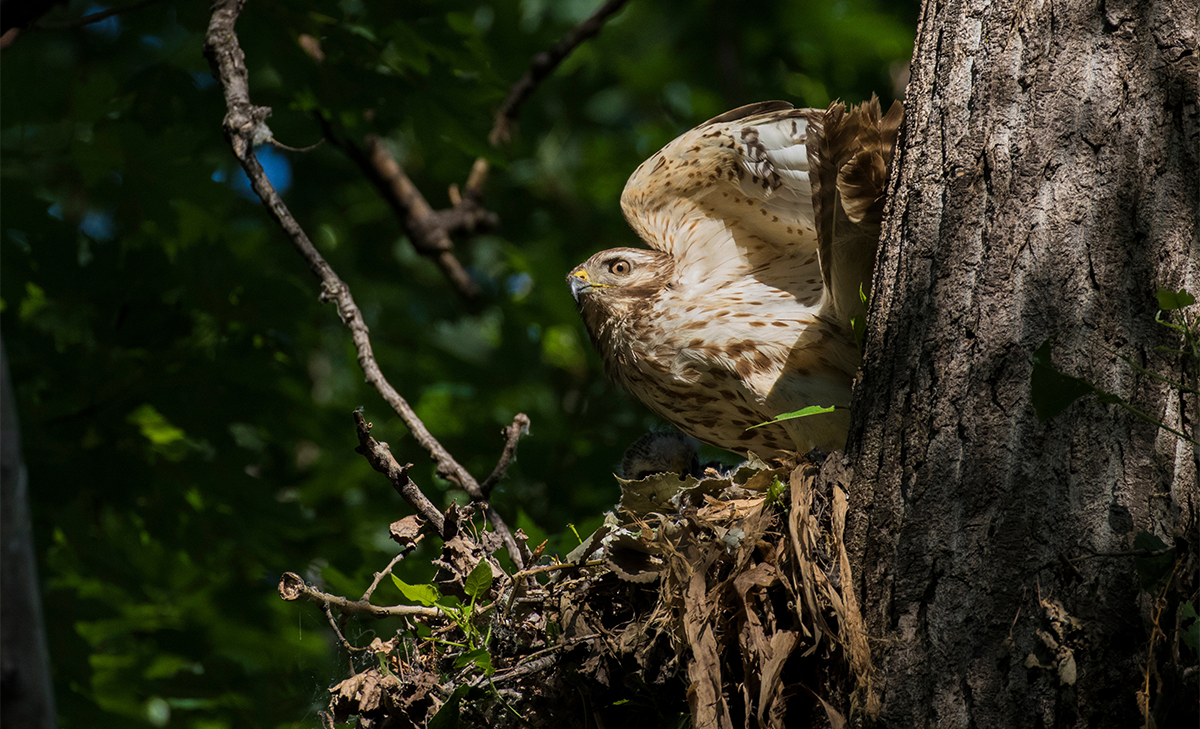
Most parents may not care about the sex of their upcoming children, but red-shouldered hawks have a clear preference, depending on conditions. That’s according to a new study published in the Journal of Raptor Research. Following the birds of prey for over a decade, researchers determined that the hawks tend to have more daughters during boom times, but invest in smaller male offspring when times are lean.
This ability of parents to influence the sex ratio of offspring is a tried-and-true evolutionary strategy that’s backed up by both theory and evidence. In fact, mammals do it, too. Dominant female red deer produce significantly more sons than more subordinate females, most likely because it allows the deer moms to maximize their genetic contribution to the following generation. A 2013 study following three generations of mammals at the San Diego Zoo found a similar dynamic at play—grandfathers and grandmothers strategically tweaking the sex ratios of their kids, giving them a disproportionate genetic share of grandkids’ generation.
Read more: “The Sex Problem with Sea Turtles”
Exactly how these mammals are selecting the sex of their offspring is still something of a mystery, but the same isn’t true when it comes to lizards. The Australian southern water skink, for example, shifts the sex ratio of their broods to favor whichever sex is lacking in the population. They accomplish this egalitarian feat by varying the temperature at which their offspring develop—higher temps for males and lower for females.
Of course all of these animals are amateurs in the sex-selection department compared to social insects. Members of the order Hymenoptera (ants, bees, and wasps) don’t just tinker with sex ratios, they maintain precise control over the sex of each and every one of their offspring via a simple genetic mechanism: haplodiploidy. The single breeding queen stores sperm from males, and if she deigns to fertilize an egg, it becomes a diploid female; if not, it becomes a haploid male.
It’s good to be the queen. 
Enjoying Nautilus? Subscribe to our free newsletter.
Lead image: Mircea Costina / Adobe Stock