Picture a forest setting, dappled light. In this forest lives a family of small cartoon foxes. In the distance, a piccolo begins its bright tune, prompting the foxes to stand on their hind legs and begin to dance. They don’t dance all at once, though. They take turns. One by one, each time the melody shifts, a different fox hops to the music.
This tiny Disney-like narrative is a paraphrase of one imagined by an anonymous study subject while listening for the first time to the jaunty notes of wind, brass, and other instruments that make up “Street in a Frontier Town,” a song from Aaron Copland’s Billy the Kid Suite, written in 1938.
The song was meant to evoke a bustling frontier town, but it turns out that it prompted most of the 20 subjects involved in a small recent study to imagine a story about frolicking forest creatures. In fact, most people imagine similar narratives when they listen to most songs, according to research evidence, says lead study author Elizabeth Margulis, who has been studying the relationship between music, imagination, and cognition for over 23 years and who directs Princeton’s Music Cognition Lab.
Read more: “What Makes Music Universal”
More surprising, when Margulis and the team of researchers scanned the participants’ brains, they found that specific regions involved in mind wandering and sensory processing lit up not only when the study subjects were listening to the music. These same regions also lit up when participants were reporting on the story they imagined while listening, and when they were later listening to a story determined to be representative of the tune. Margulis says the findings, published in Nature Communications, suggest that music has more narrative power than we may realize. They also suggest that music can have a profound impact on where our minds go when we’re engaged in spontaneous thought, she says.
Margulis recently published a book called Transported: The Everyday Magic of Musical Daydreams, which dives into the memories and imaginings that people around the world have while listening to music, and what they tell us about how music shapes human cognition. I spoke with her about what a musical daydream is, what a dictionary of musical motifs might look like, how the narratives imagined by people in China differ from those of people living in the U.S., and how musical imagination might help people suffering from anxiety and depression.
Your book is called Transported: The Everyday Magic of Musical Daydreams. What is a musical daydream?
I start the book with an example from La La Land. The movie ends with this giant musical daydream where the character played by Emma Stone is now many years past her romance with the character played by Ryan Gosling. She’s happily married to someone else. They wander into this bar, and it dawns on her that this is the bar that this ex of hers owns. He comes up, and he starts playing a song on the piano. As the music starts, the audience travels with her back to the moment that they first encountered each other when he played that song. We relive the whole memory, and then it morphs into this fantasy of what their life could have been if they’d stayed together. When he takes his hand off the piano, everything crumbles, and we’re back in this dark basement.
Everything about that scene drives home how I think about the musical daydream. It can be quite vivid and immersive. It can feel like you’re completely somewhere else, not really paying attention to the music at all. But the second the music stops, so does everything you’re imagining.
Does everyone have these musical daydreams, or are they mostly limited to musical people, if there is such a thing?
If we just go around and play music for people and ask them to tell us what they’re thinking about, without biasing them in any way—and we’ve done this at live concerts, we’ve done this in large online studies, we’ve done this in laboratories—the category that comes up most frequently is thoughts about the music. But the next most common category is fictional imaginings, autobiographical memories. In fact, thought types that are not about the music, if you add them all together, are much more common than thoughts about the music. They’re just distributed across a few different categories.
My answer to who has these musical daydreams would be most of us, but often we either don’t pay them much attention or we imagine that there’s some kind of failure. We think we should have been paying attention to the music and thinking about the music. One of the things I’m trying to do in the book is show people how deeply musical they can be.
In this new study, you found that when humans listen to music, their minds tend to wander into these specific imagined stories or scenes, and that these scenes tend to be similar across most people in a group. What does this tell us about the narrative power of music?
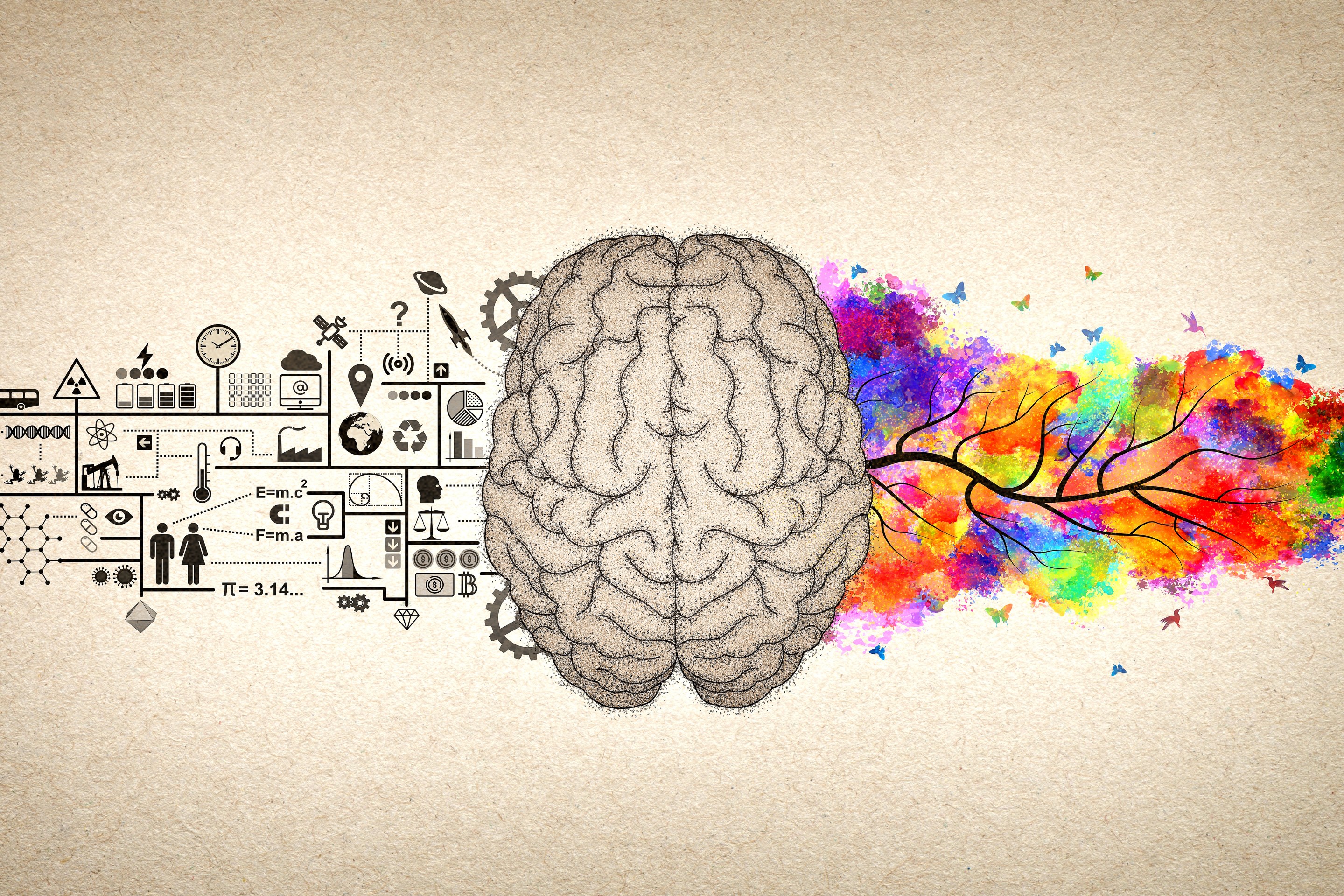
We’ve really gotten it wrong when we imagine what music’s doing in the world. We tend to consider music really abstract, somehow bypassing concepts and words, in some other zone. I get it because there is this aspect of music listening that’s so kinesthetic. It’s in our bodies and that can feel non-conceptual. But it also has a whole bunch of semantic content, concrete ideas, scenes, and concepts that come along with it. If we deny that aspect, we can really start to have some misunderstandings that aren’t necessarily helpful when we look at how music’s functioning in the world.
As you mention in the study, some researchers have proposed that meaning-making is key to the origins of music—that it evolved as a tool to give emotional power to storytelling, to help us to safely process simulated emotional situations.
The idea is that if you encounter a story in words, you can follow along, but that music adds this immersive component. It starts to get this rich sensory detail. It feels like you’re living it and that gives you the benefit of emotional regulation.
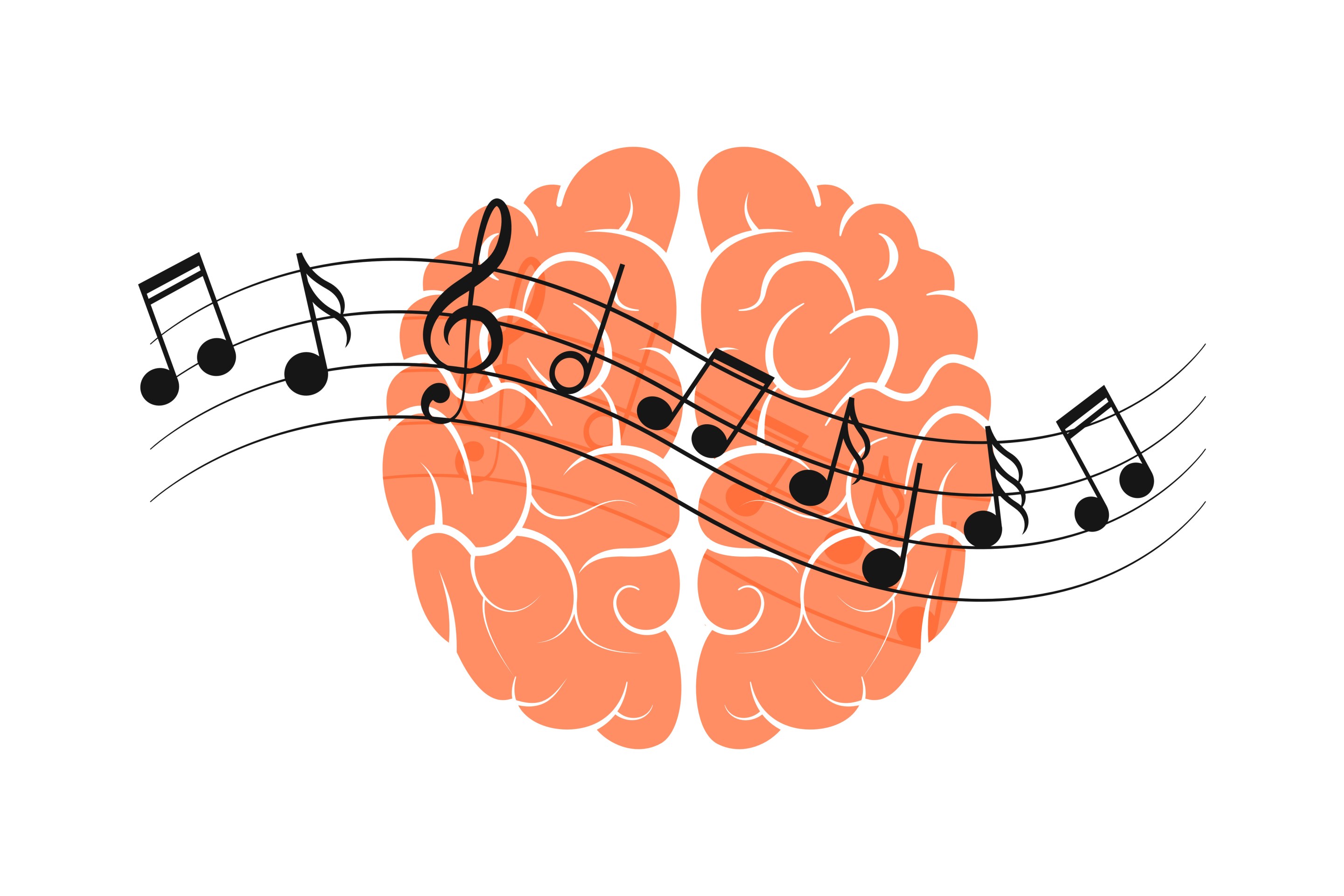
You also found that these musical daydreams or common narratives consistently recruited specific parts of the brain, the default mode network and other sensory brain regions.
What’s really curious to us is that these higher order areas of the brain that researchers have found get activated when people process narrative in a film or read a story—those same areas are engaged when people listen to music. There’s this higher order meaning-making thing happening that has a narrative scene element.
The musical excerpts that you chose were known to elicit specific stories. Can you give me an example?
One of the compositions consistently elicits stories about a meadow at sunrise, where tiny creatures are awakening and starting to frolic. The subjects in our study had never heard the music before, so they’re abstracting across patterns of exposure across their lifetime.
What’s going on in the music that elicits that kind of narrative?
We can’t say strictly what features are causing that storyline in this study, but putting on my musicology hat, we believe there’s a pastoral connotation to wind instruments and certain kinds of flute sounds. A big spread in register between some high notes and sustained low notes give a sense of space and early morning possibility. In all these examples, you can try to disentangle what’s happening in the story from what’s happening in the music, but one of the things that’s interesting is that we’ve used all the toolboxes that exist to crunch acoustic features and measure them and try to predict these stories, and you can’t really get that far from looking at the acoustic features.
Part of that is because what people are tracking is so rich and sophisticated and nuanced that it’s really going beyond things like, “Oh, the high notes are like this.” You can get part of the way when you look at emotional responses to music. There’s been some semi-satisfying work that suggests high notes tend to be perceived as brighter and happier. But when it comes to these semantic story associations, the patterns that give rise to them seem to be more complex.
You propose that there’s a dictionary of sorts where these musical motifs are linked to different concepts and objects and so on. Paraphrasing from the study, you suggest that perhaps gentle arpeggios that sound dreamlike could be connected to words like “slumber” and “fantasy” or rolling drums and brass could be coupled with the visual aspects of regalia. Would this dictionary vary from one culture to the next or be more universal than that?
If you look back at the way composers were writing about music hundreds of years ago, you can find dictionaries. There was this guy in the 18th century, Johann Mattheson, and he was like, “You know, if you’re gonna have music that’s like this, here are the figures and things you should do.” There’s one example that we play people in lots of studies that’s from (Franz) Liszt’s Faust Symphony, and it’s from the Mephistopheles movement. If you’re in a German-speaking place and it’s 1850, you’re presumably picturing the devil. But today, if you play it for people in the 2020s in the U.S., they picture a cartoon cat chasing a cartoon mouse. It’s not that it was ever used in a Tom and Jerry episode, it’s just that this is a category that exists for listeners now.
In other words, the dynamic changes over time and also over place. We also had a study that came out in 2022 in PNAS where we tested the stories associated with certain passages of music in multiple U.S. sites and in a rural village in China called Dimen. We saw that it was common and pleasurable to imagine a story while listening to music across all of these places. The people in each location also shared stories with each other for each musical selection. But it differed from one place to the next.
Did any of the stories your study subjects told diverge wildly from the norm?
Sometimes, yes. We have another study where we looked at individual differences to try to figure out what it means if you’re somebody who really imagines something quite different. We suspected that if you’re a more creative person, you might imagine a different story. But in this paper that was published in Cognition last week, led by Benjamin Kubit, we showed that people who score higher on standard measures of creativity used within psychology actually produced more appropriate narratives, closer to the semantic center or standard. What might be happening there is that one element to creativity is being able to flexibly adapt and follow associational chains. You get a prompt, and you can immediately understand what it’s suggesting.
What about people with aphantasia, who can’t picture things in their minds?
There’s someone in England, Sarah Hashim, who is doing work on these kinds of imaginings in people with aphantasia. Lacking this kind of mind’s eye, there’s probably less of the visual vividness in the musical imaginings. Since writing this book, multiple people with aphantasia have come up to talk to me, and they’ve tended to be people who were like, “I don’t have musical daydreams.” I’m curious about what’s happening with them.
You worked with just 20 people and one-minute clips in your study. What kind of potential bias could that introduce?
Because we had done so many studies using so many hundreds of participants in lots of genres outside the scanner, we felt better about using a smaller sample in this study. The fact that people imagine similar stories when they listen to music was well established outside the scanner. This was like a labor of love by a lot of people and incredibly time-consuming because it’s multiple sessions. We wanted to make the most of that time. But we did screen participants in advance to be sure that they were above this certain cutoff that we had for vivid imaginings in general and for being capable of becoming highly absorbed in music. We know from behavioral studies that this is quite common, but we didn’t want to waste scanner time. This study was meant to look at what was happening in the subjects’ brains when they were imagining the stories.
You write in the study that the findings could help us understand what happens when the mind wanders. Why?
Our best estimates are that we spend about a third to a half of our day engaged in free-flowing spontaneous thought—thought that’s not related to a specific goal or some automatic constraint, like a fly buzzing or you’re hungry. That’s a really important factor contributing to who you are and then what you do in these goal-directed moments and how you develop. Although there are important methods that exist for studying this kind of thought, it’s a little more elusive than something where there’s an express goal or task that people are responding to.
What’s cool about this work is that we’re showing that something that’s in the perceptual environment can really shape your spontaneous thought in a way that you might not necessarily be aware of. In these studies, we’re showing that music can direct you to a new place in your thought-scape, which could matter for conditions like anxiety or depression where people are really stuck in thoughts that aren’t helpful. If you’ve got something that’s really low barrier to entry, like you just press play, and it’s very un-risky in terms of side effects, and you have a shot at jump-starting some different mental space, that seems useful.
You write that this semantic narrative side of music has been neglected or ignored. Why do you think that is?
There’s been so much work that’s about the pitches, the rhythms, the structure, and the syntax of music, which is all really interesting and important. But there’s almost been a shying away from this semantic aspect. People have struggled to get a handle on it, and that’s contributed to siphoning off between approaches in music studies. Over here, you’ve got psychology, music theory, syntax, the numbers, and the grammar. Over there, you’ve got musicology, history, and anthropology. Look at the cultural way that music is used and how much it means to people. These two communities have diverged.
What I think is cool is that all these new tools and computational analysis and machine learning and natural language processing let us look at rich textured experiences to music, stories you’re imagining that are really far from beep or boop response time. My hope is that this work we’re doing will help those two strands connect and make better sense of how it is that music comes to be so important to people. 
Enjoying Nautilus? Subscribe to our free newsletter.
Lead Image: Doodlart / Adobe Stock