In Homer’s The Odyssey, Penelope—Odysseus’ loyal wife—has several dreams. In one of these dreams, she watches 20 pet geese eating wheat far from the water. Suddenly, a massive mountain eagle swoops down from a mountain and breaks all of their necks, killing them. The dead geese lay scattered around the palace, and Penelope weeps in distress, but the eagle returns and speaks to her in a human voice: The geese represent her suitors, and the eagle stands in for Odysseus himself, who will kill all the suitors on his return, the bird tells her.
This dream interpretation is one of the earliest recorded in human history, and it bears certain striking features that are not only common across dream interpretation in ancient Greece—but that have shaped the study of meaning in language and text ever since. This is the argument that classicist Mirjam Kotwick makes in her new book The Ancient Interpretation of Dreams: a long line of Greek thinkers, including Homer, Aeschylus, Herodotus, Plato, and Aristotle, she writes, engaged in an intellectual practice of dream interpretation using a shared method—essentially reading by resemblance, or the logic of likeness—and this method continues to shape how we interpret figurative language today.
I spoke with Kotwick about Penelope’s dream, the relationship between dream interpretation and magic, what Hippocrates thought the body could communicate through dreams, and what common modern concepts such as metaphor might have arisen from the ancient practice of dream interpretation.
You write that Penelope’s dream in The Odyssey is the earliest example of ancient Greek dream interpretation. How did that first example shape later traditions of dream interpretation?
I think of dream interpretation as a discourse that’s connected across time. Later scholars are aware of prominent examples in literature among which Penelope’s dream would certainly fall. And they can take up certain aspects or play with it. But I want to immediately add to that that I see Penelope’s dream not as a starting point per se for dream interpretation, but a starting point for us today. It’s the earliest case we can see, but the setup and the interpretation developed in that example suggests strongly that there’s a longer tradition already in place that Homer—or whoever is the actual author of The Odyssey—takes up and works with and responds to.
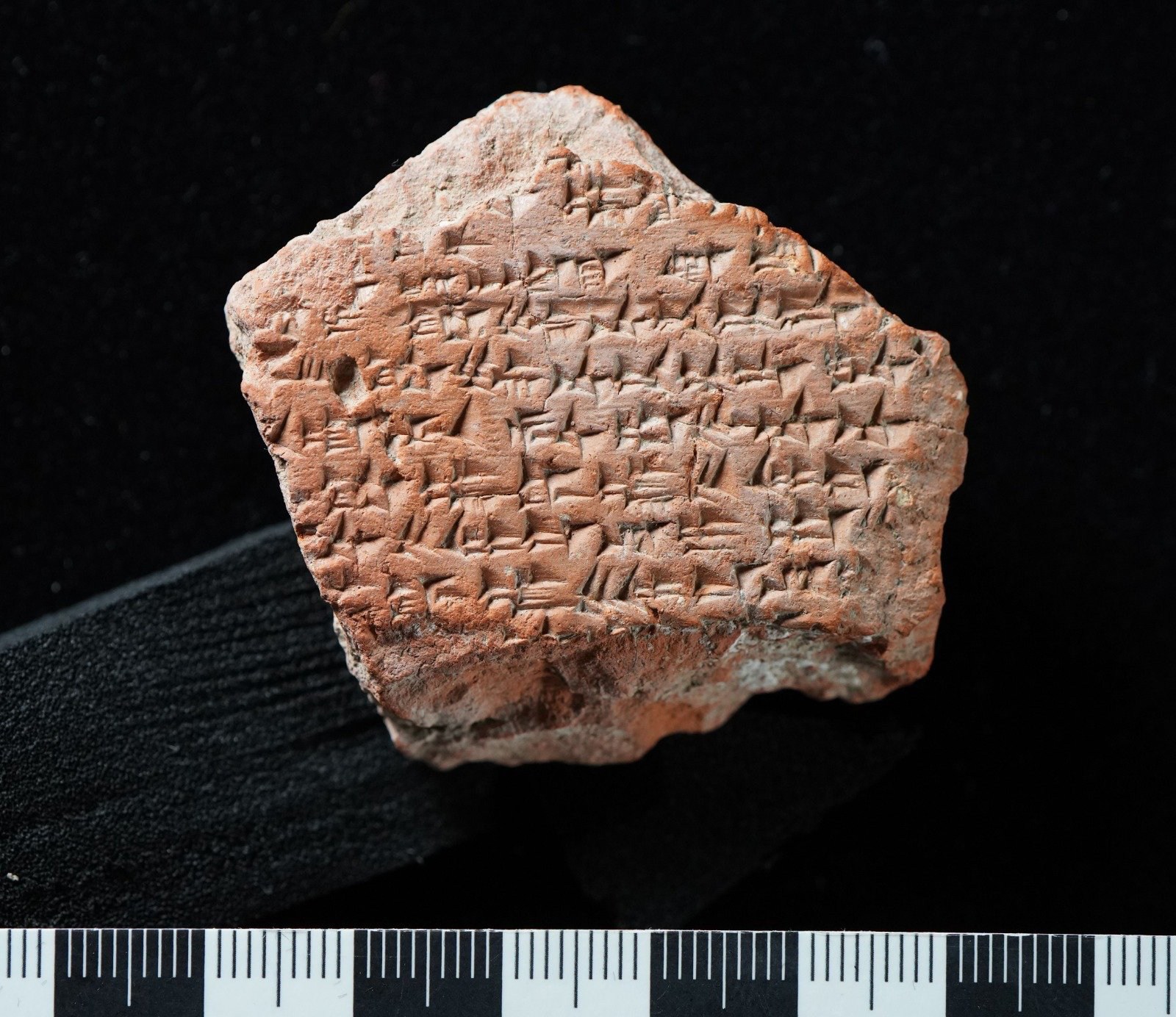
For us, it’s a starting point, but it’s not an absolute starting point. If we look at cultures and civilizations preceding Homer, in the broader context—Egyptian cases or evidence we find in the Hebrew Bible, and of course Mesopotamian examples of dream interpretation—it appears that these patterns were in place long before Homer.
Read more: “What Your Dream Life Says About You”
What symbols or strategies from Penelope’s dream interpretation carry over across time?
I analyze the interpretation that’s given for Penelope’s dream as consisting of four steps, which together make up what I call the “hermeneutics of similarity.” The first step is the assumption that the surface meaning of the dream isn’t what the dream actually wants to say, so there’s another meaning behind it. The second step is that to get to the actual underlying meaning, you’d identify either specific words in the text or specific characters. Third, you’d identify thematic similarities and formal similarities between the characters and words that are on the surface meaning with the supposed actual meaning. Fourth, you’d add the claim that the one thing actually means or signifies the other.
You have these four steps in Penelope’s dream. The eagle in the dream interprets the very dream she’s having as eagle-kills-geese means Odysseus will come home and kill the suitors. To get from the surface meaning to this other meaning, you have these four steps. And then you get a response by Penelope: She’s critical about the interpretation, and she’s critical in a very interesting way, which takes up some significant aspects of this hermeneutics of similarity: She relies on puns—similarities between Greek words—to determine that her dream will not be fulfilled.
Unlike other scholars, you argue that Aristotle was receptive to traditional dream analysis in his own theories of dreams. How so, and why is this significant to the argument you’re making?
Aristotle has a short paragraph on dream interpretation in his treatise On Divination in Sleep. And that treatise follows his treatise On Dreams, so these things go together. Typically, scholars have read that paragraph in On Divination in Sleep as indicating that Aristotle wants nothing to do with symbolic dream interpretation, has no interest in it, and gives a purely sort of physiological account of dreams in which there’s no space for that. I try to show that that’s not the case.
Aristotle was certainly aware of the earlier discussions of how dreams work, signifying something other than what’s on the surface. These are the same questions that we saw with Penelope, that are still in the background for Aristotle, even across all the centuries in between. Aristotle uses a phrase that’s very telling here. He said something like, the best dream interpreter is the one who can identify similarities.
It’s not so much about symbols. It’s more about thematic similarity. It’s a lot like how we think of metaphor: You say one thing by means of another. If I call my friend a rock, I don’t mean he’s a stone. I mean he’s a reliable person. That basic aspect of human language is what ancient scholars start to think about in the context of dreams. Aristotle uses that phrasing, and he then explains what he means by saying, “This is like when you have a mirror image on a body of water.” And if you look into water that functions here like a mirror, you need to be able to quickly spot similarities between the image and what it reflects to understand what it is. Is it a human, or is it a horse?
For Aristotle, dreams result from remnants of previous sense impressions that are stored in our body. These remnants can come up either for memory or for imagination in general or for dreaming, and in the process, they can get distorted. Distortion is how Aristotle explains that, for instance, Penelope dreams of an eagle instead of Odysseus. There are other questions about how dreams might relate to prediction of a future event, and that’s much more difficult for Aristotle to explain.
You also find some commonalities between dream interpretation and certain magical beliefs and practices. What are these commonalities?
Yes, why does the idea of similarities between different things fascinate humans so much? One thing representing another thing based on certain similarities is found in many forms of ritualistic action, actually. Dream interpretation can also be seen as part of a larger context of divination. Oracles would be relevant here as well. That’s where you have the idea that you’re dealing with riddles or metaphors that disguise the true meaning.
But I’d be more hesitant to claim that oracles precede dream interpretation. Canonical depictions of how oracles work—speaking in metaphors or indirectly—come up with the fifth century author Herodotus. This is already shaped by the discourse on dream interpretation that precedes it rather than the other way around. It’s tricky to find a clear answer when it comes to origin points.
Aside from metaphor, what key concepts that we take for granted in the study of text today might come from interpretation of dreams?
I could go so far as saying that even the way we think about “poetic language,” for instance, is colored by this early engagement with dream interpretation. The allegorical interpretation that developed in the ancient world was very successful throughout late antiquity as a way of reading texts that are expected to hide their true meaning underneath a surface. And that’s still an attitude that we often carry around with us when we engage with poetic texts.
Dream interpretation and allegorical reading emerged together and shaped each other, rather than one producing the other. In the fifth century B.C., we can see allegorical interpretation for the first time applied to a poetic text in the Derveni papyrus, and we see the technique that’s used to interpret a mythical story as a cosmological account of the universe. This method of interpretation has significant overlap with the hermeneutics of similarity as I describe it. There’s a clear connection that can be seen from then onward to modern and later understandings of how interpretation works.
Read more: “Your Terrifying Dreams Could Be Rehearsal for Real Life”
Do you think there’s any relationship between early forms of dream interpretation and the pleasure that many humans take more generally in hidden meanings and poetic language?
Yes, it comes with a certain pleasure, but I cannot explain the pleasure. That might just be a human characteristic. But pleasure could be one of the forces driving interest in trying to understand your dreams. They present in such a way as to push you to ask, “Is there something else behind it?” Some bits seem to be like remnants of previous sense impressions, but often there seems to be more going on.
You tell us there were two main ways that dreams were interpreted in ancient Greece: messages from the gods or messages from the body. Related to the latter, you describe On Regimen, the Hippocratic text where dream interpretation was used for direct medical purposes. Can you talk a little bit about what physicians thought the body was trying to communicate through dreams?
Yes, there were two ways of thinking of dreams. Either they were divine messages from an outside power to a human being, or they originated purely from within the body. On Regimen is an early example of a thinker who takes that second account fully on board. Actually, Hippocrates doesn’t deny that there may be divinatory dreams, but he’s not interested in that. He’s aware that a large part of his audience may understand dreams as divine, but he’s interested in dreams for the sake of diagnosing diseases in the body before symptoms become visible. That’s his selling point.
He says, “I will be able to diagnose a disease before anyone else because I can interpret it in dreams. And dreams speak in a distorted way about the internal state of your body.” He goes out of his way to set up an explanation of why that’s so. He explains the entire cosmos as consisting of similarities between different domains. He thinks of this as the cosmic structure: how stars move mirrors the circulation of blood within our body, which in turn mimics certain human crafts, such as basket weaving or the motion of the potter’s wheel. He turns the hermeneutics of similarity into a cosmic principle that then allows him to cash in on his practice of dream interpretation.
Hippocrates says your soul is really running the show in your body when you’re asleep, whereas when you’re awake, the soul is the servant of the body. The soul produces these images of the stars or of human interaction, but that’s just the language the soul uses to express the processes that are ongoing in the body. Knowing physiology and knowing the human body very well, Hippocrates can understand then based on these images what they actually mean. If you dream about rivers having too much water, that means your veins have too much blood or something like that. Hippocrates shows himself to be aware of the semantic stretch of certain words.
Today scientists have a lot of different theories about dreams. Maybe they’re for memory consolidation or threat simulation, or maybe they’re just totally random. But are these explanations really in conflict with the idea that dreams may carry messages that could be interpreted? Is that still something dream researchers accept as a plausible idea?
If you look at modern dream research, from Freud onward, it’s hard to find someone who would completely deny that dream images have any significance. We can probably agree that I dream about things that I experienced. I dream about things that matter to me, that I’m worried about, for instance. And modern neurological dream research often says dreams are metaphorical or hyper-associative, but that doesn’t mean then that they contain messages about how to live your life. Dreams are a form of cognition. That’s pretty much accepted, and the idea that what we dream about has something to do with who we are is also generally accepted. This feature of dreams can be partially explained by the fact that certain neurotransmitters are suppressed during REM sleep, which makes our thoughts more loose, looking for connections that we wouldn’t look for in waking life.
You write that dream interpretation has been overlooked as a field of study, that it hasn’t been taken seriously. Why do you think that is?
I think it has something to do with it being labeled as irrational or superstitious. We should relax and accept the fact that people like Aristotle really were interested and wanted to get an answer to that question—whether dreams can predict the future and how they work. I don’t think there’s much that’s irrational about it. Surely some of the answers, we wouldn’t share. We know things that they didn’t know about how the human body works.
Do you try to interpret your own dreams?
Yes, I do. The language of dreams is metaphorical, but that’s nothing spooky or strange. It’s just the way language works. And that’s how we think in dreams: in metaphors, in associations. I’m not sure I try to interpret them in the sense of, “Oh, what does this dream tell me about myself?” But to a certain degree, I do try that even. Coming back to the pleasure of interpreting, but also just of dreaming, I often find how it works funny. I can sort of make out, “Oh, yeah, this is an interesting version of that friend I’ve dreamt of,” or something like that. I don’t think that all dreams are suppressed wishes, but they can be worth engaging with. 
For more on the metaphorical, hyper-associative nature of dreams described in current neuroscience, see Ernst Hartmann’s The Nature and Function of Dreaming, from Oxford University Press, Antonio Zadra and Robert Stickgold’s When Brains Dream, from W.W. Norton, and Patrick McNamara’s The Neuroscience of Sleep and Dreams, from Cambridge University Press.
Enjoying Nautilus? Subscribe to our free newsletter.
Lead image: Jorm Sangsorn / Adobe Stock