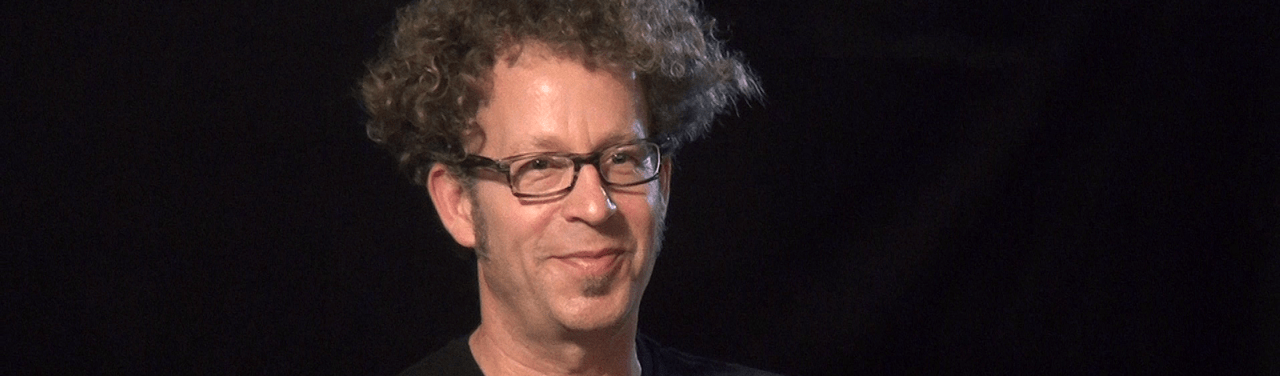
Ken Goldberg is nothing if not creative. A distinguished roboticist and researcher at the Automation Sciences Lab at the University of California, Berkeley, he’s also an internationally recognized artist. He’s the author of more than 150 peer-reviewed papers on algorithms for robotics and his artwork has been exhibited at the Whitney Biennial in New York and the Pompidou Center in Paris.
Goldberg’s work in robotics often inspires his artistic practice, and vice versa. As the World Wide Web took off in the ’90s, Goldberg and his students created a garden that users could water and tend to by operating a robotic arm via a Web interface. Called “Telegarden,” the piece was popular with users of the rapidly growing Web and also raised important epistemological questions about what is real.
One of Goldberg’s research projects focuses on enabling a surgical robot to perform automated tasks like suturing. Goldberg is inspired by recent advances in cloud robotics, which allows devices, networked to supercomputers in the cloud, to continuously learn and develop.
But as Goldberg sees it, we are not on the verge of a “singularity,” when intelligent robots will take control. In fact, he says, his work in robotics has made him appreciate the quirks of humanness that can’t be modeled with algorithms. Smart robots and artificial intelligence systems can enhance our creative capacities, but true creativity remains a singularly human trait. We spoke in Goldberg’s lab at UC Berkeley.
Does connection to the cloud mean robots are now smarter?
Can robots be creative?
You trained as a computer scientist, but soon turned to art. Why?
Tell us about “Telegarden,” the project that allowed people to garden through the World Wide Web.
You coined the term “telepistemology.” What is that?
What is the most creative thing that a robot has done?
Was the robot itself being creative?
Why do AI proponents think machines will one day be like humans?
What are Hubert Dreyfus’s views on creativity?
Can robots help humans to be more creative?
What is the uncanny?
Could you imagine a Turing test for creativity?
Could a surgical robot ever substitute for the real thing?
What has working with robots taught you about being human?
What would you be if you weren’t an engineer or an artist?