Science is a slippery concept. It’s tough to fit into a neat box with fixed edges. It is digging up artifacts in the desert, peering at microbes through powerful instruments, theorizing about the expansion of the universe, writing code for new technology, retracting a paper riddled with errors, admitting you were wrong, starting over, making accidental discoveries, experimenting on yourself with psychedelic drugs. It is also exploring genetic code, curing disease, connecting people through instant global communication, and engineering weapons of mass destruction. It is demystifying rainbows. It is riddled with bias, but it is the most rigorous system humans have for discovering things about the world.
But what separates science from non-science exactly and who decides? Recently, University of California, Berkeley, psychologist Marina Dubova and Princeton University researcher Qiawen E. Liu decided to try to take on the elusive task of answering these questions—of defining science.
Read more: “The Thrill of Science in 2042”
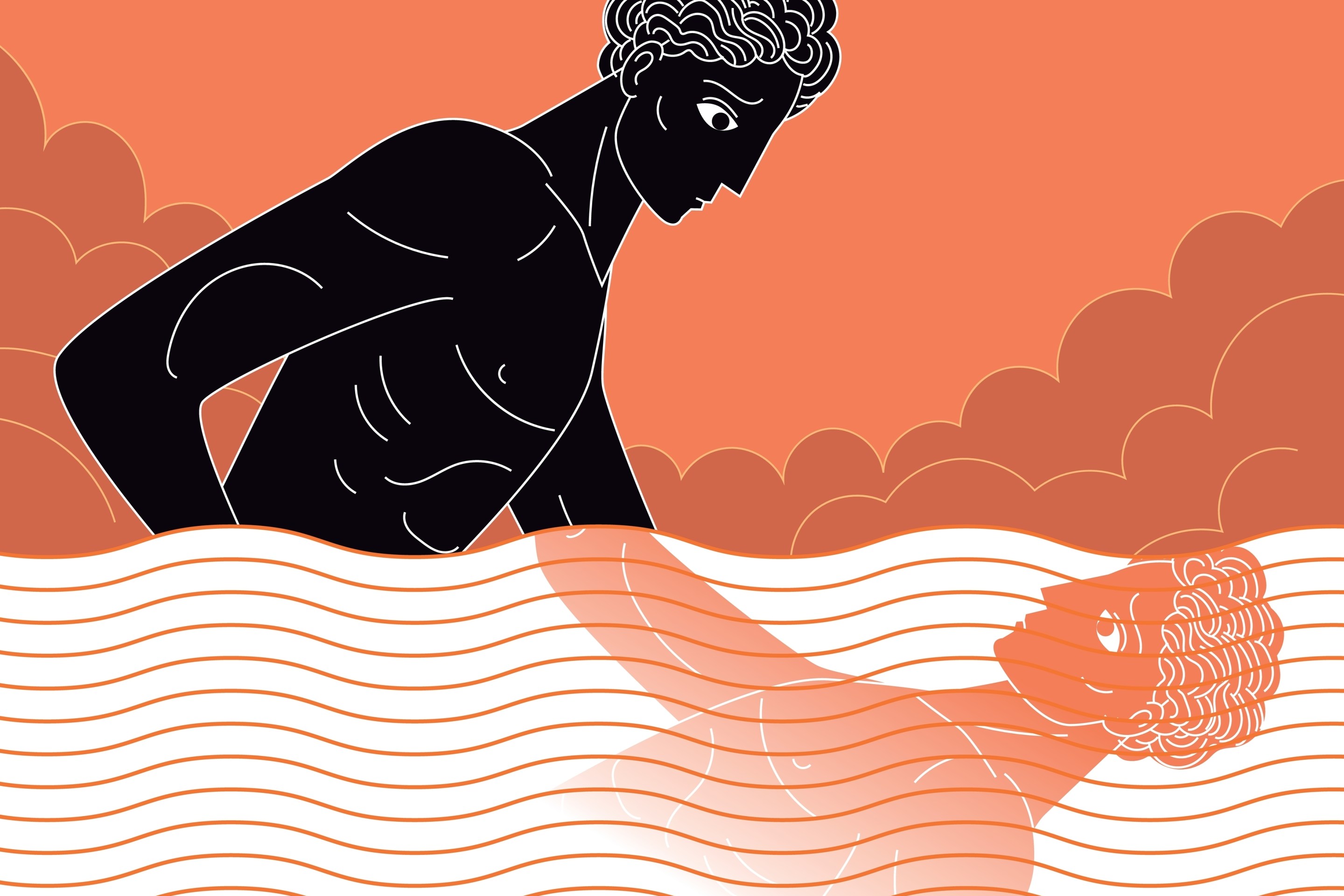
Is science like holding up a mirror to ourselves, reading the book of nature, or is it a game of competition, strategy, or chance? Metaphors, they decided, could be wrestled into service for their cause. They chose 18 metaphors that have historically been used to describe science and then surveyed 91 scientists and 99 members of the public about how accurate they found the metaphors. They published their results in Royal Society Open Science.
I spoke with Dubova about why the distinction between science and non-science matters, which metaphors appeal to her most, why we need “radically exploratory” approaches to scientific discovery, and what AI will do to creativity in the sciences.
You write in your new paper that science has a demarcation problem, that it’s been very difficult to solve the question of what precisely separates sciences like physics and biology from non-sciences or even pseudosciences like astrology. Why is that?
It’s very hard to solve the demarcation problem because science is such a versatile activity and that’s what our paper also shows. As a cognitive scientist who studies concepts, I know that all human concepts are fuzzy and versatile. Even when you talk about very commonly used concepts like birds. What is a bird? Nobody can give you a precise definition. Even though we coordinate around what we call bird and what we don’t call a bird, if we actually study the inner structure of these concepts in individual minds, there’s a lot of diversity. That’s why trying to define anything, to put strict boundaries around concepts, becomes problematic.
It’s a big issue with science specifically because that’s a concept where we do need to draw the line sometimes. And the diversity of understandings has run up against attempts to propose just one or a few criteria, for example, like falsification, to distinguish science from non-science. There are all these other ways in which scientists can conduct themselves that still lead to successful discoveries historically.
You say science needs to draw the line sometimes. Why?
There are many practical senses in which we do want to distinguish between scientific evidence-based advice for the public, versus non-scientific advice. But sometimes it’s really hard. Just thinking about scientific advice as coming from the community of scientists doesn’t appeal as neatly to people. We want to see beyond that: What exactly is it about scientists that allows them to offer this advice that is more legitimate? We want to help people trust scientific advice as compared to other kinds of information we might encounter across the internet.
Your primary finding was that scientists disagree about science more than the public does. What do you think is going on there?
Scientists are the people who are engaging in science in versatile ways, so you see more variability in the way they describe it than in people who are potentially non-expert. That’s something we might expect from any domain of expertise. It’s not necessarily unique to science.
The reason we were interested in this question is because I have training in science, and my colleague Ella has training in science. During our training in science, we were taught all these amazing methods: how you can measure this, measure that, operate this specific piece of technology. But in our experience, it was never a point of discussion to talk about our understanding of science.
That felt like a paradox. In science, we often disagree about very specific aspects of scientific policy and methods. In psychology and cognitive science, there is a big debate about pre-registration and replication. Is it worth replicating someone else’s study or is it better if I do my own new study? People disagree a lot about this.
When we disagree with each other, we might think, “Oh, this person just must not understand how important replication is.” But in my opinion, it actually goes much further. We may have very different conceptions of what science actually is. These kinds of cognitive attitudes about science may play a big role in scientist disagreements, but we never zoom all the way out. We often focus on specific disagreements and stay there. That’s why we wanted to know what scientists think about science.
You also found that the public has a more idealized version of what science is today than the scientists. There are a couple of reasons why you thought that might be, including possibly your study sample, but I was still really surprised by this, given the strong anti-science bent that has dominated politics at least in the United States lately. Is there any way in which that kind of idealism about science could be helpful?
We are still thinking about it, and this study is just the first step. There’s so much more to be done, and our small sample of the public is nowhere near to capturing the diverse conceptions of science that people have.
You would think, “Oh, trust in science is declining and everybody has started hating science.” Politically we can see that happening and that was kind of my belief. But according to recent meta-analyses across different countries, it turns out that most people still trust science a lot. Maybe not medical advice from scientists, or some very specific things, but basically people still report that they think science is very valuable for society.
The conclusion from that literature seems to be that the people who don’t trust science are a noticeable minority. They speak very loudly. We hear from them all the time. That’s why we think that trust in science is declining.
Our study is consistent with that. Individuals seem to be very optimistic about science. But it is a double-edged sword. It’s great to see that a lot of people think science is so valuable. But I wonder—and we don’t have any data yet to support this—whether these kinds of heightened expectations might raise suspicion about scientific advice that so often comes with a lot of caveats. If the public is expecting a definitive finalized conclusion, they might reject pieces of advice that come with all kinds of uncertainty.
That’s the main feature of scientific advice: It’s going to be updated, it’s going to include all kinds of caveats. Because that’s what science is about—being able to revise and capture the uncertainty. And that’s what scientists in our study sample were speaking about: The uncertainty and all the other aspects that come into the act of trying to evaluate scientific evidence.
That is potentially the next stage of this research for us, to look at whether idealism about science can make it more difficult to evaluate real scientific claims. How does it affect communication between the public and the scientists? When we do science communication, there’s always this assumption of alignment between the speaker and the receiver. But if we have completely different expectations, we might run into problems.
You use metaphors to try to approximate a definition of science in the study. Can you explain how you chose the metaphors that you used and tell me whether there a few that you personally like best or are the most true to what science is?
We mostly collected these metaphors through reviewing the literature in philosophy and history of science, and by looking at how scientists talk about themselves. My co-author Qiawen Liu and I did this together. Of course, this is in no way comprehensive. In the future, something we really want to do is scrape these metaphors from public discourse about science, also. But this is just the first step.
There are a few metaphors that I love the most. My favorite one is about how it is a kind of “haptic engagement with reality.” That comes from this philosophical conception of “haptic realism.” Basically, the idea is that the scientific process consists of us interacting with the world in such a way that when we’re measuring it, we may inadvertently affect the phenomenon itself. It’s always about the relationship between the observer, or the scientist, and the phenomena. We’re just trying to explore it in this tactile way.
The reason I like this metaphor is that in our data, we found that a lot of the historical conceptions of science are visual. We’re looking at the world and we’re taking pictures, or we’re building images of the world, or we’re looking with a flashlight or mirroring reality. But a couple of philosophers of science, Mazviita Chirimuuta, and Hasok Chang, emphasize the many ways in which science is not visual or well captured by this visual metaphor, because we are not just passive observers. We are actively choosing what to measure. We’re interacting with people who we are trying to describe. In many ways, we’re affecting the world around us. And that’s a very important aspect about science that needs to be highlighted more. It’s something I’ve been learning through the philosophical work. It was not the way I originally thought about science.
A related conception is that science is an iterative dialogue with nature. It’s not just me observing passively what’s going on there. It’s me actively choosing what to query about and then receiving some kind of information based on that query. I think these are very important aspects of science that often get neglected in visual frameworks.
You wrote a speculative fiction piece for Nautilus earlier this year. You write about a not-so-distant future when science has shifted from this very rote process into a more creative one that you call “radically exploratory science.” I wonder if you feel that science is already in a rut and needs to shift toward the radically exploratory?
In my opinion, yes. I love science. I think science is the best thing that has happened to society and I love my colleague scientists. But one part that I love about science is that we also are very open to rethinking what science is and what science is about and noticing when some of our methods are not working as effectively in helping us learn about the world. My own personal conception of science made me realize how important this radically exploratory part is and how at the moment it is not very consistent with how we think about science.
Often when we think about science, it’s something premeditated. You need to know why you’re doing a specific study. There’s so much emphasis on rational premeditation and rational intention. When we propose grants, we need to already have some data that shows we’re going to see what we’re going to see. If we are proposing to do this specific experiment, we need to have a really good rationale. Is it helping us with this theory or this other question?
What was surprising to me, coming from this more cognitive view about science, is that it seems like that’s exactly the wrong way to think about many aspects of science. If we look at any cognitive systems that learn about the world, they start with a lot of exploration. That’s how you get to learn things that you don’t expect to see.
What influence do you think AI will have on how we understand science and the scientific method? Can it support greater creativity in science or will it do the opposite?
I think it can do both. AI by itself is not necessarily one thing or another. It’s based on how we deploy it. I’m both very excited about the advances AI has for science, but I’m also very worried alongside many of my colleagues about how AI is currently being deployed and how it can potentially remove any kind of exploration.
Basically, a lot of people are reporting this possibility that AI will decrease the amount of exploration we’re already doing in science. Some literature on this topic that I really appreciate talks about the danger of a scientific monoculture.
Laura Messeri and Molly Crockett have been at the forefront of advocating that AI may turn science into a monoculture. The idea is that each AI model obviously comes with its own biases. It’s not one objective view from nowhere. I’ve heard that kind of worry being raised even now when it comes to AI being used for mathematical discovery where mathematical discovery is equated to just being able to prove things. If you ask mathematicians what they think they’re doing, it’s much more than that. Are we going to be able to capture all these diverse conceptualizations and diverse understandings of what we are even doing, when we are trying to scale up science with these models? That’s something to really keep in mind. 
Enjoying Nautilus? Subscribe to our free newsletter.
Lead Image: Master1305 / Shutterstock