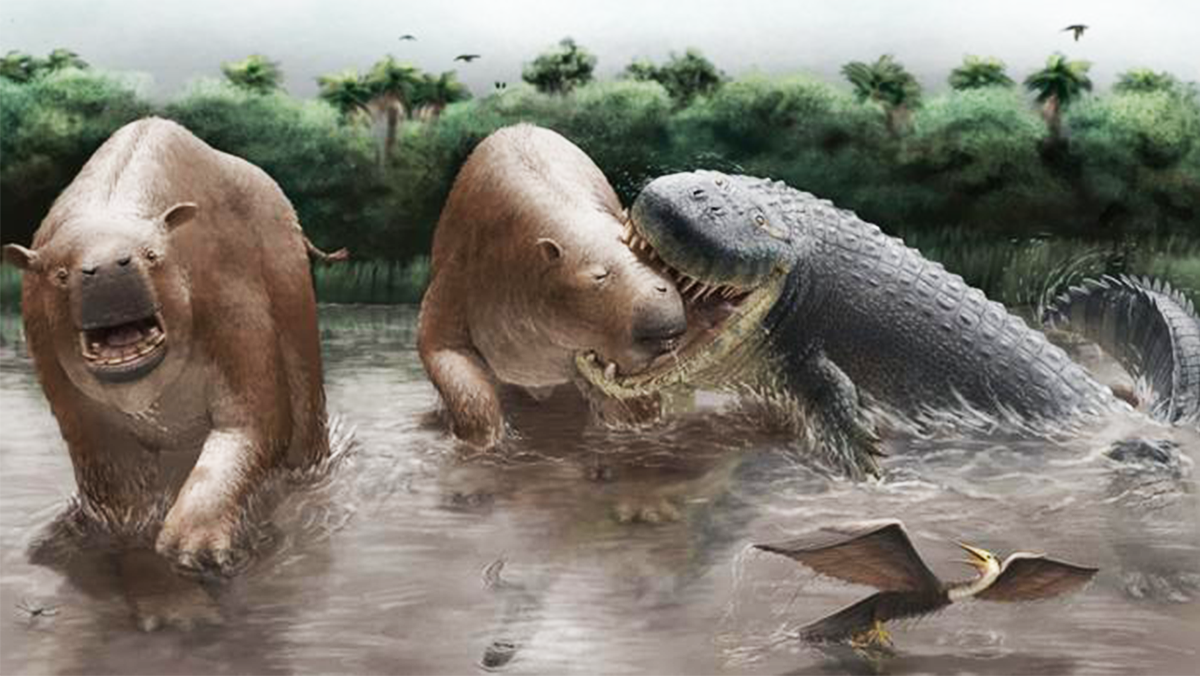
Over 10 million years ago, in the Middle Miocene, big things were happening in South America. The northwestern portion of the continent was covered by the Pebas megawetland system, a vast freshwater lake with tendrils of interconnected waterways snaking out. From this swampy cradle sprang a rich diversity of giant crocodylians, and they sat at the top of the food chain, according to a new study published in the Journal of Vertebrate Paleontology.
An international team of researchers led by paleontologists from the University of Helsinki came to that conclusion after studying fossils recovered from the region. Climbing to the apex predator spot was no easy feat. For starters, there was plenty of competition—saber-toothed marsupials, human-sized flightless “terror birds,” and giant anacondas also stalked the shores. Still, there was more than enough food to go around. “There was so much prey available that mammalian predators couldn’t have eaten it all,” study author Oscar Wilson explained in a statement.
The prey was abundant but similarly colossal—from towering ground sloths to prehistoric rhino relatives. Fossils belonging to a species from the latter group, Pericotoxodon platignathus, were some of the bones analyzed by the paleontologists, along with those from two extinct elephant-like species (Xenastrapotherium kraglievichi and Granastrapotherium snorki).
Read more: “The Rise and Fall of the Living Fossil”
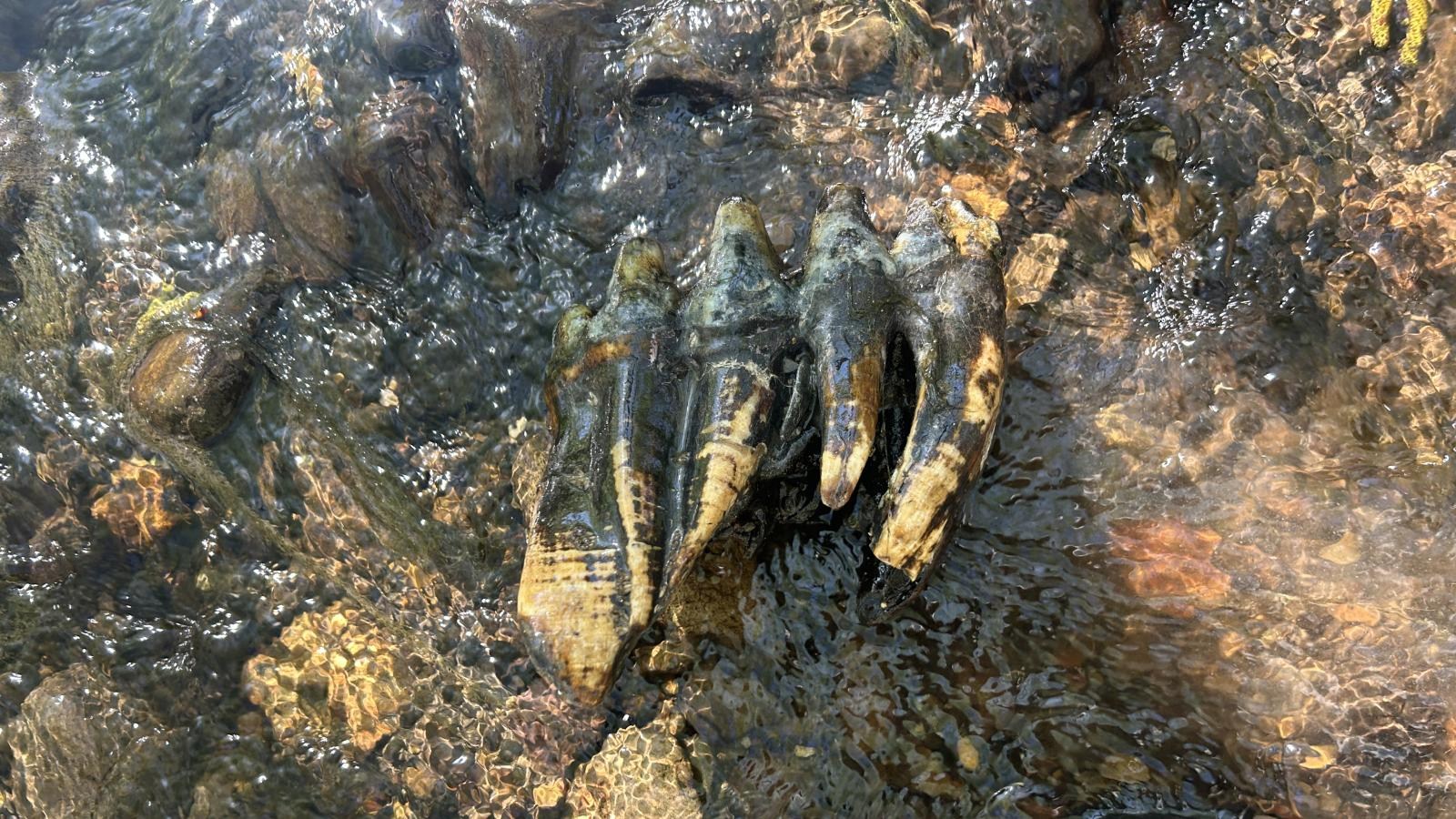
The megafauna fossils showed tell-tale signs of predation by crocodylians—circular puncture wounds primarily focused around the head, neck, and jaws of the animals. According to the team, similar wounds in similar areas are left by living crocodiles, who lie in wait, ambush their prey, and drag their heads beneath the water for the kill.
The only croc with a bite force powerful enough to leave the wounds was the massive Purussaurus neivensis, a relative of caimans. This strong-jawed crocodylian was as long as a school bus, weighed in at almost two tons, and had an appetite to match. “The frequency of marks likely made by Purussaurus suggests that it was an important predator in these tropical ecosystems,” Wilson said.
Per the team, Purussaurus played an important ecological role, not only in chomping herbivore populations down to size, but also providing leftovers to scavengers further down the food chain. Case in point: Sebecids, longer-limbed terrestrial crocodylians that lived in the same area, likely scavenged from Purussaurus’ cast-offs, researchers say.
When you take into account the fearsome predators they had to contend with, it’s a wonder South American megafauna lasted as long as they did. 
Enjoying Nautilus? Subscribe to our free newsletter.
Lead image: Miguel Hernandez