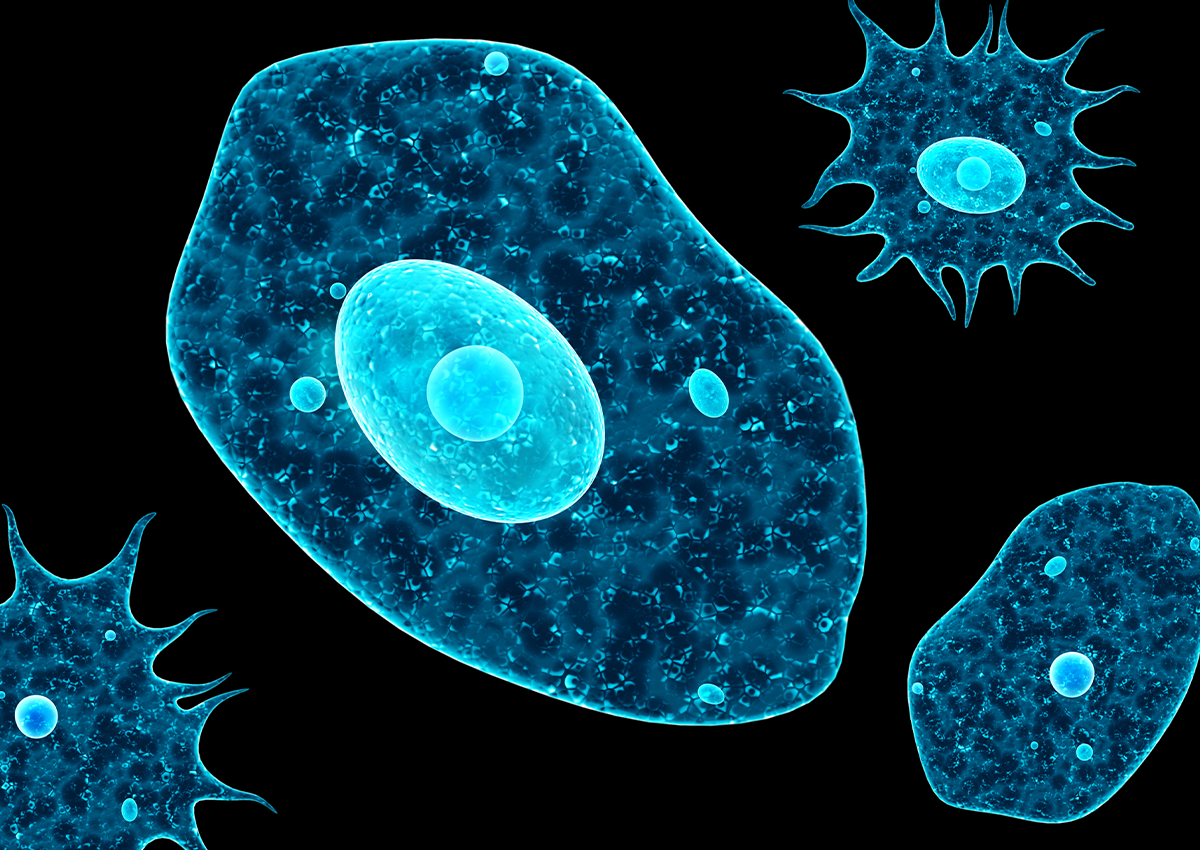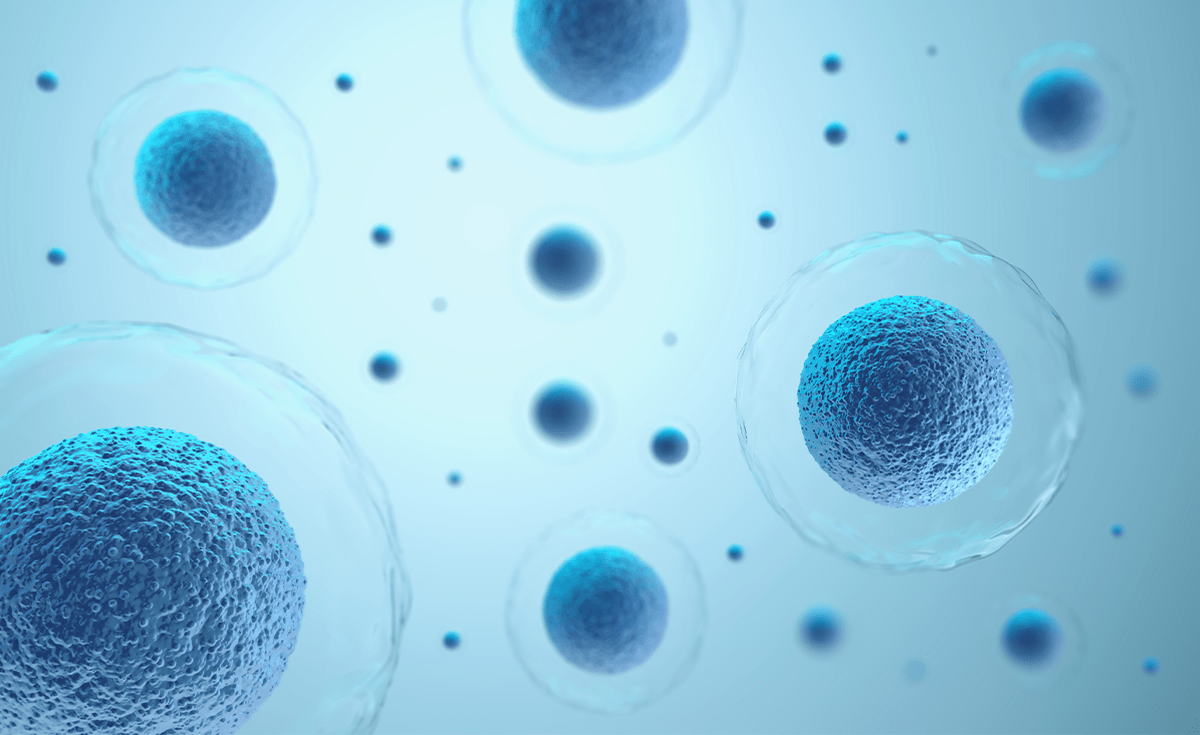
The airwaves are crackling this week with news of the first synthetic cell, constructed and cultured by researchers from the University of Minnesota, under the auspices of biotechnology nonprofit Biotic. According to an announcement from the organization, the so-called “SpudCell” consists of a 90,000 base-pair genome (these genetic building blocks split between several separate DNA plasmids), 36 enzymes, and a simplified lipid membrane.
“Unlike earlier work on minimal cells that carved down living cells, SpudCell is built entirely bottom-up from individually purified, non-living components,” the announcement, which includes an unpublished, not-yet-peer reviewed manuscript, reads. “It is the first time such a system has demonstrated a complete cell cycle.”
That’s right. The researchers, co-led by synthetic biologist and Biotic co-founder Kate Adamala, have documented SpudCell feeding, replicating its DNA, and reproducing for a few generations.
But does this mean the new, scratch-made, synthetic cell is “alive?”
Opinions appear to be split thus far. “We've replicated in chemistry what only used to be possible in biology: the complete set of behaviors of a cell,” Adamala says in a statement. “It proves that the most fundamental functions of life, like growth and replication, do not need a mysterious magical spark.” While SpudCell represents a major accomplishment if the work stands up to peer review, it is not “life created in the lab,” Imperial College London biochemist Yuval Elani told CNN. “To my mind, this is a real advance in the long-running effort to ask whether chemistry can be organized so convincingly that we begin to call it life,” she added.
Read more: “A New Way to Make Cells from Scratch”
Consisting of a mere 200 or so molecules, SpudCell is dwarfed in complexity to actual living cells, which can contain billions of molecules. And the synthetic cell has only been shown to reproduce for about five generations, many many short of what organisms require to evolve, another broadly accepted characteristic of life. In addition, it requires a constant and orchestrated input of nutrients in order to survive and reproduce. So stopping short of calling the new synthetic cell “alive” seems reasonable.
The authors of the SpudCell preprint equivocate on the point. “A common question raised in the field of engineering live [sic] from non-living components is ‘How do we know we are done?’,” they write. “The authors of this paper are partial to a definition quoting Justice Potter Stewart, ‘I will know it when I see it’.”
While this fundamental question will take more time to disentangle, SpudCell, if verified, does represent a major leap forward in synthetic biology, especially in the commercial realm. Already, genetically engineered bacterial and fungal cells are used to produce a bevy of useful substances, from insulin and vaccines to food-making enzymes and detergents. If we get to a point where researchers can indeed manufacture living cells of sufficient complexity to pull these chores off, we’ll need to address a host of ethical questions surrounding the science. 
Enjoying Nautilus? Subscribe to our free newsletter.
Lead image: Anusorn / Adobe Stock