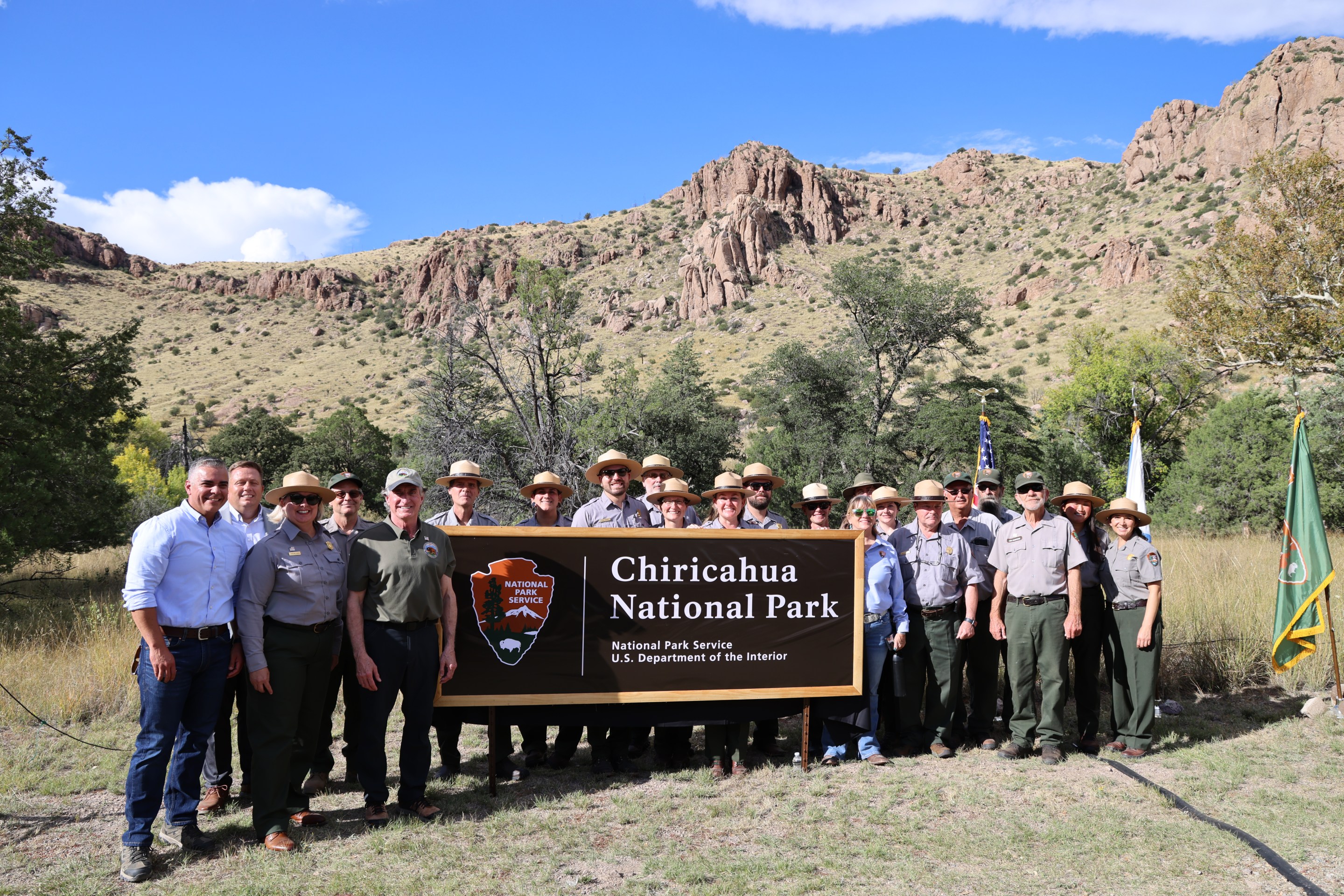
It may take a while to become as famous as Yosemite, the Grand Canyon, or Monument Valley, but the 12,000-acre Chiricahua area in southeast Arizona just became the 64th national park in the U.S.
Known as “the wonderland of rocks,” Chiricahua was shaped by ancient volcanic forces and contains a wealth of dramatic geological features. It also boasts a rich human history, including tales of the Chiricahua Apache who lived here long before colonization from the Spanish, the African-American soldiers who were stationed here in the 1880s, and homesteading families who moved here from the eastern U.S. in the late 1800s.
One highlight: Massai Point. Named after a Chiricahua Apache man born in the Mescal Mountains, the landmark features spires and columns carved into rhyolite rock (originally flowing lava) by millions of years of erosion.
With an act of Congress signed by President Donald J. Trump, the region got an upgrade from “National Monument,” which was its status for more than a century.
“While its name is changing, our commitment remains the same: Protecting this remarkable landscape and its cultural heritage while providing opportunities for visitors to experience and enjoy it for generations to come,” Jessica Bowron, Comptroller Exercising the Delegated Authority of the Director of the National Park Service, said in a statement.
Chiricahua’s change in status should mean more visitors and increased spending per visitor (people tend to stay overnight more often at parks versus monuments).
And there’s lots to do at Chiricahua. By day, visitors can wander hiking trails or take scenic drives, spotting wildlife like Coues white-tailed deer, mountain lions, and Chiricahua and Apache fox squirrels. By night, there’s the opportunity to camp out in the wilderness and indulge in some stargazing.
The new national park, now the fourth in Arizona, is what’s known as a sky island—that is, an “island” of mountain and rock rising up from the “sea” of the desert. The island as a whole sits around 6,000 feet above the Sulphur Springs Valley, though the highest point is actually outside the park: The top of Chiricahua Peak is 9,795 feet above sea level.
Of course, there’s also a conservation aspect to achieving national park status. It’s written in the original Organic Act of 1916 that one of the purposes of the parks system is “to conserve the scenery and the natural and historic objects and the wild life therein.”
Some 154 years after Yellowstone became the first national park, the number of recognized areas has now swelled to 64—but happily much of the fundamental mission remains the same. 
Enjoying Nautilus? Subscribe to our free newsletter.
Lead Image: NPS