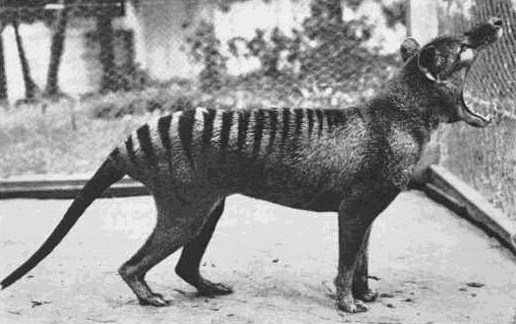
The extinction of the thylacine stings a little more acutely than the loss of other species. Unlike other extinction icons like the dodo bird, this striped predator lived into the 20th century (we even have footage of the last known surviving specimen). And there’s no ambiguity about what drove it to the brink. In the early 19th century, farmers (and later the Tasmanian government) put bounties on thylacines in an effort to protect their cattle and sheep. An estimated 3,500 were slaughtered over almost a century, and later efforts to preserve its dwindling numbers came just weeks before the last one died in captivity.
Now a new study investigating the thylacine’s bite shows they likely never posed a threat to livestock at all.
Sometimes called Tasmanian tigers or wolves, thylacines aren’t really related to either of these groups—they’re marsupials, more closely related to kangaroos. In fact, if you take a close look at the shape of their faces, you can see something of a resemblance. But evolutionary biologists from Flinders University in Australia recently conducted an in-depth analysis of thylacine skulls, and discovered they’re unlike anything seen in any other carnivorous mammals.
Read more: “To Bring Back Extinct Species, We’ll Need to Change Our Own”
For starters, thylacines have relatively large skulls for their body size, and they could open their mouths fairly wide (up to 80 degrees). Their jaws are also long, slender, and tall—definitely not suited to holding down large prey items like cattle or sheep. Instead, researchers say, these characteristics make the thylacine better suited to ambush smaller animals, like bandicoots, pademelons, and possums.
“The longer a jaw is, the faster its tip moves when an animal bites,” study author Vera Weisbecker explained in a statement. “This increases the impact of the strike. We think that the thylacine’s huge skull size allowed it to withstand these bite forces.”
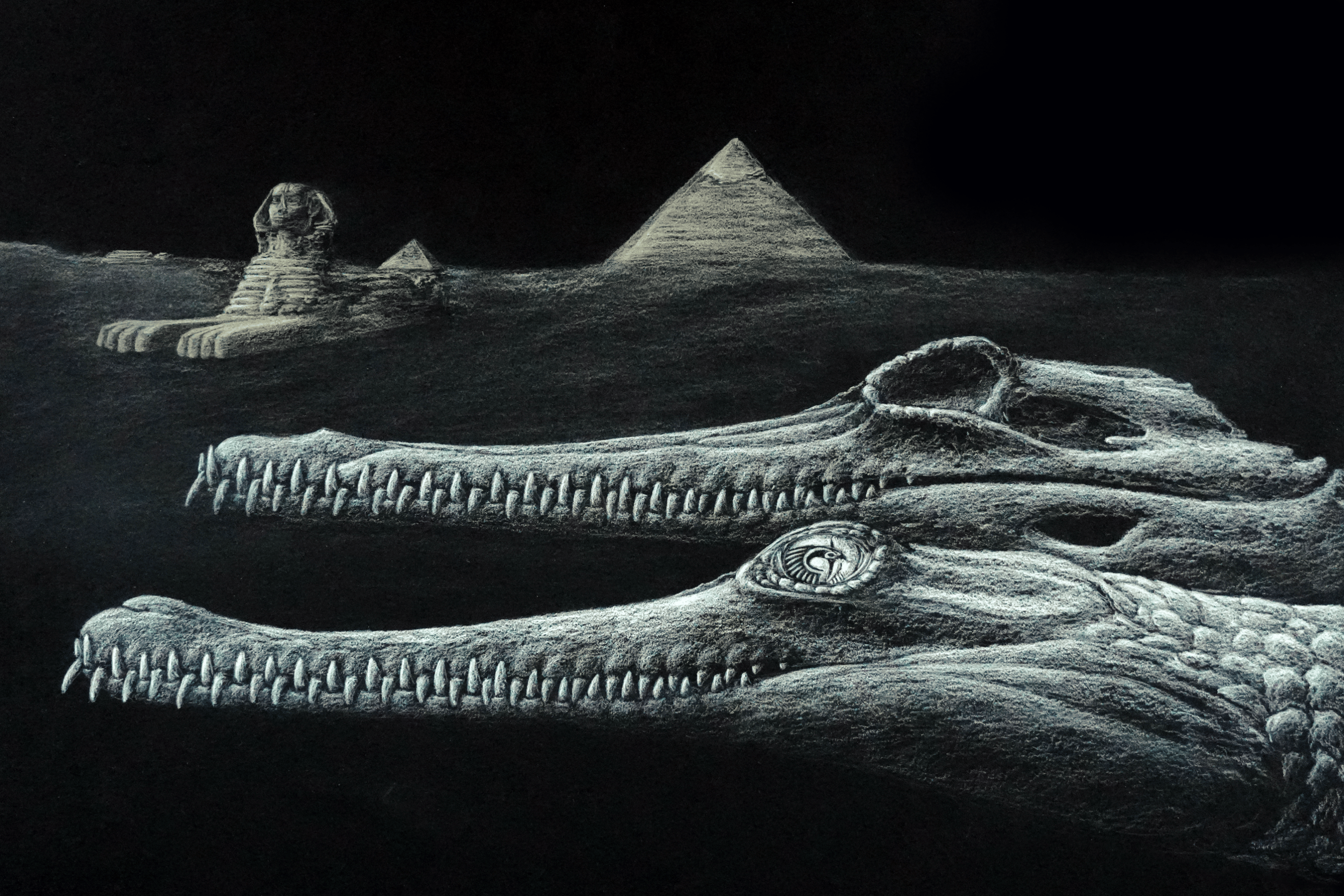
While this lethal combination of a big head and light, snapping jaws is unique among meat-eating mammals, it’s more common in other carnivorous groups. “Many crocodiles and predatory fishes have long, fast-snapping jaws used to catch agile prey like fish,” Weisbecker said. “Their jaws are often much longer, and frequently sport tall and widened tips.”
So the panic over thylacines thinning herds was just that. It’s a tragedy we’ve found out a century too late. 
Enjoying Nautilus? Subscribe to our free newsletter.
Lead Image: Dr. David Fleay / Public Domain