In 1914, a bird named Martha, aged 29, died at the Cincinnati Zoo. She was the last of the passenger pigeons. In the mid 1800s, flocks of these birds numbered in the billions. But by the 1890s, they had almost entirely disappeared due to intense commercial hunting and habitat loss.
The extinction of the passenger pigeon was a transformative loss. Bird lovers and hunters of the time began to realize it wasn’t the only bird in trouble. By the late 19th and early 20th centuries, many birds were in crisis: long-billed curlews, red knots, greater and lesser yellowlegs. Soon an unlikely coalition of sportsmen, ornithologists, wardens, artists, and politicians came together to put conservationist protections in place.
This is the story that James McCommons, a long-time environmental and travel journalist, tells in his new book The Feather Wars: And the Great Crusade to Save America’s Birds. But first he describes all of the gruesome ways these birds were done in: skinned and blown to bits, eggs pocketed, specimens displayed in cabinets, feathers plucked for hats. McCommons stumbled upon his story while working on an earlier book, and saw its relevance to our current predicament. A few years ago, studies began to roll in that pointed once again to vast losses in North America: A third of birds had vanished. McCommons wanted to inspire hope that we could pull off another miracle of conservation.
I recently spoke with McCommons about the wars between sportsmen and subsistence bird hunters that broke out in the swamps, the woman who created the first bird of prey refuge, and what gives him hope for bird conservation today.
Some of the most effective bird conservationists in the late 19th century were hunters, who were killing birds, as you write in the book. Who were these conflicted do-gooders as you called them?
Today, most bird-watchers are what the forest service and the government calls non-consumptive users. They’re folks who go out and enjoy nature, but don’t fish, don’t hunt. But yes, back in the late 19th century, a lot of bird folks were hunters. In the Audubon movement, too.
But the hunters weren’t just one thing. There were the market hunters—people who were purely hunting for profit—and then another group that emerged in the 1880s, which were the sport hunters. These were folks who were going out there for recreation. They were trying to recapture the pioneer spirit. And [Theodore] Roosevelt was part of that, too.
Those two groups really were in conflict. The sport hunters promoted game laws and bag limits. Subsistence hunters and market hunters wanted nothing to do with that. Violence often broke out between them. They were out there in the swamps, fighting with each other. The subsistence hunters were coming in and burning down the clubhouses of sportsmen. The sportsmen were often outsiders. They were often wealthy. They had access to power and lawyers. So they were very different groups.
Read more: “The Woman Who Saw Birds as Individuals”
You found that science was also contributing to birds’ demise back in the late 1800s. Why was that?
Killing birds was the only way to study them. I see why they were doing that back then. There was a lack of good field guides. There was a lack of good optics. There was this whole period of ornithology that was all about classification. That’s how you study birds. You brought them in, measured them, and dissected them. This is still important work. But as field guides improved, as binoculars improved, there was no reason to be collecting birds in this way.
Our science is so much better today, including community science. For instance, while researching the book, I went to the Cornell Lab of Ornithology, which developed the Merlin app, a global community science bird guide. Everybody talks about that app. Everybody uses it. I use it too. But I also ended up interviewing some biologists for the book who still find legitimate reasons to collect specimens.
The extinction of the passenger pigeon was one of the major wake-up calls for the bird conservation movement of the time. Does real progress in conservation require catastrophe?
Sometimes it does. We’re talking about human beings, and they have their prejudices. For example, the whole idea that we shouldn’t trust experts is on the rise today. Sometimes I feel pretty pessimistic. We’re going in the wrong direction in a lot of places. We overuse pesticides, knowing the consequences, for instance. But I wrote the book partly to remember the victories.
The disappearance of the passenger pigeon, this spectacle of nature, no one will ever see it again. The people of that period watched it disappear during their lifetimes. Some of the conservationists of that period, they really saw how bleak it could get unless something was done. So it was a motivator.
You describe so many conservationists who had troubled relationships to human rights and race, including Audubon, who held slaves and had racist views that may have exceeded those of his time. This is a legacy we’re still coming to terms with.
Yes, it’s all coming up now. The National Audubon Society decided it was gonna keep its name, but it’s probably not a closed issue. A lot of these local chapters have changed their names. Even the local Audubon Society in Marquette, Michigan, where I live, has changed its name. And the American Ornithologist Society came out and said in 2023 that they’d change the names of birds, particularly sparrows, who were named after people, because some of those people were enslavers with racist or misogynist ideas.
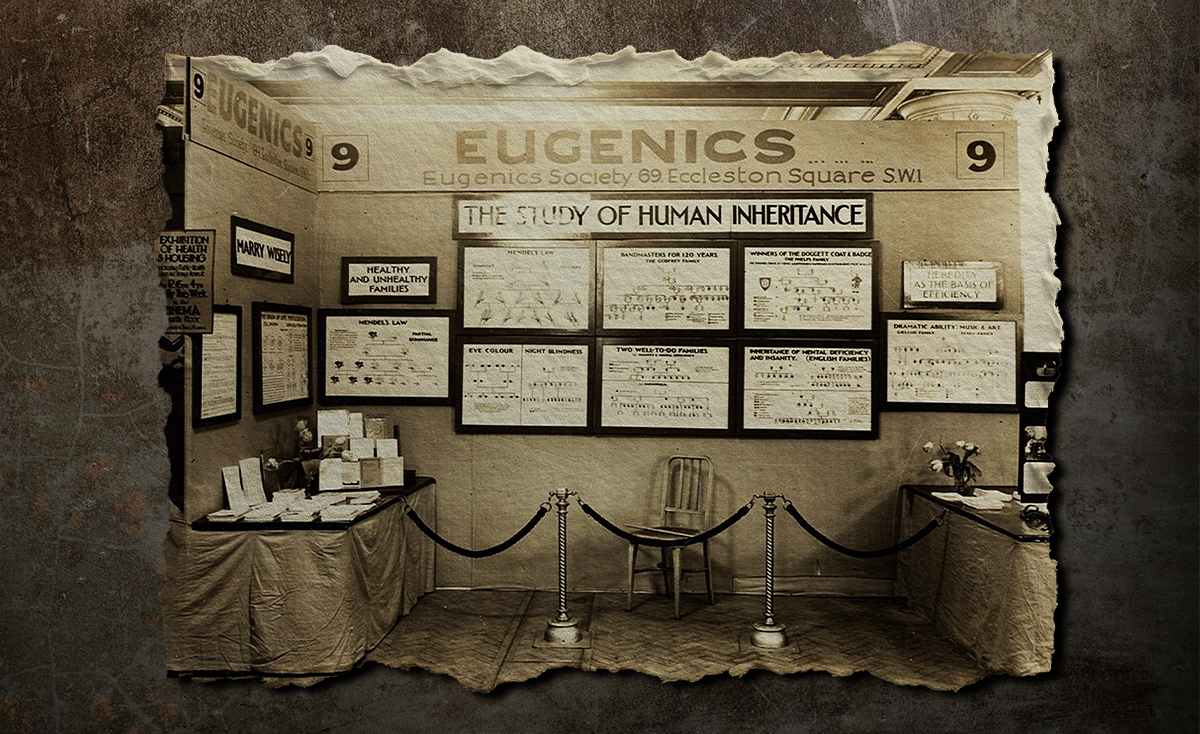
It wasn’t just Audubon. Madison Grant was another conflicted conservationist. He was one of the trustees of the American Museum of Natural History, and he wrote the book, The Passing of the Great Race, which promoted eugenics. Hitler called that book his Bible. William Hornaday, who saved the American buffalo and was the first director of the Bronx Zoo, displayed an African man in his zoo. So there’s some very dark history to this. A lot of them were very sexist, too. They used to call the Audubon Society sentimentalist because many of the Audubon state organizations were led by women.
Can you tell me about some of the women who spearheaded the efforts to protect birds, whose fascinating stories you tell in the book?
Florence Miriam was one of them. She wrote a book called Birds for the Opera Glass. She grew up in a family in New York state, in the southern Adirondack mountain region. They were all into science. The mom was an astronomer. Her father was interested in glaciers. And she was interested in birds. Her brother, Hart Miriam, ended up becoming the chief of the Biological Survey, which is later the U.S. Fish and Wildlife Service. Hart was always collecting birds and specimens, and while Florence was growing up, she helped with that somewhat. But when she went off to Smith College, she started an Audubon club there and an anti-bird hat movement. She’d been writing some stories for magazines about observing birds, not shooting them. And then she comes up with this book, which really is the first field guide. She’s the first person to use the term “birding.”
Then there’s Mabel Osgood Wright—she started the Connecticut Audubon Society. She also became an important person in the national Audubon. One of the important things she did was to take 10 acres and make it a bird refuge. So she started the first private refuge for birds in America, and it’s still there today in Fairfield, Connecticut, right on I-95. All you can hear is the traffic, but birds still go there. She was important because she said, “You can do things in your backyard to attract birds, and help them that way.”
The third person is Rosalie Edge. This is around the 1930s. She’s the one who confronts the Audubon Society and says, “You’re not protecting all birds, and you’re involved with some things that you shouldn’t be.” What she was really talking about was protecting birds of prey. At that time, there was still this idea that there were good birds and bad birds, and the birds of prey were the bad birds. Then she goes to Pennsylvania because she hears that there’s all these hunters going up on this ridge and shooting at migrating hawks as they’re flying by. She ends up raising money—she’s wealthy herself—and she’s able to buy this ridge. That becomes Hawk Mountain, the first bird of prey refuge. It’s an iconic place that birders love to go to. She was a real pistol and a reformer.
Read more: “A Third of North America’s Birds Have Vanished”
You wrote in the preface that the early bird conservation movement had all sorts of people—heroes, martyrs, villains, conflicted do-gooders. Can you tell me more about the martyrs?
These were some of the game wardens. There was Guy Bradley. The welcome center in the Everglades National Park is named after him. Bradley was a plume hunter when he was a teenager. This is in the 1880s and 1890s in Florida. He was shooting birds because it was a way to earn cash for his family. And he moves down to Flamingo, which was like the end of the world at that point. You couldn’t get there except by water. It’s full of a lot of roughnecks and people like that who are just eking out a living. It’s also mosquito infested. It was a rough place, with some criminality to it. Guy was down there, and he ended up deciding that he didn’t want to be a plume hunter anymore, because these birds were disappearing. He becomes a game warden through the sheriff’s department, which is a brand new thing. His neighbors see him as a turncoat. And eventually, during an arrest, he’s killed by one of his neighbors. He became a martyr for the bird movement because his salary was being paid by the American Ornithologist Union.
He wasn’t the only one. There was a warden who was murdered on the east coast of Florida. His body was chopped up and thrown out to the sharks. And there was another game warden killed up in South Carolina. Then, during these duck wars, people got shot on both sides. These were gang wars. The fight to save the birds got very bloody.
You write in the book that people in the United States once assumed nature was infinite and indestructible. Has anything changed?
Back then, they thought there’d always be more trees to cut down. There’d always be more buffalo. There’d always be more birds. It was this weird mindset that today, we’re like, “How could they have imagined that?” But here we are, doing what we’re doing, polluting, thinking that we’re gonna have more Earth. As I mention at the end of the book, human influences are found everywhere, even in the most isolated places.
Obviously, there’s more of a culture of conservation today than there was back then. It was a new concept for a lot of folks at that time—the idea that we should regulate things to make sure they don’t disappear. A spiritual transformation also had to take place to instill this idea that we needed to become caretakers. Some of those ideas stuck and have become ingrained today. At the same time, the problems remain. They don’t get solved. They just get different.
Are you optimistic about bird conservation today? Do we have the same sense of urgency now that they had back then?
I don’t know if we have the same sense of urgency yet. There’s a lot of money being poured in, unlike back then, a lot of great science being done. But these studies that have been coming out over the last three or four years show that there are some big issues that need to be addressed. Habitat loss has always been a problem, and pesticides. But now there are these new ones called neonicotinoids that we’re using, which may be related to the loss of insects across the country, which most birds feed on at some point in their life cycles.
Even bigger problems right now are house cats and window glass. The glass issue has just come to the fore in the last 20 years. The conservation organizations couldn’t agree on the science that was saying more than a billion North American birds each year are killed by flying into window glass. That’s crazy. Some of that can be mitigated, but it’s gonna take time to change our built environment. I think everybody has heard the bump on the glass.
When it comes to cats, particularly in warm climates, there’s a lot of feral cats. I see ‘em every day here in my tiny town in Texas. That’s a whole other emotional issue, how to handle that. I don’t make any recommendations in the book, but for people who own cats, those cats need to be kept indoors or only allowed outside under supervision. If we did that, you’re talking about saving half a billion to a billion birds. So we need to change the pet culture. It needs to become uncool to let your cat roam around outside by itself. Because cats will do what cats do. And it’s not just birds. It’s amphibians, reptiles, rabbits. They’re hunters, they’re carnivores, and again, that’s what they do.
I’m hopeful that these things can change. I’m old enough to remember when people just used to let their dog outside to do its business in the middle of a city on the street, and then the dog would come back in the apartment. Everyone would shrug. Well, it’s not cool to do that anymore. It changed fairly quickly from the pooper-scooper laws that New York City put out in the late 1970s. This can change too. It’s just gonna take time. 
Enjoying Nautilus? Subscribe to our free newsletter.
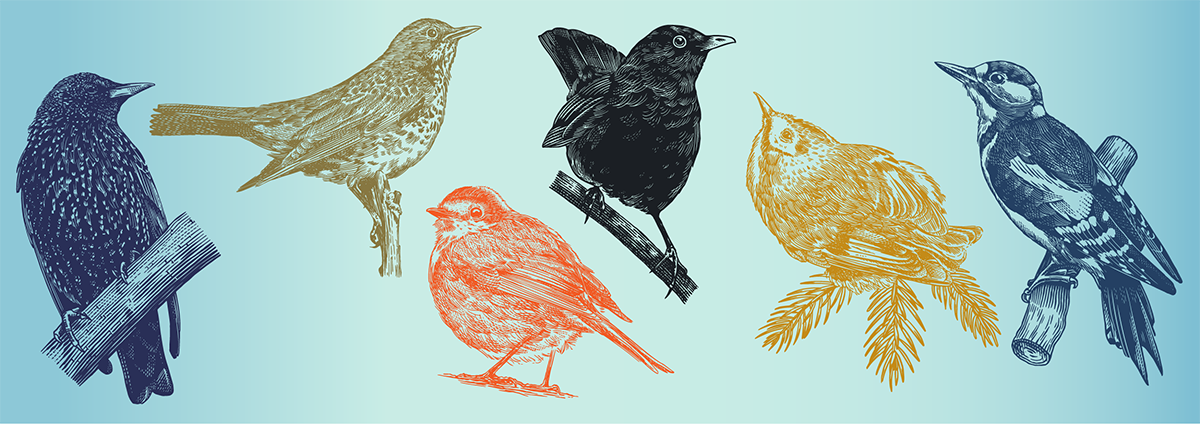
Lead image: Arthur Balitskii / Shutterstock