Rabies is a viral disease that has plagued humanity for generations. Just last month, researchers in Canada published a case report about an 11-year-old boy who died of rabies about 5 weeks after he woke up with a bat on his face and nose in northern Ontario in 2024. A rabies vaccine could have saved his life, but just 150 years ago, such options weren’t available to people who experienced such brushes with rabid animals.
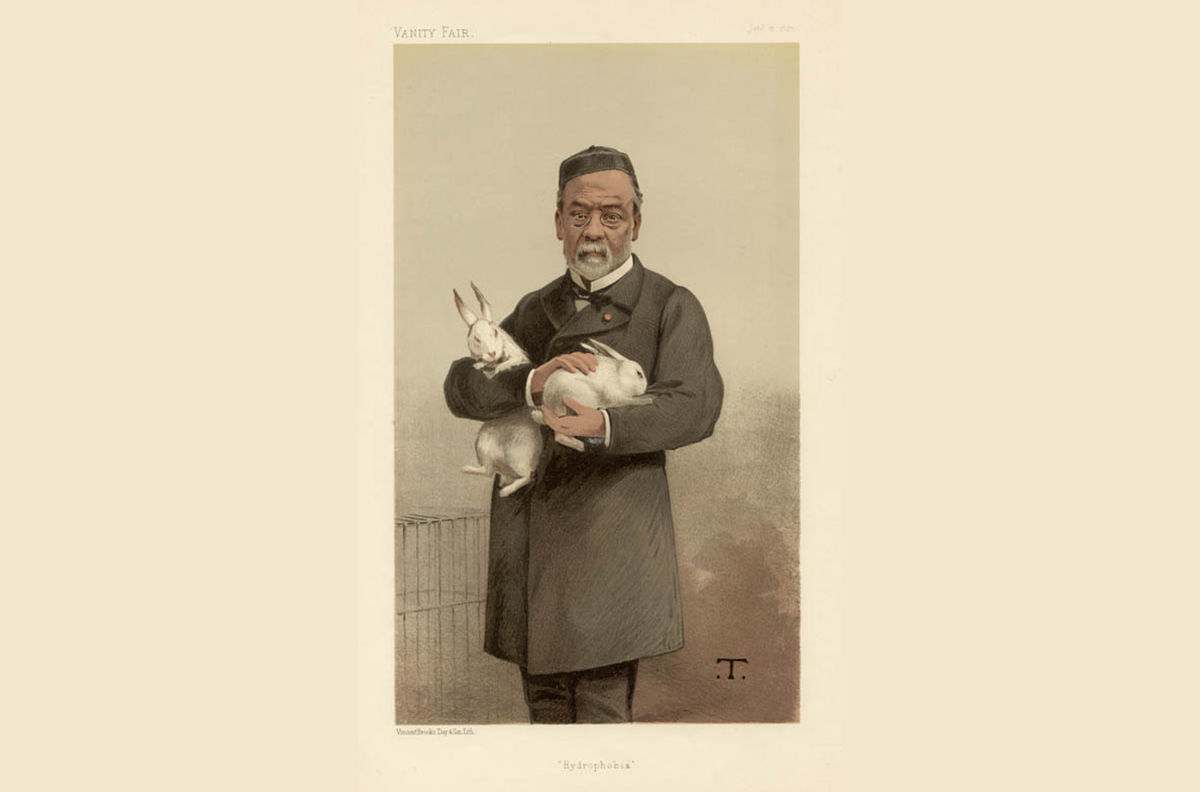
That changed on July 6, 1885, when a 9-year-old French boy named Joseph Meister was the first person to be treated with an experimental rabies vaccine developed by none other than the father of modern microbiology, Louis Pasteur, in Paris.
Meister was bitten 14 times by a rabid dog in Alsace two days earlier, and his mother Marie-Angélique had heard that the famed chemist was testing a rabies vaccine on dogs in Paris. She traveled to the metropolis and begged Pasteur to save her son. Initially the scientist balked at the idea, but the boy was near death and an influential Parisian physician named Jacques-Joseph Grancher convinced Pasteur and his colleagues to administer the vaccine to Meister.
Read more: “The Man Who Drank Cholera and Launched the Yogurt Craze”
Starting on July 6, Pasteur gave about a dozen doses of the vaccine, initially developed by his assistant Emile Roux, to Meister over the course of the next 10 to 11 days. Aside from the experimental nature of the vaccine, this represented a legal breach by Pasteur, who was not licensed as a physician. Despite these obstacles, less than a month after he was bitten, the boy had recovered.
In the ensuing years, hundreds of people would travel to Pasteur’s laboratory in Paris from all over the world to receive the groundbreaking rabies treatment. The success of the treatment helped build the Pasteur Institute, which was founded in 1887 and inaugurated in 1888. Pasteur had revolutionized science’s understanding of fermentation, improved food storage and sterilization by developing a process that would bear his name, and disproved the long-standing theory of spontaneous generation. But his work with the rabies vaccine cemented his status as an internationally renowned researcher.
Grancher gave the inaugural address at the ceremony to formally launch the Pasteur Institute, and Joseph Meister would become caretaker of the institute as an adult, a role he inhabited until his death in 1940 at the age of 64. 
Enjoying Nautilus? Subscribe to our free newsletter.
Lead image: Théobald Chartran / Wikimedia Commons