NASA is catching some heat after it announced the crew of the Artemis III mission, which will launch in 2027 and attempt to “carry out a series of objectives in low Earth orbit designed to demonstrate critical systems needed for future lunar landings, beginning with Artemis IV,” according to the space agency. The glaring omission from the four-person crew? A woman.
This oversight is especially notable considering the crucial role played by NASA astronaut and engineer Christina Koch, the Artemis II crewmember who became the first woman to travel beyond low-Earth orbit when she and her fellow space travelers swung around the moon and back this year.
Read more: “The Woman the Mercury Astronauts Couldn’t Do Without”
But on this day in 1963, the Soviet Union was ahead of the game.
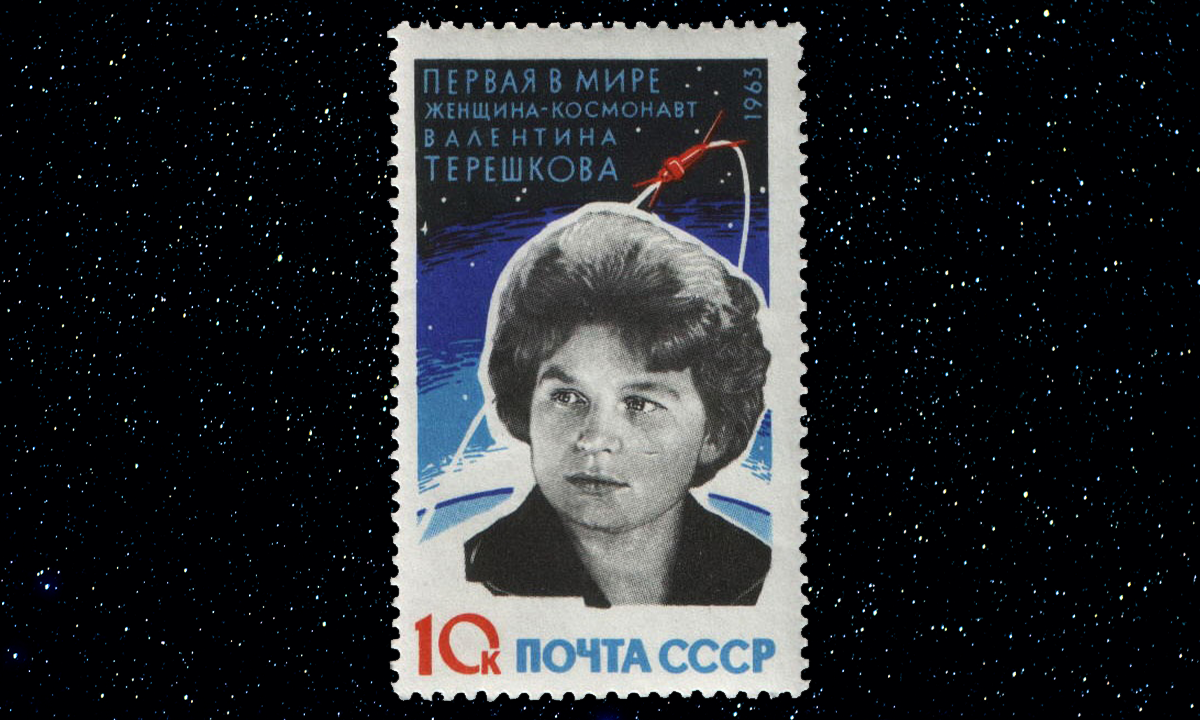
On June 16 that year, the Vostok-3KA No. 8 spacecraft lifted off from the Baikonur Cosmodrome in Kazakhstan. On board was cosmonaut Valentina Tereshkova, who would become the first woman to experience spaceflight. Then 26 years old (still the youngest woman to orbit the Earth), Tereshkova completed 48 orbits around the Earth in the cramped Vostok 6 capsule, which stayed aloft for nearly three days. She remains the only woman who accomplished a solo space mission.
Tereshkova’s journey was not without its bumps. Soviet state television broadcast glimpses of the mission live as the cosmonaut chatted with Premier Nikita Khrushchev, made entries into her flight log, flew the spacecraft, and snapped photos. After she returned to terra firma, Tereshkova reported vomiting while trying to force down the food that had been packed for her and bemoaned the fact that mission organizers had forgotten to include a toothbrush with her gear.
But those blips aside, the cosmonaut returned safely to Earth having made history and in that single mission logging more flight time than all the astronauts sent into space by the United States up to that point combined. Khrushchev awarded Tereshkova the Order of Lenin and the Hero of the Soviet Union later in June. She would go on to earn a Ph.D. in aeronautical engineering and become a representative in the State Duma, the lower house of the Russian legislature, where she still serves even as she is sanctioned by the U.S. and European Union governments while Russia’s war with Ukraine drags on.
The U.S. wouldn’t send a woman into space until 20 years after Tereshkova’s trailblazing flight. In 1983, mission specialist Sally Ride became the first U.S. woman in space aboard the seventh Space Shuttle mission. 
Enjoying Nautilus? Subscribe to our free newsletter.
Lead image: Post of the Soviet Union / Wikimedia Commons