Our brains are staggeringly complex, which makes studying them difficult. Animal models don’t always faithfully replicate their functions, and researchers can’t go around taking samples from humans, so what’s a neuroscientist to do?
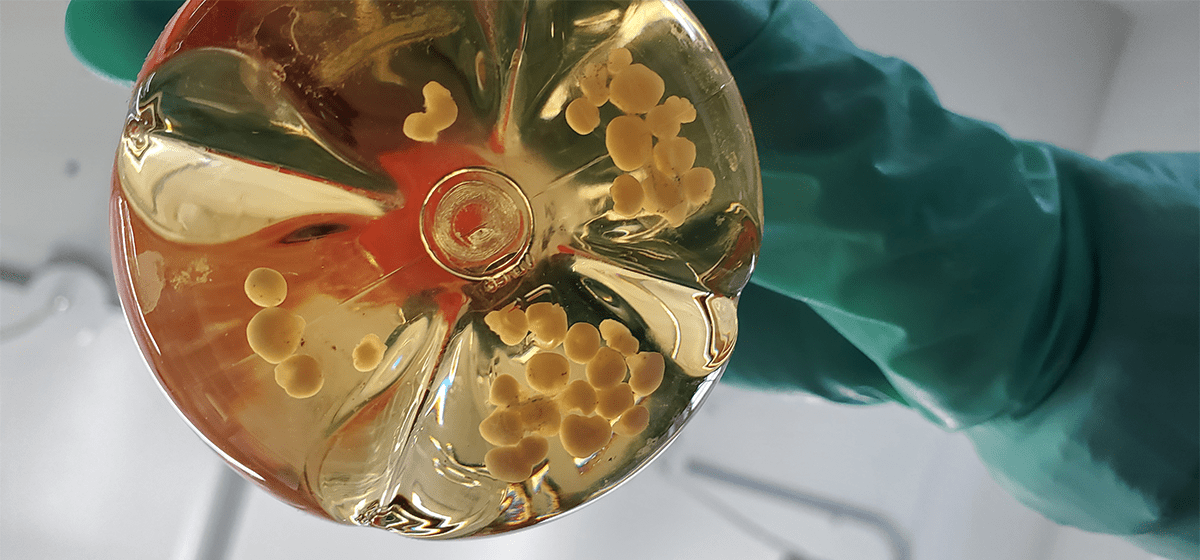
Use cerebral organoids—cultured balls of cells that more closely mimic human brain tissue.
These mini-brains are cultivated from embryonic stem cells, chemically nudged to transform into neural tissue and given three dimensions to grow. In a new study published in Nature, scientists are documenting how they develop in the fourth dimension: time.
Most brain organoids are cultured for specific experimental purposes (ranging from studying the neurodevelopmental impacts of Zika virus to playing Pong). Once they’ve served those purposes, they’re discarded. Now, an international team of scientists has kept them living, growing, and maturing for five years and counting.
Read more: “What the Tiny Cluster of Brain Cells in My Lab Are Telling Me”
Along the way, they had to come up with new culture media to support the brain organoids’ burgeoning neuronal activity. They then sampled the tissues at different points in time to see how they were progressing, and found the same kind of developmental markers expected from normal human brains. Different cell types appeared in the appropriate order, the complexity of neural connections increased, and their genes switched on and off at predictable times.
In fact, after their first “birthday,” researchers observed milestones that normally only occur postnatally. “The cells are outside the body, yet they still follow approximately the same developmental timeline as we do—and even more closely than we’d anticipated,” study author Noelia Antón-Bolaños of Utrecht University said in a statement. Not bad for a disembodied mini-brain.
The team also discovered that more mature brain cells maintained some kind of developmental “memory” (distinct from the conceptual memory our complete brains are capable of; these organoids aren’t complex enough for that yet, most likely). When they mixed older organoid cells with younger ones, the resulting chimera was capable of producing new neurons, ones that appeared more mature.
“When we dissociated an older organoid and allowed the cells to grow again, they produced the cell types associated with a late developmental stage,” Antón-Bolaños explained. “Yet when we combined older cells with younger cells, the older cells regained the ability to produce neurons—but only the types associated with later stages of development.”
It’s an exciting finding. Our brains owe their complexity in part to their relatively delayed development. Unlike many other mammals, we emerge from the womb unable to feed ourselves, walk, or even hold our heads upright. Now these more seasoned organoids can shed light on what happens inside our brains during our slow burn to brilliance. 
Enjoying Nautilus? Subscribe to our free newsletter.
Lead image: NIAID / Wikimedia Commons