Snake bites happen in the blink of an eye. Some can strike fleet-footed rodent prey in a flash of scales and fangs that lasts a mere 60 milliseconds. An action so quick, though potentially deadly, is mysterious simply because it defies careful consideration. Until now.
Researchers have recorded the lightning-quickness of snake bites with two high-speed cameras recording at 1,000 frames per second. Publishing their findings in the Journal of Experimental Biology, an international team of scientists captured 36 venomous snake species biting a faux prey item made of ballistics gel. They used 3-D coordinates to compare the style and motion of the strikes as measured by several variables, including velocity, acceleration, contact angle, and gape angle, to name a few.
They found that snakes in family Viperidae, so called vipers, were able to reach higher peak velocities than snakes in family Elapidae, which contains the king cobra, black mamba, and other species.
The researchers also reported these gruesome snake bite facts. Elapids bite victims repeatedly to pump as much venom into them as possible. And one member of family Colubridae they recorded, a species native to sub-Saharan Africa called the Fischer's cat snake (Toxicodryas pulverulenta), thrashed its jaws from side to side in order to rip a gash in its victim. This, of course, was so it could deposit the maximum volume of venom into the wound.
Although the researchers helped generate unprecedented insight into the interesting realm of snake bites, they likely did not do much to quell the fears of ophidiophobes.
Here’s a viper bite:
And here’s that bite from a Fischer’s cat snake:
Enjoying Nautilus? Subscribe to our free newsletter.
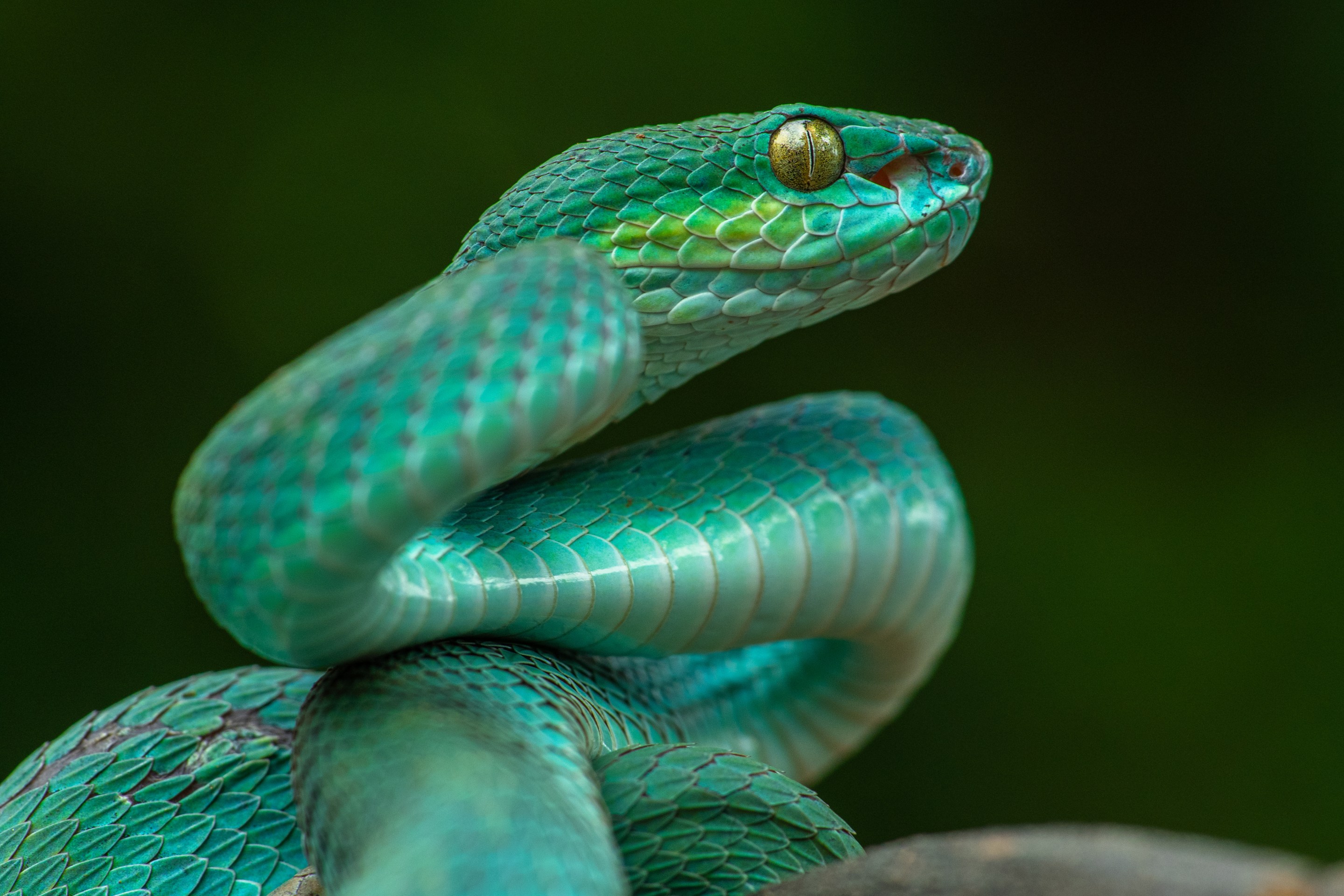
Lead image: Marzufello / Shutterstock