
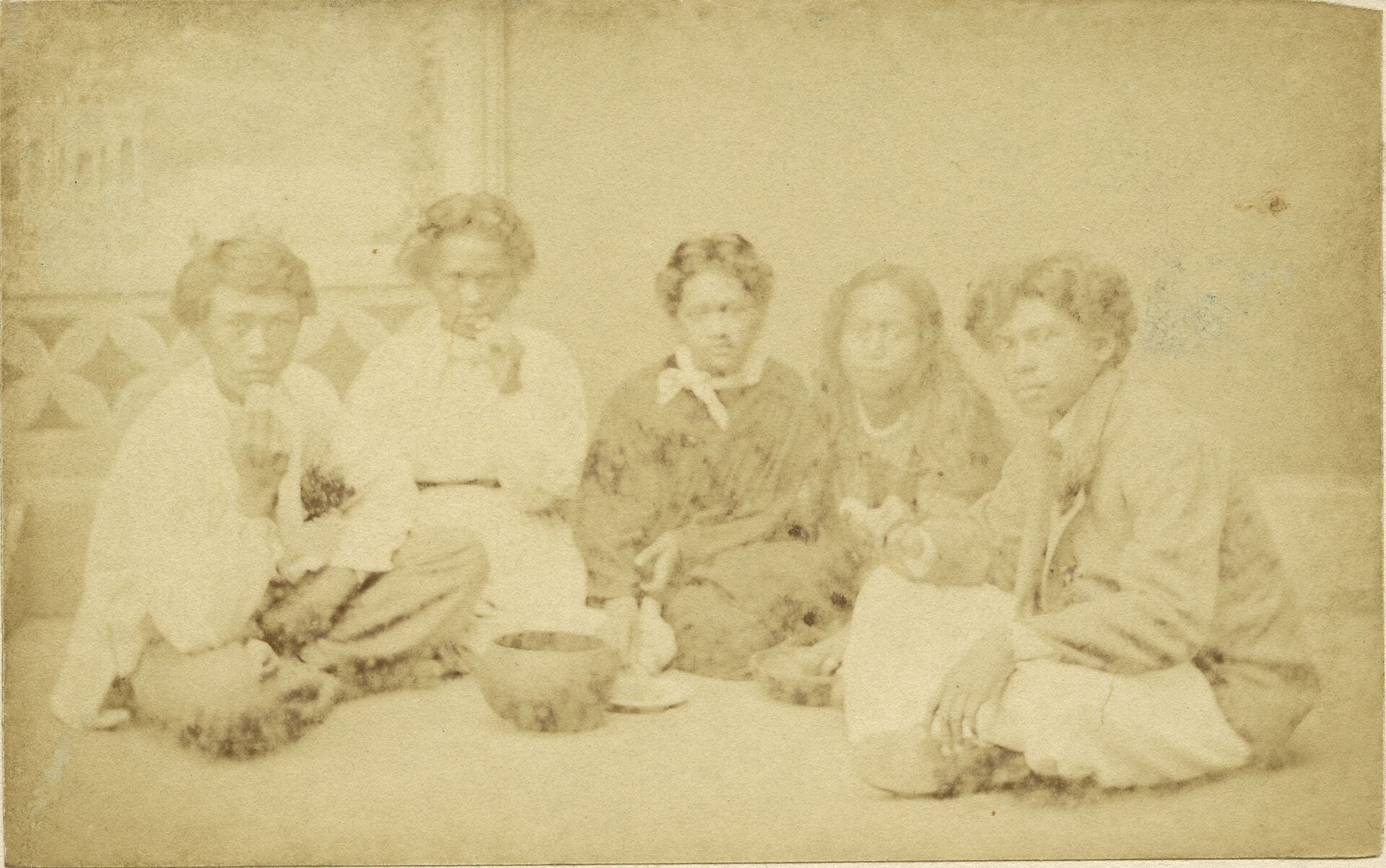
Hawaii is one of the most isolated islands on Earth, surrounded by vast oceans for thousands of miles on every side. And yet humans have been living there for nearly a millennia. They’re part of the Polynesian diaspora. This culture of ultravoyagers embarked on their own age of exploration while Europe was still mired in the Middle Ages, colonizing the tiny islands dotting the South Pacific without the benefit of metal tools, navigational equipment, or a written language. Now, a new study published in Science Advances is better defining their genetic history.
“What we uncover in this paper is where the Native people of Hawaii had come from,” study author Alexander Ioannidis of Stanford University said in a statement. “Hawaii is the only Polynesian island in the Northern Hemisphere, so it’s a long way from everything.”
Read more: “Hawaii’s False Killer Whales Are Wasting Away”
After excavating the genomes of Native Hawaiians for clues, Ioannidis and a team of geneticists and anthropologists were able to track their origins some 4,400 miles away to Easter Island. Previous genetic research conducted by the team allowed them to look even further back in time, retracing the path of the diaspora that eventually wound up in Hawaii. Polynesian peoples spread to Fiji and Tonga, then pushed east to the Cook Islands, Tahiti, and Mangareva. They settled on Easter Island in the early 1200s, but they didn’t stop there.
According to the team, generations of island-hopping left their mark on the genomes of these ultravoyagers, especially the Native Hawaiians at the end of the line. When a smaller subsection of a population settles in a new place, the founders of the new colony only carry a fraction of the population’s gene pool. The result is a genetic bottleneck (called the founder’s effect) that can magnify the frequency of previously rare genes in the following generations, turning uncommon alleles into common ones.
The team determined that founding populations grew rapidly following settlement, preventing the new gene pool from being swamped by future migration. Additionally, because the genomes of Native Hawaiians passed through chains of these bottlenecks en route to their final destination, it compounded the founder’s effects.
“By the time you’ve gotten all the way to Hawaii, you’re at the end of a series of founder effects, so it’s really intense,” Ioannidis explained. “What we discovered is in the Eastern Polynesians, such as Native Hawaiians, the founder effects are more than an order of magnitude, so more than 10 times, larger than what we have in the populations of European descent we’ve studied so well.”
These European bottlenecked populations (including the Finnish and the Amish) have slightly elevated risks of developing certain genetic disorders, and Native Hawaiians are no different. The team identified three deleterious alleles that occur at a slightly higher frequency (between 2-4 percent), which cause conditions like dislocated lens in the eyes, vision loss, and kidney failure.
According to the researchers, it’s a problem that needs to be addressed. “We don’t have recommendations for genetic testing, and there’s no reimbursement from insurance because these are conditions we don’t even know about,” Ioannidis said. “This is a population that should be getting research resources and attention from geneticists even more urgently.”
Their ancestors conquered the oceans using nothing more than what grew on their islands and an oral navigation tradition, it’s the least we can do. 
Enjoying Nautilus? Subscribe to our free newsletter.
Lead Image: National Library of New Zealand / Wikimedia Commons