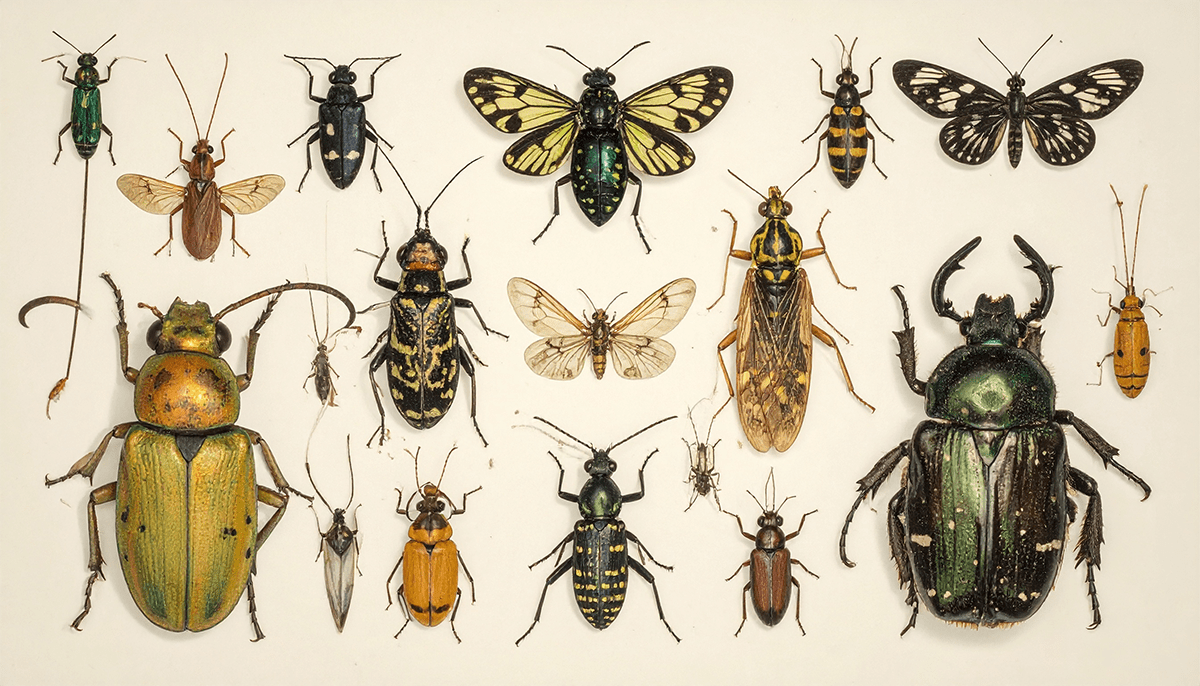
With their highly adaptable segmented body plans, small sizes, and quick generation times, insects have shown a remarkable ability to adapt to almost any environment. In fact, they’re the most diverse and abundant animal groups on Earth, living on every continent and biome. But we still don’t know how many species there are. Current estimates range around 5.5 million, but only around 1.2 million are known to science. And according to a study published today in the Proceedings of the National Academy of Sciences, there could be a lot more than we previously thought.
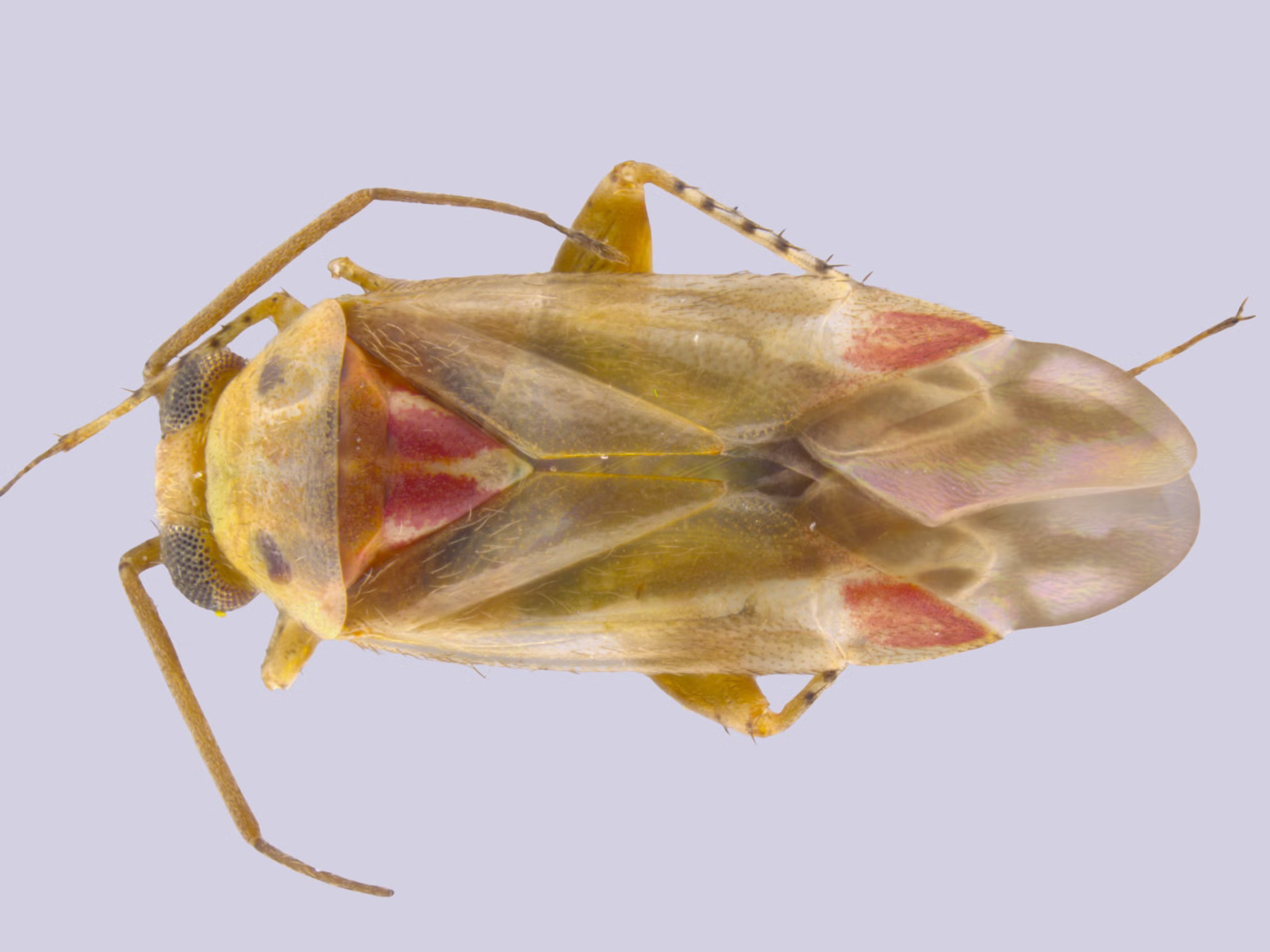
Entomologists from Cornell University arrived at that conclusion after taking a genetic census of parasitoid wasps in Costa Rica’s Área de Conservación Guanacaste (ACG), a massive nature preserve in the northeastern corner of the country. These wasps lay their eggs in caterpillars, and when they hatch, the larvae devour the caterpillars from the inside and emerge as adults. As part of their intense sampling, researchers collected new adults as they emerged from their hosts and used tent traps to capture others, along with plenty of non-wasp insects.
Read more: “Why I Traveled the World Hunting for Mutant Bugs”
Altogether, their efforts yielded more than 1.6 million individual specimens representing 54,000 insect species, including 1,414 wasps (as determined by DNA sequencing). Using statistics, the team determined the ratio of wasp species they detected compared to the number of potentially undetected species and then applied that to the 54,000 other insect species. That gave them a ballpark figure of around 333,000 insect species living in the ACG.
To estimate global insect diversity, the team extrapolated further, comparing the number of different species of trees in the AGC (1,200 to 1,500) to the tree species diversity worldwide (about 73,000). That gave them a final conservative count of around 14 to 20 million insect species on the planet—or around three times the current estimates.
“Our results point to a large number of undescribed insects, those without a name,” study author Laura Melissa Guzman said in a statement. “With recent reports of insect declines, there could be many species that are declining that we haven’t even discovered.”
It’s an important finding because, as Guzman says, “we cannot protect species if we don’t know that they exist.”
But identifying new species is the second step. The first is understanding the staggering scope of what’s missing. 
Enjoying Nautilus? Subscribe to our free newsletter.
Lead image: Alfiyah / Adobe Stock