Scientists examining rotting fruit in German orchards in 2025 noticed something odd—writhing masses of hundreds of tiny nematodes, assembling themselves into living “towers” that stretched upward seemingly in search of … something. According to their research, published in Ecology and Evolution, that “something” was likely a beetle and the worms were trying to hitch a ride.
Such towering behavior had been seen previously, but only in a laboratory; this was the first time scientists witnessed it in the wild. Earlier research revealed that touching the undulating towers with an instrument caused them to latch on and break away from a pear. Additionally, introducing fruit flies into the mix showed they could do the same thing with the passing leg of a small insect. So what about something larger?
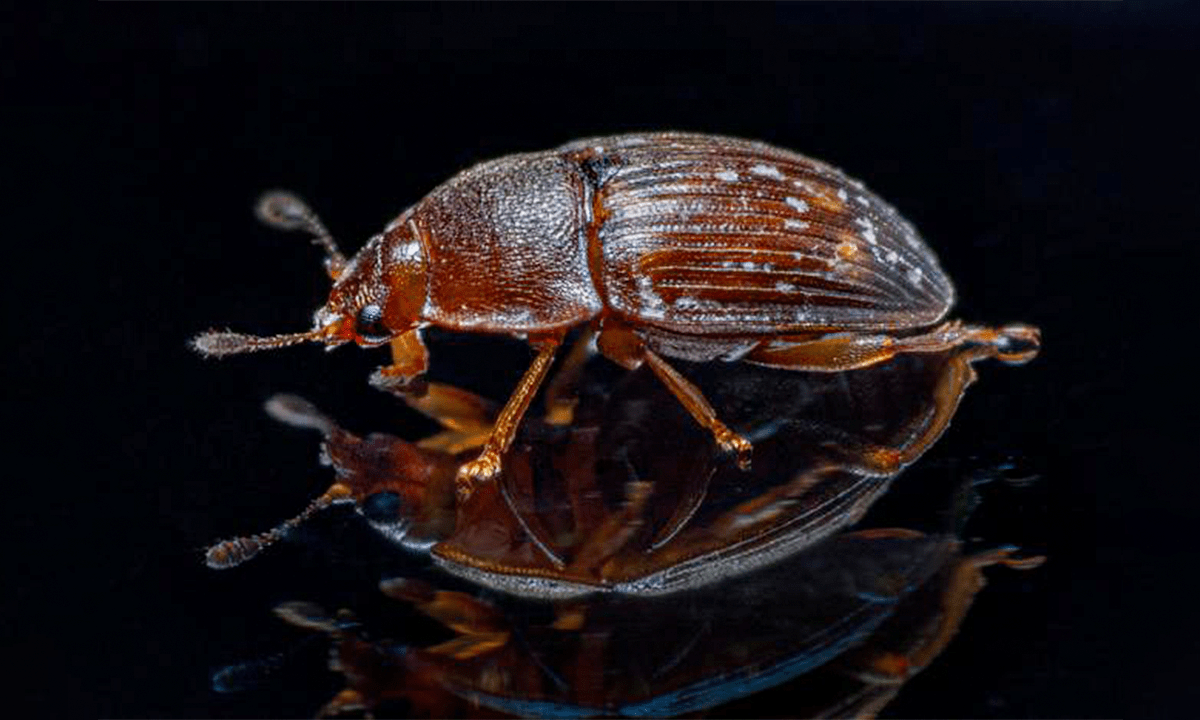
Returning to the orchards, the researchers collected a variety of invertebrates and checked them for nematodes. They found the worms—a newly described species called Caenorhabditis apta—primarily clustered on two types of sap-sucking beetles, both of which are invasive pests plaguing German fruit farms. Of the two, however, the nematodes showed a clear preference for the strawberry sap beetle (Stelidota geminata). By mapping the global distribution of the worms (and its relatives) along with the two beetles, they discovered an overlap with the strawberry sap beetle, evidence of a strong link between the two species.
Read more: “How Darkness Can Illuminate the Insect Apocalypse”
Although they’ve yet to see the worms latch on to beetles in the wild, the researchers believe the nematodes arrived in Germany by hitching a ride on the beetles, and they could be an important lever to control the pests. “The introduction of a new nematode species in Europe might not seem like a big issue,” study author Ryan Greenway of the Max Planck Institute of Animal Behavior explained in a statement, “but we know that nematodes can play an important role in helping their vectors spread, and vice versa. We might even find ways to use C. apta to limit the spread of these sap beetles, which has implications for managing these well-known crop pests.”
You never know what you’re going to find when you take a closer look at rotting fruit. 
Enjoying Nautilus? Subscribe to our free newsletter.
Lead image: Gustavo Alarcon-Nieto / Genes and Behavior Group