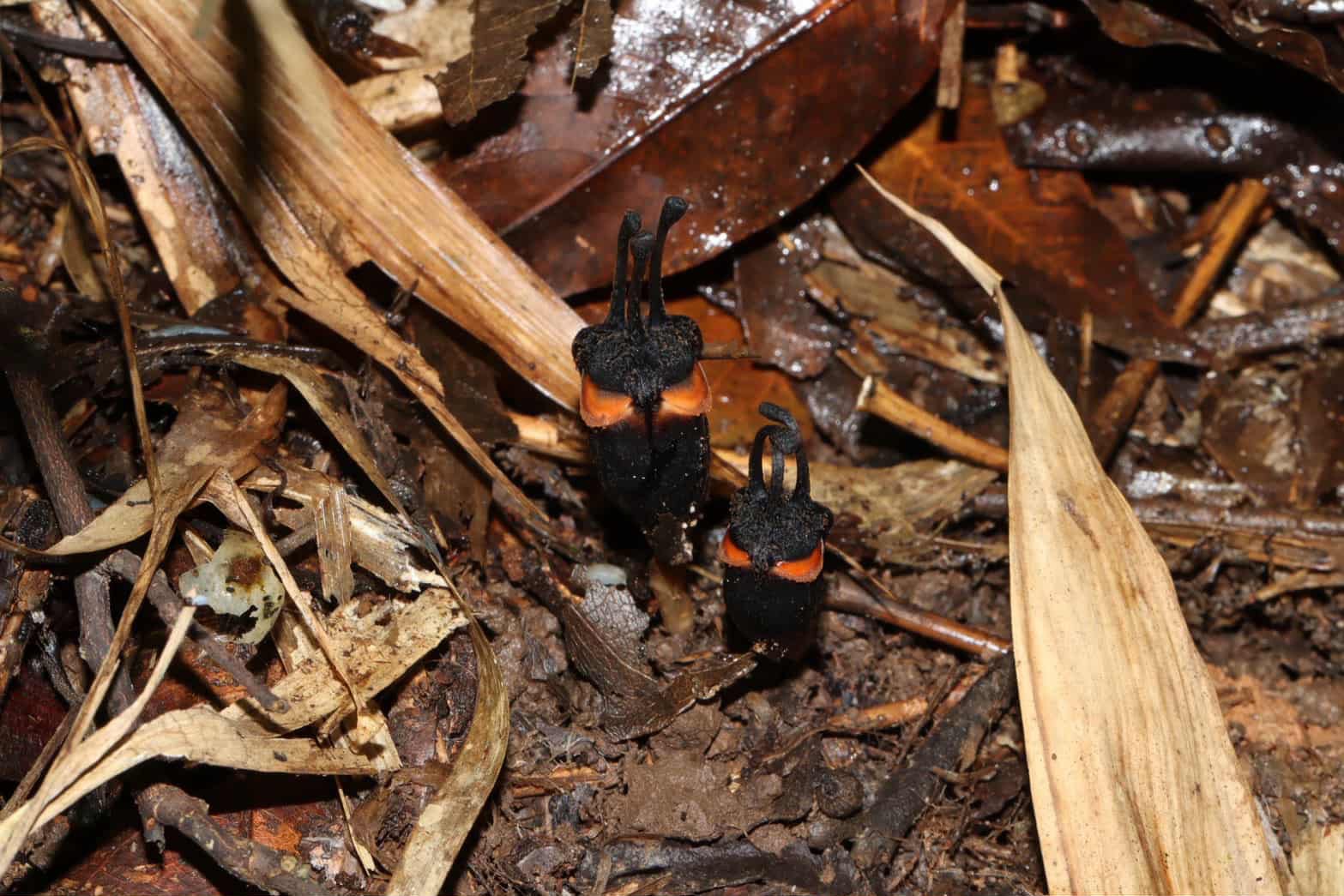
Discovered in the forests of the Thong Pha Phum National Park in Thailand, the leafless “devil flower” looks like a small, charred gremlin staring at you with fiery eyes. In fact, as soon as you see the newly identified plant species Thismia daemona, you understand the nickname.
The tiny horns protruding from the top and the glaring eyes are actually individual fleshy outer parts of the plant known as tepals, and their color and the lack of leaves gives something else away: There’s no chlorophyll in there, and the plant doesn’t use photosynthesis for nourishment. Instead, T. daemona gets its sustenance from drawing in nutrients through fungi in the soil.
It also spends much of its life hidden below dead leaves on the forest floor, which partly explains why it took so long to find this newest member of the Thismia genus. That, and the fact that fewer than 50 of these plants have been cataloged in an area smaller than a soccer field—around 0.02 square miles.
Read more: “A Closer Look at the Woolly Devil”
Chronicling the discovery in a new study, researchers note a couple of additional oddities about the devil flower. For one, members of the Thismia section Geomitra have never been discovered this far north in Thailand before. And while species of this type are usually found in lowland Thai rainforests that are humid year round, this plant was spotted in a seasonal, evergreen forest in the mountains, almost 3,300 feet above sea level.
Now that we know about T. daemona, the next challenge is making sure it survives. As this species is so rare and so localized—not to mention, found in a popular national park filled with tourists—it was placed on the Critically Endangered List as soon as it was discovered.
“(Given) its hidden, subterranean, and mysterious lifestyle on the forest floor, naming it Thismia daemona perfectly captured its enigmatic and devil-like essence,” Sahut Chantanaorrapint, one of the botanists behind the discovery, said in a statement. “A key next step is adopting a sustainable conservation approach aligned with the UNESCO Man and the Biosphere concept, harmonizing biodiversity conservation with human engagement.”
It may look scary, but T. daemona needs our help. 
Enjoying Nautilus? Subscribe to our free newsletter.
Lead Image: Neeranuch Taosiri