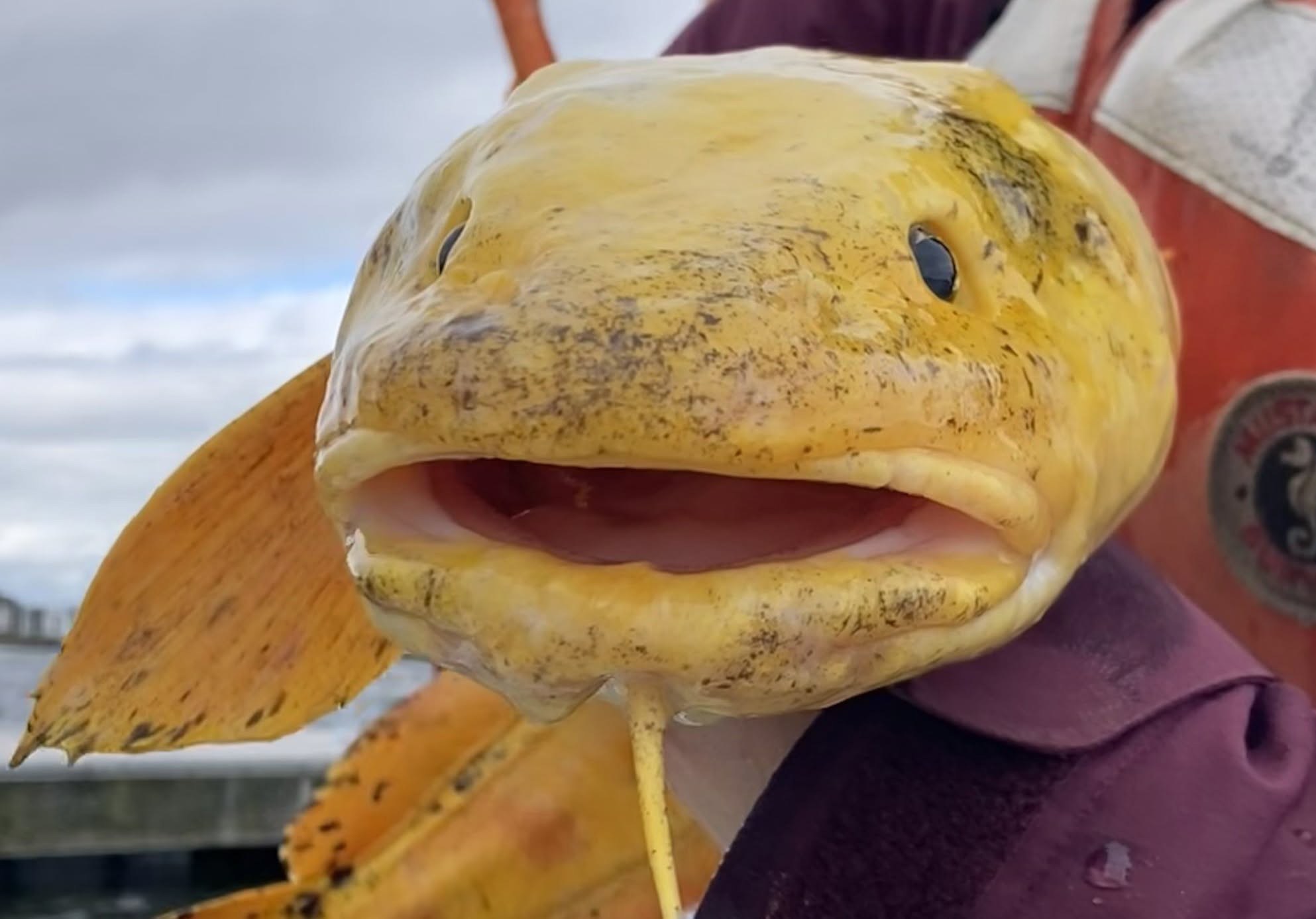
Burbot (Lota lota), better known as cusk in northern New England, are usually green or brown, but the specimen just plucked out of Oswego Harbor on Lake Ontario is somehow a bright shade of yellow.
It was discovered by biologists from the U.S. Fish and Wildlife Service (USFWS), who describe it as a “one-in-a-million” catch. The yellow hue is brought on by a rare genetic condition called xanthochromism, which suppresses red pigmentation to leave yellow at the fore. It can happen in birds and amphibians, as well as fish.
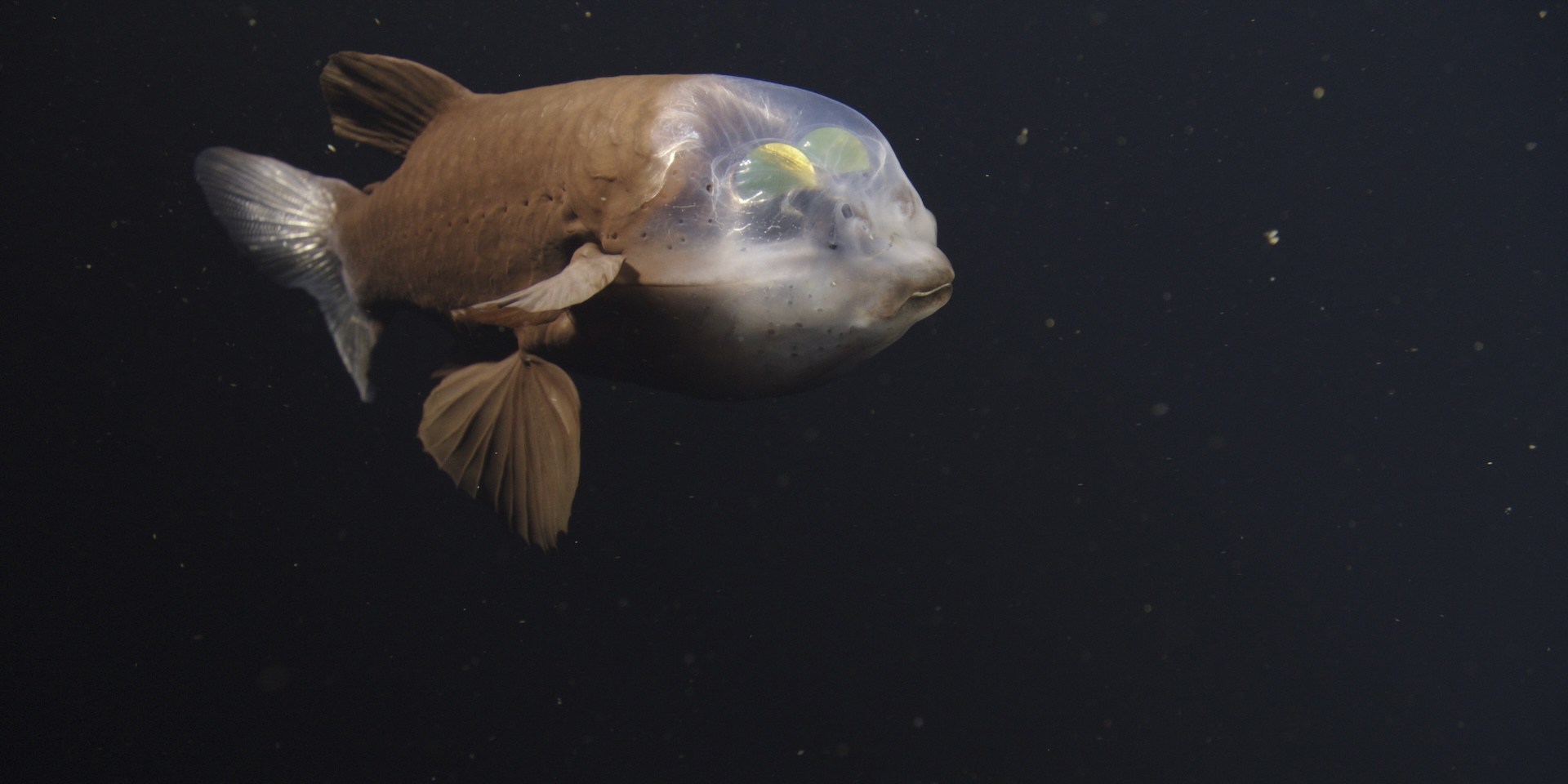
Read more: “Scientists Catch a Rare Glimpse of a Fish With a See-Through Head”
Making the catch even more notable is that burbot usually live in colder, deeper waters. That it was found in a harbor with a maximum depth of 27 feet is unusual, though it’s not clear why or how it got lost. It’s the first time a burbot of any color has been picked up in Oswego Harbor.
The fish was found by the Aquatic Invasive Species Early Detection and Monitoring Program run by the USFWS, which looks for aquatic species that are somewhere they shouldn’t be in terms of ecosystem health. The program uses methods like electrofishing (stunning fish with electricity), fyke-netting (tubular traps), gill-netting (walled nets), and environmental DNA analysis on water samples to identify what’s in rivers, lakes, and oceans.
When it comes to monitoring Lake Ontario and other bodies of water, it’s important that invasive species can be quickly detected and removed at an early stage.
Burbot is a native fish in this area, but it continues to struggle in terms of population numbers, mostly due to the parasitic, invasive sea lamprey. This particular yellow specimen was sick as well and taken away to Cornell University for further testing. It’s possible that its bright yellow coloring has been something of a disadvantage when it comes to sneaking up on other fish for food.
The hope is that the testing gives experts more clues about why burbot numbers remain low around Lake Ontario. 
Enjoying Nautilus? Subscribe to our free newsletter.
Lead Image: U.S. Fish and Wildlife Service