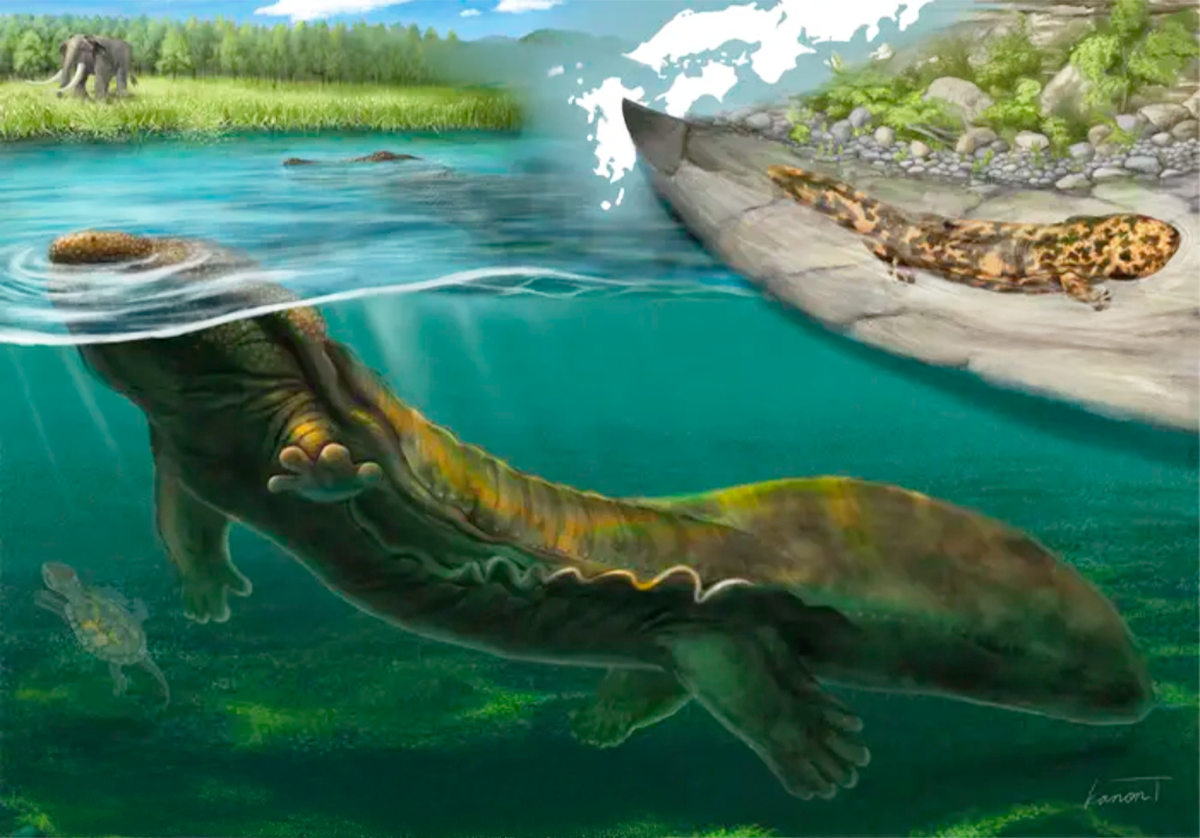
Growing up to 5 feet long, the Japanese giant salamander is among the largest amphibians living today. Now it’s got a new extinct cousin, according to a recent study published in the journal PeerJ.
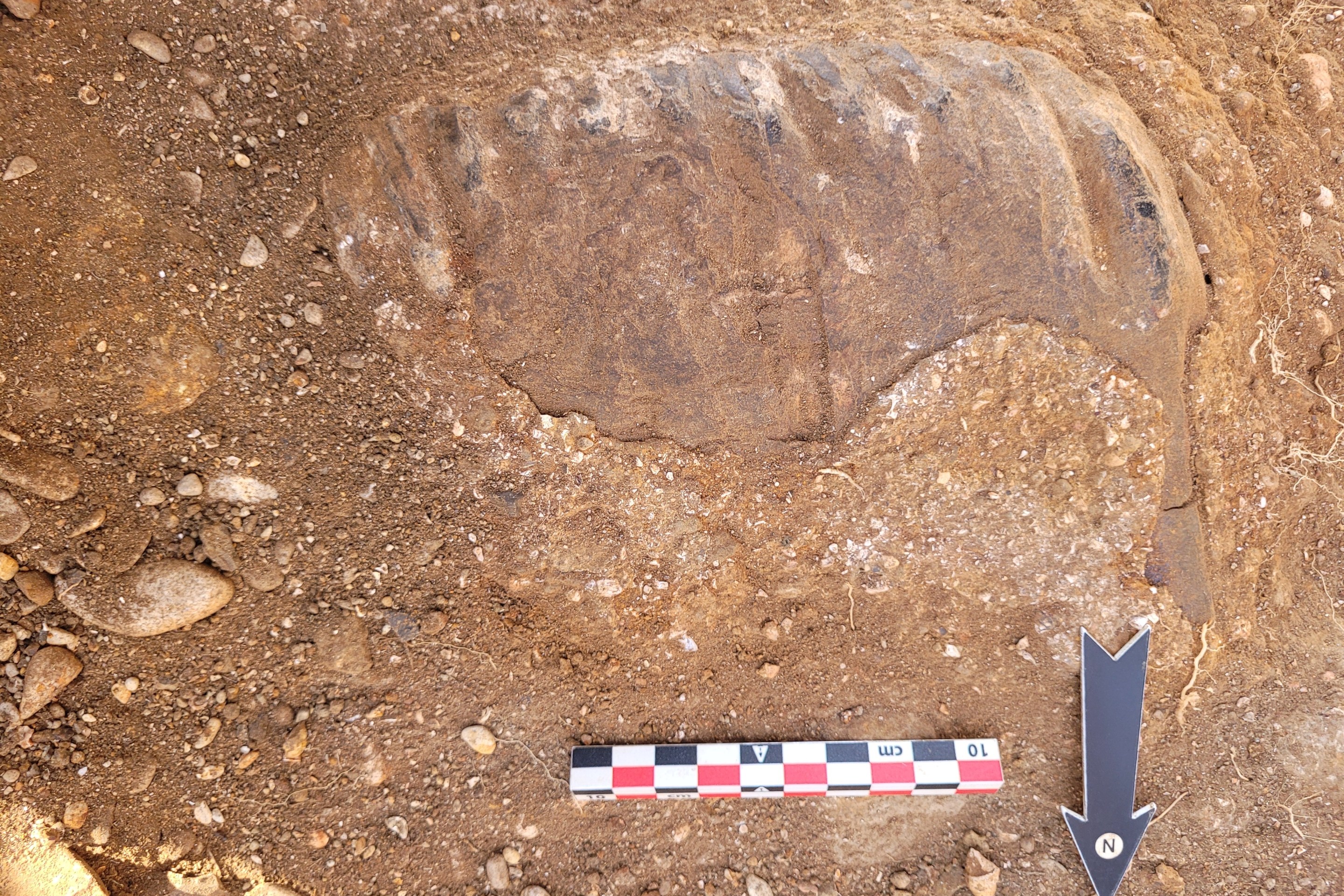
In the 1990s, paleontologists excavating in the Ajimu region of Japan’s Oita prefecture unearthed fossils from the backbone of a 3.5-million-year-old species of giant salamander. The fossilized vertebrae were thought to belong to the genus Arias, the same genus as the Japanese giant salamander, but a new analysis by paleontologists from Kyoto University revealed the Ajimu specimens’ unique structure made them an unlikely fit. Comparing them to six species of living giant salamanders, the team determined they weren’t just a new species, but an entirely new genus.
Read more: “This Toothless, Beaked Crocodile Ancestor Walked on Two Legs”
Though the species has long since gone extinct, it lived in the same area where Japan’s giant salamanders live today. “Ajimu contains the only site in the world where fossils of the giant salamander family and extant genera have both been found,” study author Masahiro Noda said in a statement. “I’m delighted that this study has highlighted Japan as a crucial region for understanding their evolutionary history.”
According to the team, the new salamander, dubbed Limnospondylus ajimuensis for the Greek words for lake and vertebrae and the area it was found, could grow to be close to 4 feet long, and lived in the lakes, marshes, and wetlands that existed millions of years ago in southern Japan. Researchers aren’t sure why L. ajimuensis went extinct, but say it’s likely related to the climate cooling significantly around 2.5 million years ago and resulting habitat changes.
Of course, the Japanese giant salamander isn’t out of the woods yet. The species is listed as vulnerable and faces a range of threats. “Recently, Japan’s native giant salamanders have faced challenges such as hybridization with foreign species and habitat destruction,” Noda said. “This research has given me a renewed appreciation for the importance of preserving extant species for the future.” 
Enjoying Nautilus? Subscribe to our free newsletter.
Lead image: Kanon Tanaka