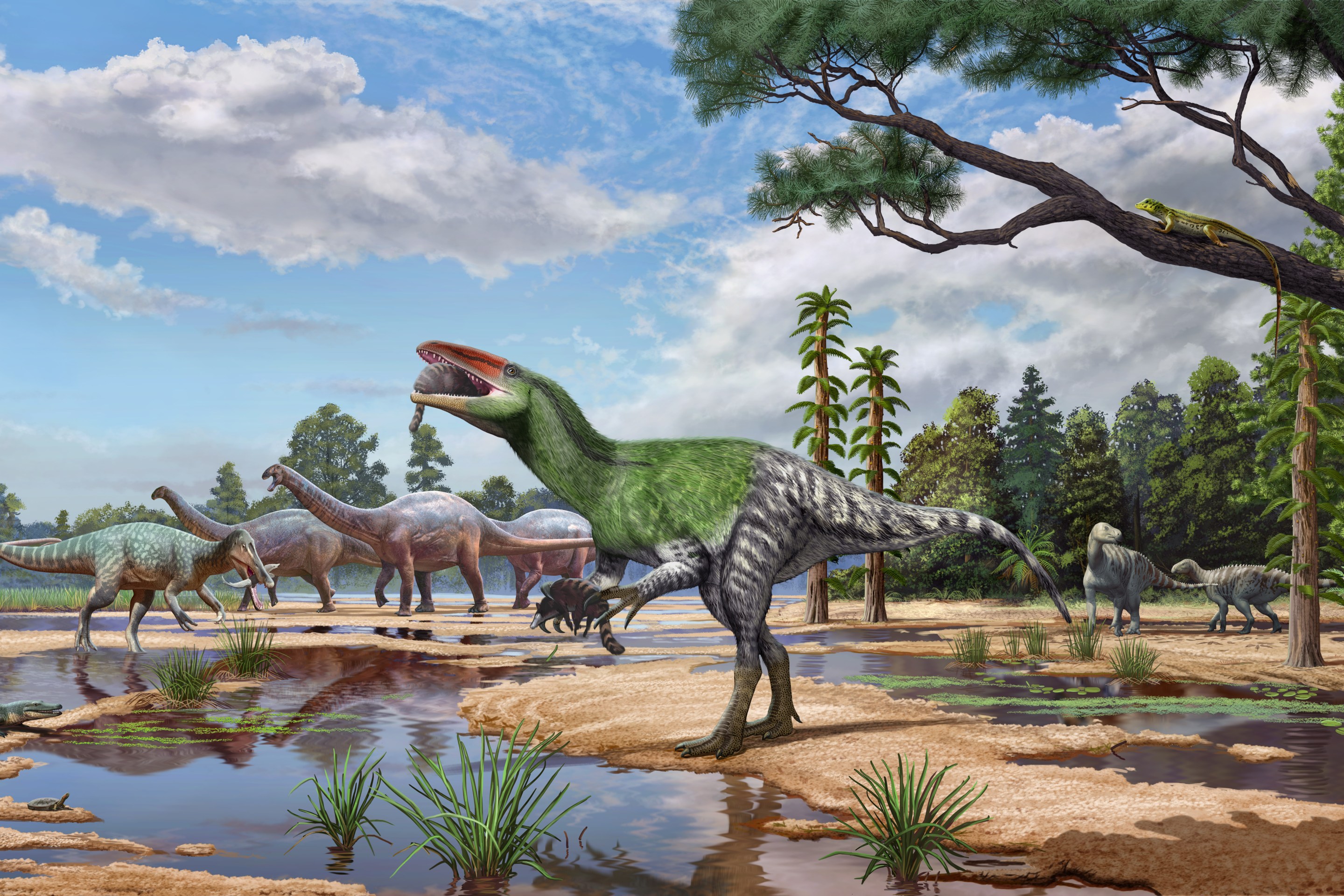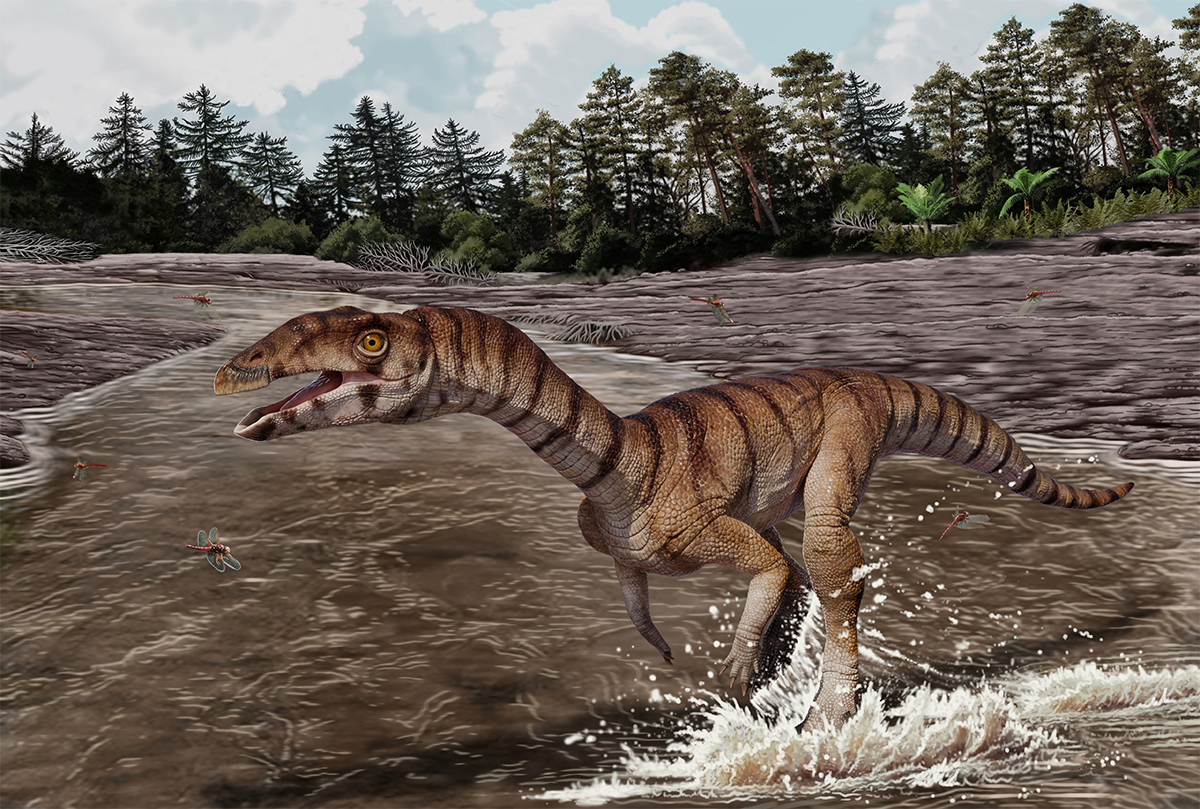
During the Triassic period there was an explosion of animal diversity. A cataclysmic extinction event at the end of the Permian period had wiped out most species, leaving plenty of ecological niches open for the surviving fauna to move into. It was on this blank slate that evolution drew some of its strangest forms, like massive tusked amphibians and zipper-faced marine reptiles. Now there’s a new weirdo to add to the Triassic menagerie—a toothless, beaked, bipedal crocodile ancestor.
Paleontologists from the Natural History Museum of Los Angeles County recently described the bizarre new species, christened Labrujasuchus expectatus, in the Journal of Vertebrate Paleontology. A member of the family shuvosauridae, L. expectatus belongs to an ancient lineage that eventually gave rise to both crocodiles and birds. While this specimen is more closely related to the crocodile side of the family tree, its bipedal body-plan resembled the bird-like dinosaurs living at the same time.
Read more: “The Greatest Animal War”
“We see a lot of the successful strategies for modern animals and non-avian dinosaurs first arise in the Triassic, and shuvosaurs are a great example of that convergent evolution,” study author Alan Turner said in a statement. “Bipedalism is certainly a unique path for crocodile relatives to take, but it’s a path well-trod by dinosaurs and later birds. It obviously worked for these animals.”
It worked for the other shuvosaurs too. L. expectatus is the fifth discovered species of the bunch, found during a time period between older and more recent shuvosaurs. In fact, its name comes from paleontologists’ expectation that they’d find an intermediary between the two. It’s also a play on the name of another shuvosaurs species, Shuvosaurus inexpectatus, which was initially thought to be a bird-like dinosaur, but unexpectedly turned out to be a crocodile ancestor.
Evolution might like to tinker around with new forms, but sometimes the classics work just as well. 
Enjoying Nautilus? Subscribe to our free newsletter.
Lead image: Jorge Gonzalez, copyright NHMLAC Dinosaur Institute