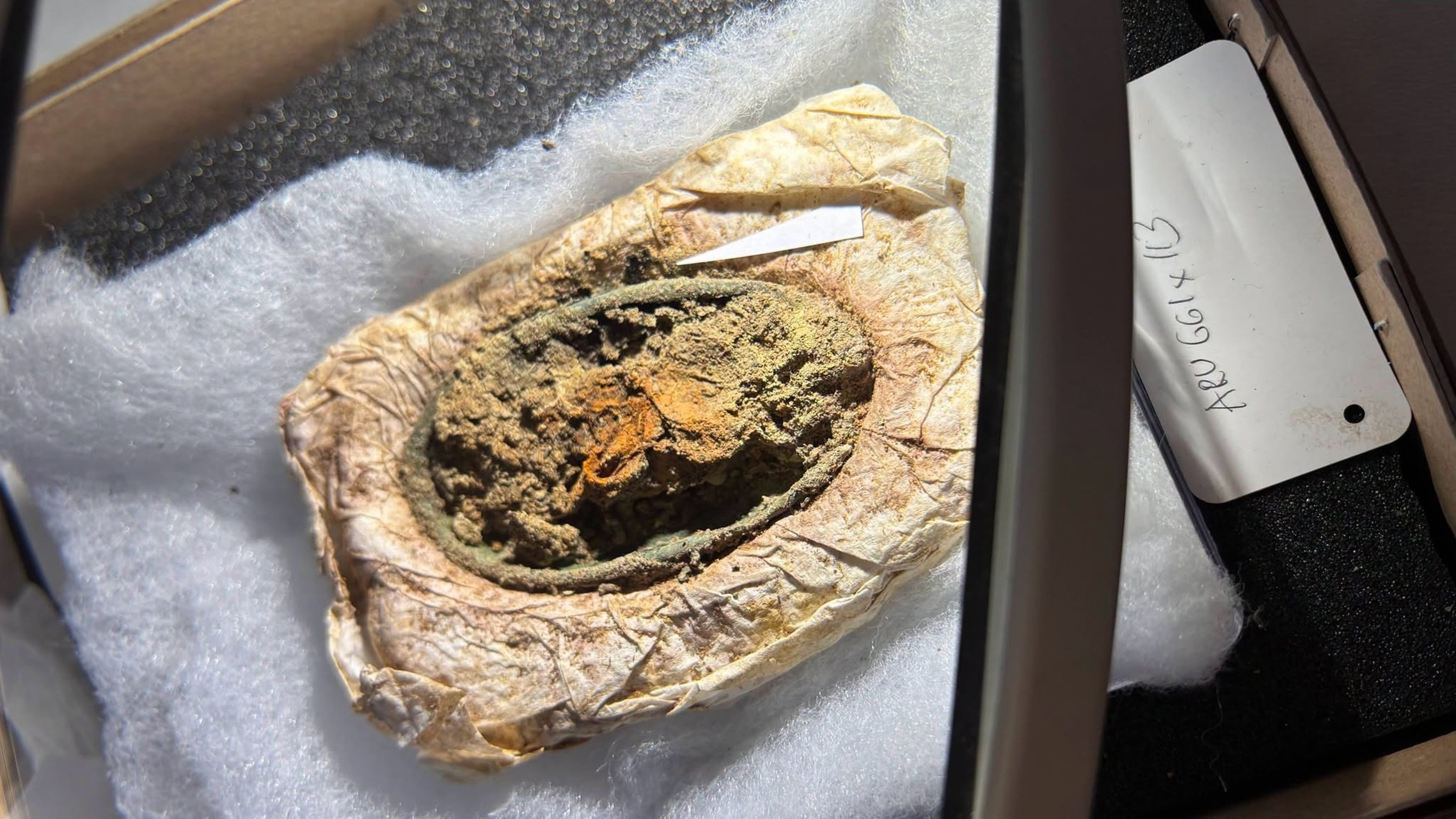
Every so often, archaeologists come across something that’s beaten overwhelming odds to remain preserved across generations—such as a section of a 1,300-year-old Viking dress that was recently discovered in the western Jutland region of Denmark.
Ordinarily, you’d expect such fabrics to decompose within a few years, which is why researchers describe the find as “absolutely magical” in a (translated) Facebook post. The artifact was excavated from the tomb of a young girl by the Archaeology West Jutland (ArkVest) project.
Read more: “Vikings—They’re Just Like Us! Social Networks in Norse Sagas”
So how did such a delicate find survive for so long?
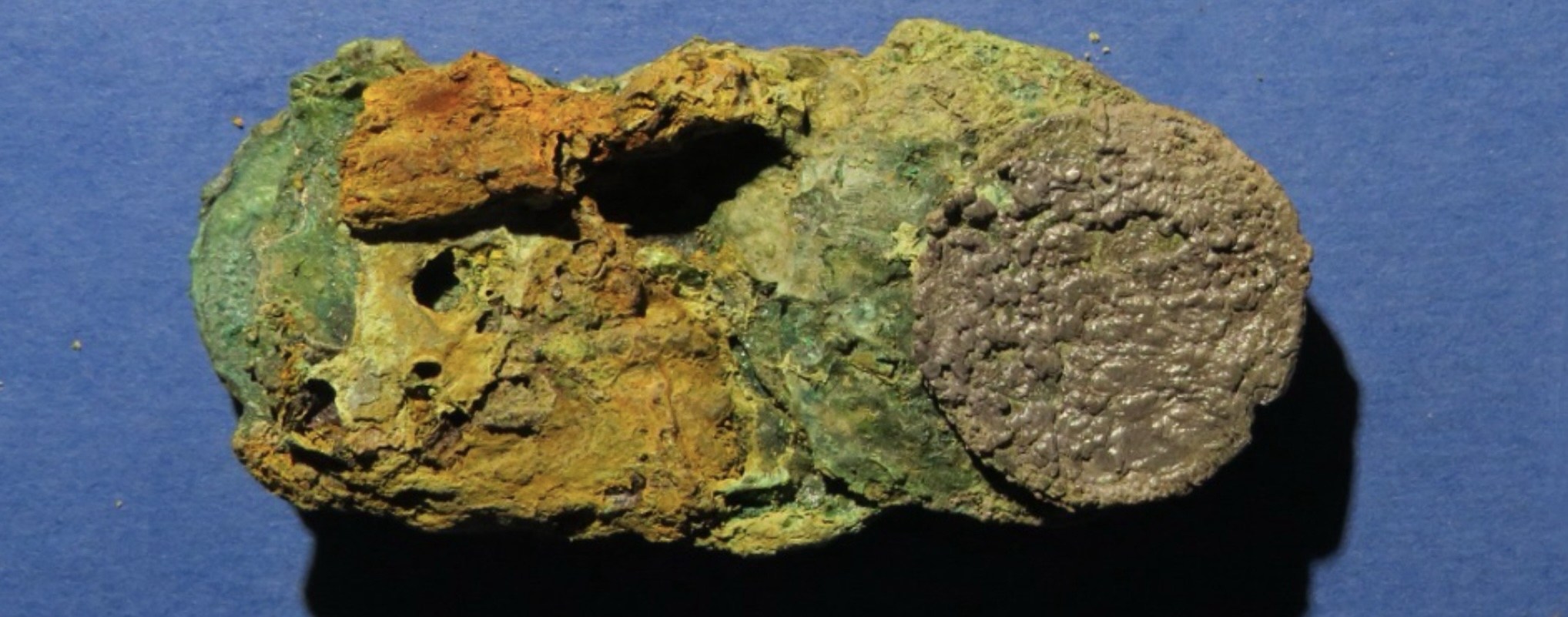
It appears that salts leaking from the metallic ornaments on the garment acted like a preservative, protecting the fragments of fabric from the acidic soil.
Based on an artist’s impression provided by the archaeologists, the protective, concave “scoop” brooches (or “skålspænder”) were part of the shoulder straps of the dress. There are signs these metal ornaments were repaired, suggesting they might be heirlooms that predate the rest of the dress.
The dress is part of the latest round of discoveries made at the historical site at Skonager. The dig gives experts a valuable window into life in this part of the world from the Bronze Age to the Viking Age—a period stretching from around 1700 BCE to approximately 1050 CE.
Next, the team behind the discovery wants to get a more exact dating of the dress and its ornamentation as well as a better understanding of its original colors. The colors are important because they would’ve been representative of wealth and power, as explained by the National Museum of Denmark.
And so, while they definitely provide a hint about the aesthetic of the era, they say a lot more about the life and status of the girl who wore the dress so many centuries ago. 
Enjoying Nautilus? Subscribe to our free newsletter.
Lead Image: Arkæologi Vestjylland/Facebook