
Nvidia CEO Jensen Huang stepped down today just days after he admitted to having an affair with an alleged Chinese spy. The relationship raised alarms at U.S. intelligence agencies, who reportedly believed his paramour, Alice Huang (no relation), was passing secrets to the Chinese government in addition to encouraging the CEO to lobby for Chinese access to cutting-edge AI chips. Earlier this year, Jensen Huang persuaded President Trump to allow Nvidia to resume selling the chips to China, in exchange for the U.S. government taking a 25-percent cut on all sales.
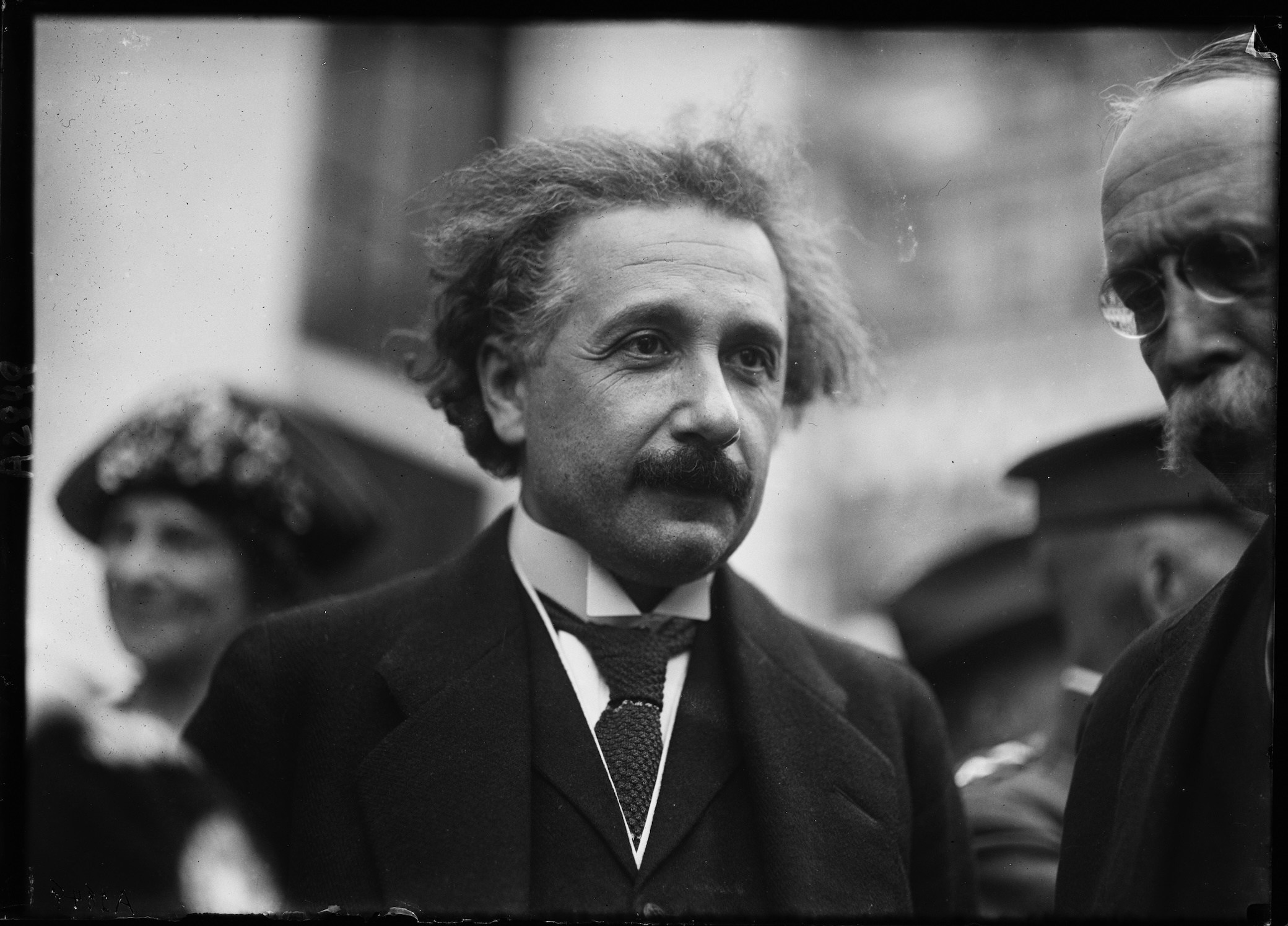
It may very well be the most successful honeypot operation in history, but it’s not the only attempt to seduce state secrets from a prominent official. In fact, Albert Einstein had his own romance with an alleged Soviet spy named Margarita Konenkova, who was reportedly after inside information on the Manhattan Project.
Read more: “The Catch 22 of Hacktivism”
While there are conflicting accounts of the specifics, Einstein met Konenkova a year before his wife Elsa passed away in 1936. She was married to the Russian sculptor Sergei Konenkov, who was crafting a bust of the renowned physicist. In the years that followed his wife’s death, Einstein struck up a relationship with her.
The affair didn’t come to light until half a century later when letters he penned from 1944 to 1946 documenting their tryst came to light. In them, Einstein appears to be deeply in love, sending a sketch of the “nest” (a cozy study) where the two enjoyed romantic liaisons. The smitten physicist even came up with a portmanteau couple name to refer to themselves: “Almar” (six decades before “Bennifer” and “Brangelina,” he was just as ahead of the curve in pop culture as he was in theoretical physics.)
Of course, as with all Cold War spycraft, whether or not this was a bona fide honeypot operation is somewhat hazy. The claims Konenkova was acting on behalf of Russian intelligence come from the memoirs of Soviet spymaster Pavel Sudoplatov, who wasn’t entirely accurate in his accounts. While she did introduce Einstein to Soviet vice consul Pavel Mikhailov, there’s no evidence she ever succeeded in extracting any Manhattan Project secrets from her lover. Einstein wasn’t directly involved in the project either.
The Soviets already had a much better source for intelligence on the U.S. effort to build an atomic bomb: physicist Klaus Fuchs, who was on the Project Manhattan payroll (spoilers for Oppenheimer). Fuchs had been passing along information to the Soviet government since the beginning of the project in 1942. Unbeknownst to Fuchs, his American colleagues Ted Hall and Saville Sax joined him in sharing secrets beginning in 1944.
These betrayals weren’t the result of steamy dalliances with Russian femme fatales. Instead they were motivated in part by a fear that the United States might have a monopoly on atomic weaponry. As we’re confronted with another civilization-ending technology, the remarkable thing about the Jensen Huang affair might not be that it worked, but that there haven’t been similar high-profile spies driven by the same fear—at least, that we know about. 
Enjoying Nautilus? Subscribe to our free newsletter.
Lead Image: Albert Einstein, Washington, D.C, Harris & Ewing. Library of Congress, via Arkivism