In the classic 1964 children’s film Mary Poppins, the governess sings a gentle lullaby to the children in her charge one evening called “Feed the Birds.” The lyrics describe a little old bird woman who goes to the steps of St. Paul’s Cathedral in London each day. She calls to the tourists to feed the little birds, to “show them you care,” and says it will make the tourists glad.
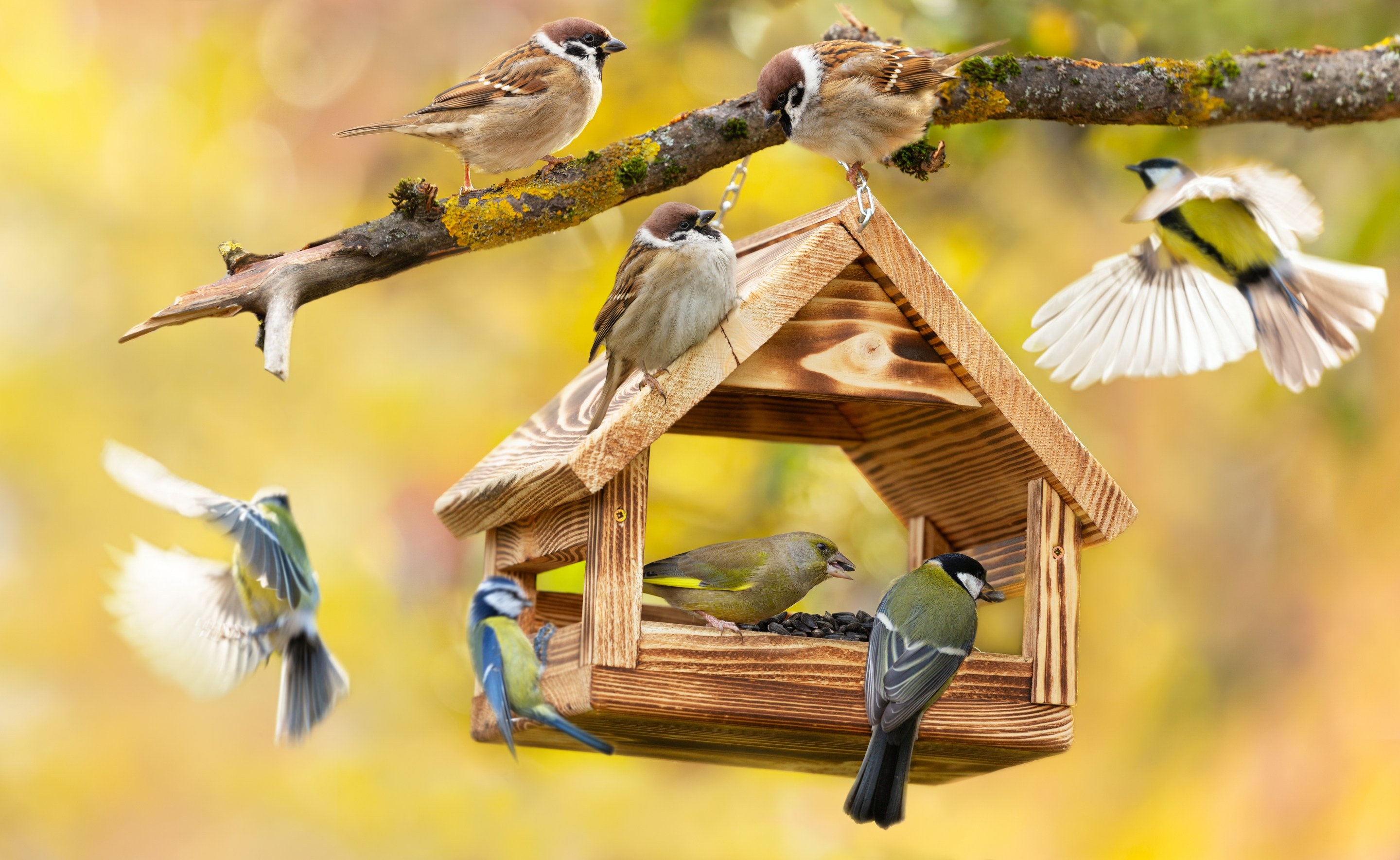
Modern science seems to be catching up with Mary Poppins: A recent study found that feeding wild birds can make people feel better. The more than 3,600 people who participated in the new study were offering snacks from backyard feeders, however, not purchasing crumbs from a little old bird woman in a city square. These residents of Canada and the United States were enrolled in Project Feederwatch, a platform that allows people to submit feeding observations to the Cornell Lab of Ornithology. A team of researchers surveyed them twice over a 6-month period and the vast majority—some 95 percent—reported that feeding and observing birds had positive impacts on their well-being. By comparison, just 55 percent said other events in their lives did. The researchers published their results in the journal Ambio.
Read more: “The Woman Who Say Birds As Individuals”
Feelings of joy, gratitude, hope, and calm dominated among those who said feeding their feathered friends helped them. Some of them also said it gave them a sense of meaning: They believed what they were doing was helping the birds or contributing to science. Others said feeding and watching the birds helped reduce stress and gave them the opportunity to focus on something happy during otherwise difficult times, such as a death in the family.
Of course, anyone who volunteers for Project Feederwatch could reasonably be described as a bird lover, so the study participants in this particular research effort may be a self-selected group, already inclined to find joy in anything related to avian species. Still, the bird-feeding findings add to a growing body of literature that suggests engagement with “nature” in general, and birds in particular, may have therapeutic effects for people who are unwell, and possibly fortifying effects for people who are already healthy.
One intervention study from the 2020s, for instance, found that just 30 minutes of bird feeding and bird counting, combined with a joy-rating exercise, lowered anxiety and boosted feelings of well-being. Another study of German nursing home residents found that movement levels, memory, concentration, bird knowledge, and life satisfaction increased over the course of a multi-month intervention where the residents were tasked with watching birds feed through a window. And an experimental study of college students found that bird walks did more to increase well-being and reduce stress than a general nature walk.
Bird feeding is, of course, no magic cure-all. Some people in the Project Feederwatch study actually felt worse after feeding the birds. They had distressing or annoying experiences or found that watching and feeding the birds just led to grief and conservation anxiety. “I have observed the frequency of several birds decline in the 10 years I have done FeederWatch,” one person noted. “It makes me feel like crying.’’ The impact on one’s mental health might also depend on the bird. Previous research has found that emotional responses tend to be less positive when they involve listening to the harsh squawks and squeals of the Eurasian magpie, also known as the Pica pica, or the eerie hooting of owls.
Feeding birds can also potentially have negative effects on the birds themselves. It could make them more susceptible to disease, to flying into windows and dying, to falling prey to pet cats, and to changes in their natural behaviors. On the other hand, though, feeding them could have positive impacts on bird diversity by ensuring a food source, and it could enhance interest in conservation among humans, the researchers reported.
If it turns out the positives for both birds and humans outweigh the negatives, perhaps it’s time to encourage more people to let these flighty creatures know that we care. As one study subject put it, feeding birds is “a good reason to get up every morning!” 
Enjoying Nautilus? Subscribe to our free newsletter.
Lead Image: Nitr / Shutterstock