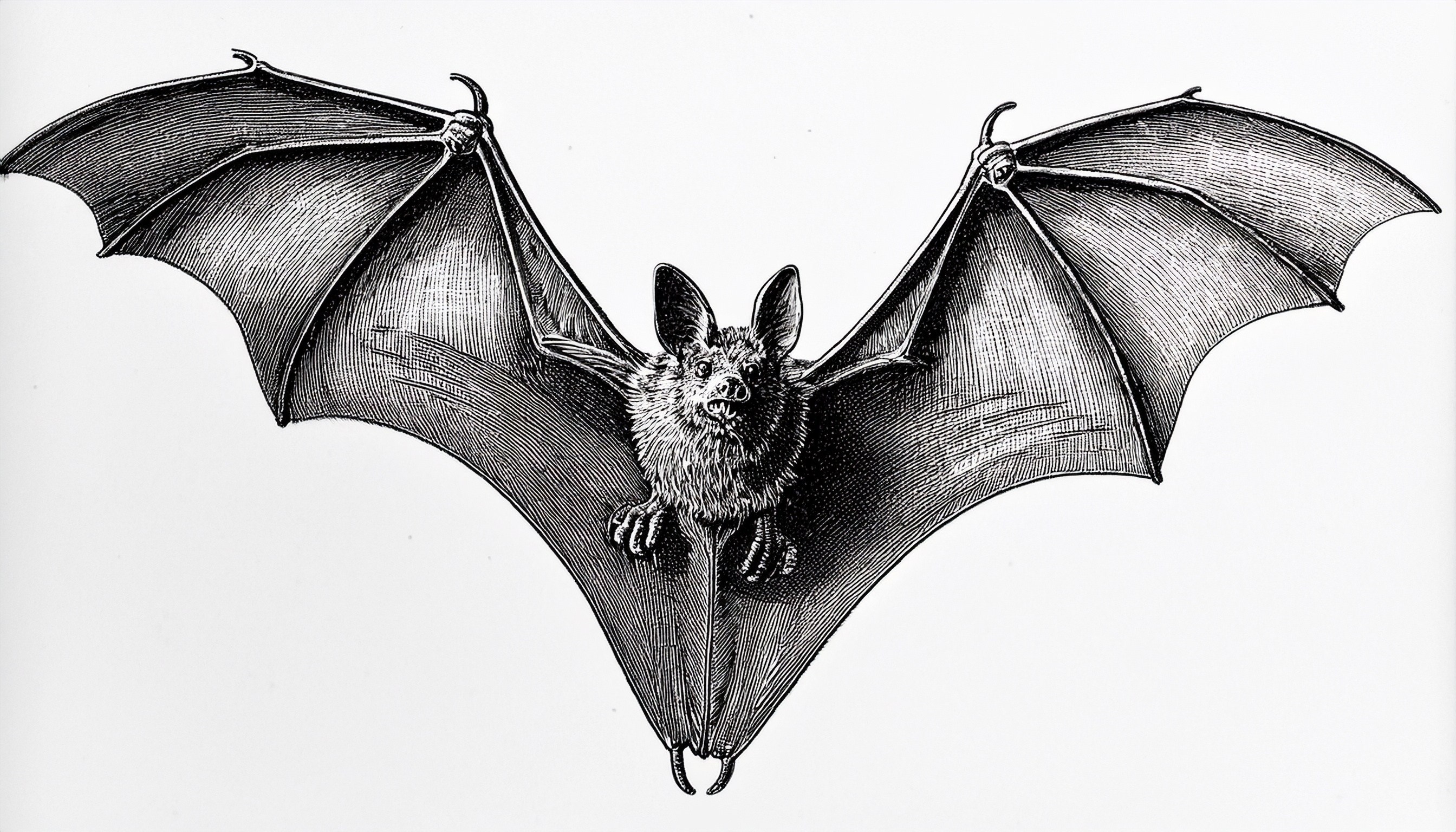
Bats are exceptional for a number of reasons. But two in particular stand out. First, the largest genus of bats, Myotis, can carry up to hundreds of viruses without ever getting sick. Second, they have impressive lifespans relative to their body size—as much as 42 years in the case of the minuscule Brandt’s bat (M. brandtii).
A study published today in Nature by an international collaboration of biologists explored Myotis genes to better understand both their pathogen-resistance and their longevity. “These are often studied as separate biological problems,” explained co-lead study author Elise Lauterbur, an evolutionary biologist at the University of Vermont, in a press release. “But our results suggest that evolution may be shaping them together.”
Read more: “The Social Life of Bats”
The researchers sampled tissue from eight closely related Myotis species from the American West. Using a no-kill technique pioneered by co-lead study author Juan Manuel “Manny” Vazquez, a biologist at Penn State University, they biopsied circular patches from the bat wings. From those, they grew cell lines, from which they extracted nearly complete genomes and identified genes related to lifespan, cancer-resistance, and virus tolerance. They focused on the gene “protein kinase t” that’s known to serve in immunity in all mammals.
The results revealed that bats have one or two extra copies of this key gene, in contrast to the single copy known from other mammals. The gene appears to play a protective role in preventing cell damage. Case in point: In cells of little brown bats (M. lucifugus), the gene helped cope when a pox virus was introduced to the cell line. Damaged cells were either repaired or discarded entirely.
“The little brown bats start committing to kill off cells,” said Vazquez. “Our hypothesis is (that) it’s dumping the cells that can’t be salvaged.”
In other words, bats have a distinct way of handling viruses that’s not seen in other mammals. They survive pathogens through a genomic response that also confers cancer-resistance and therefore longevity. Further understanding how this remarkably diverse genus, comprising at least 139 species, acquired its disease-resistance could curb zoonotic disease transmission—and maybe help all of us live a little bit longer, too. 
Enjoying Nautilus? Subscribe to our free newsletter.
Lead Image: b113 / Shutterstock