In August 2026, Anthropic, the AI giant, announced that its newly released Claude models would weave an imperceptible watermark into generated text and attach signed provenance metadata to supported file types worldwide. The official reason is the European Union AI Act’s transparency code demands it. The practical result is that the machine now arrives pre-confessed. Every sentence it writes carries a tiny cryptographic whisper: “It was me.” Somewhere, a million term papers quietly began to glow.
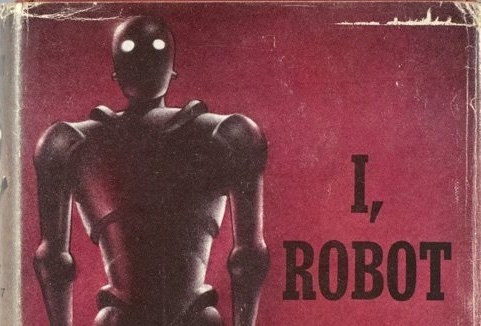
I have argued that Asimov’s three laws of robotics need a fourth law: “A robot must not deceive humans by impersonating a human.” Watermarking takes it a step further. Even if a human author supervised and curated the AI-generated text, the writing process itself must carry a digital signature. The reason it matters is somehow stranger than mere compliance. The signature is an admission that we can no longer tell human text from machine output by just reading it, and that the only proof of a human hand we can still trust is the wrong note: the typo, statistical anomaly, or hesitation.
Read more: “A Glitch in My Serenade”
In 1970, Japanese roboticist Masahiro Mori sketched a curve. As a robot becomes more human-like, our affinity for it rises, then plunges into revulsion just before the copy becomes indistinguishable; then, it recovers. He called the dip “bukimi no tani,” or the uncanny valley, and he was thinking of prosthetic hands and mechanical faces. For half a century, we have dutifully awaited the arrival of the uncanny valley in robotics labs. Humanoids have not yet reached its far edge, although we’re getting closer. A robot can do a backflip, yet no one mistakes it for a gymnast. In the meantime, the valley opened somewhere else entirely: in the realm of video, images, and text.
Consider the phrase “AI slop.” It is not a technical term. Rather, it is a term of disgust, which is the emotion Mori placed at the bottom of his curve. Remarkably, the revulsion is not aimed at poor text or images. Bad creations have existed forever, and we shrug them off—the most bizarre ones are even appreciated. Boston and Quebec even have museums of bad art, and there are plenty of movies that are so bad they're entertaining.
The revulsion is aimed at almost-good text, images, or films: fluent, tidy, eager to please, and off by a few degrees. The relentless bullet points. The sycophantic throat-clearing. Style guides now ban the word “delve,” the way villages once banned suspected witches. The em dash is another telltale sign. We crossed the uncanny valley in prose, images, and video long before androids came close to doing so, and we are living in the trough.
Alan Turing framed his imitation game as a machine trying to pass for human. Three-quarters of a century later, we play the game daily in reverse. Humans now labor to prove to spam filters, editors, reviewers, and their own students that they are not machines. We click on fire hydrants and identify Sarah Connor in photos. We apologize for polished paragraphs. The question “Can machines think?” has quietly been replaced by a more humiliating one: Can humans still demonstrate that they typed this themselves?
The honest answer is no, not reliably. Information scientists Maurice Jakesch, Jeffrey Hancock, and Mor Naaman demonstrated that when people judge whether a text was written by a human, they rely on shallow heuristics such as first-person pronouns, contractions, mentions of family life, and informality. Even worse, these heuristics are exactly what a language model can learn to exploit, resulting in optimized machine text being rated as more human than humans. “More human than human” was the Tyrell Corporation's slogan in Blade Runner. Now, it is an empirical finding with a p-value. In other words, our gut is a lousy classifier. Hence, the need for cryptography.
The cryptography is delicious in its irony. A text watermark nudges the model’s word choices according to a secret pseudorandom pattern. This bias is statistically detectable yet invisible to any reader. Consider what this means: To prove that a text is synthetic, we embed a deliberate, carefully engineered irregularity that no human eye can detect, emulating a stylistic tic. The machine’s honesty is an imperceptible mannerism itself.
If you buy a digital piano today, you will find that its engineers have lovingly modeled damper noise, the faint thud of the key returning, the sympathetic resonance of unstricken strings, and the mechanical rustle when the pedal lifts the felt. Players had complained that a clean tone sounds dead. These are the very sounds that piano makers spent two centuries trying to eliminate. Then, synthesis achieved perfection—and perfection turned out to sound fake. So, at considerable expense, the flaws were reverse-engineered and put back in, one by one. The premium models are the ones that fake the noise the best.
Text is heading in the same direction, and faster. If typos and hesitations are our heuristics for authenticity, the models will supply them. Some users already prompt their chatbot to “add a couple of typos so my boss believes I wrote it.” I fully expect the near future to bring a slider for self-doubt, a “late-night email” preset with one misplaced comma, and enterprise pricing for statistically plausible awkwardness. Walter Benjamin worried that mechanical reproduction strips artwork of its aura and unrepeatable “here-and-now.” He did not foresee the aura itself being reverse-engineered, benchmarked, and shipped as a feature. At least philosopher Jean Baudrillard would not have been surprised: A perfectly simulated imperfection is the purest simulacrum on record—an error that never erred, a wrong note played precisely as written.
The near future has a comic structure. A chatbot such as Claude is required by regulation to carry a hidden mark that says “machine,” while the market pays the same model to perfect a surface that says “human.” Every paragraph it spits out will whisper both. Some firms will sell tools to detect the whispers, while others will sell tools to muffle them. A third group will sell insurance against both. Human writing will respond the way handicrafts always have to industrialization: by becoming a luxury good. Mechanical watches did not die when quartz watches arrived; rather, mechanical watches became less accurate and far more expensive. They are worn to signal that the owner can afford imprecision. Expect artisanal typos. Expect certified, free-range sentences that are lovingly hand-reared and traceable to a named writer with visible deadline damage.
Anthropic bluntly acknowledges that the mark is a signal rather than proof of machine authorship. Heavy editing and translation can remove it, and it can appear on human prose that Claude merely polished. Mori’s uncanny valley was a warning about faces. In text, however, it turned out to be a mirror. What repels us about slop is not the machine’s failure to be human, but rather, its unnerving ability to be almost like us, without the friction or stumbles, and, of course, without the cost. For now, the wrong note is the best proof that someone was actually sitting at the piano. Enjoy your typos while they are still free. They are about to become premium. 
Enjoying Nautilus? Subscribe to our free newsletter.
Lead Image: AndriiKoval / Shutterstock