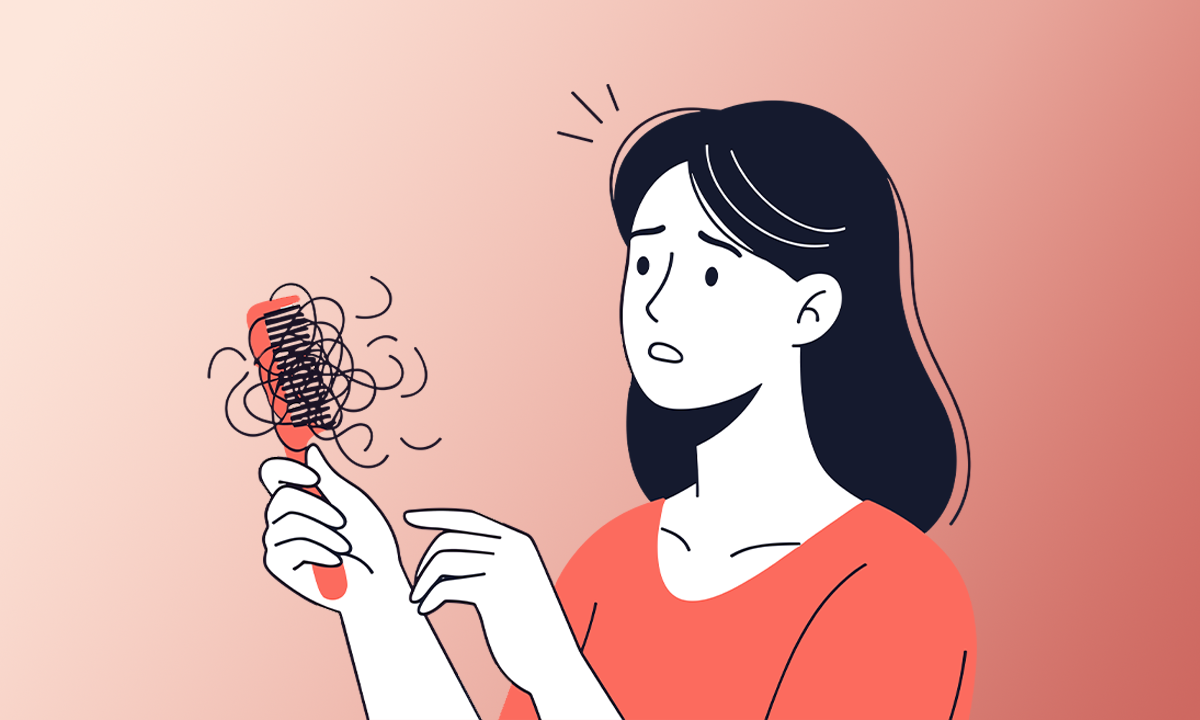
If you’ve ever watched your locks pool in the shower drain during a particularly taxing time of your life, you’re not alone—stress-driven hair loss is highly common. Yet scientists are still untangling precisely how stress impacts our bodies, including quickly regenerating tissues like hair follicles, which are more vulnerable to sudden shifts in the body.
Stress is linked to two hair loss disorders: telogen effluvium, a usually temporary condition that can cause significant hair shedding, and alopecia areata, an autoimmune disease that is often chronic. To learn more about how such conditions emerge, scientists induced stress in mice, which are frequently studied to understand more about hair growth and loss, and observed how their hair follicles responded.
This quickly ramped up the sympathetic nervous system, which coordinates the “fight-or-flight” response to perceived threats. These nerves then released loads of the neurotransmitter norepinephrine, which in excess can kill rapidly multiplying cells in the hair follicle, a finding reported in the journal Cell.
Read more: “Why Are Marine Mammals Losing Their Hair”
This damage was temporary, the authors noted, because it didn’t affect the stem cells that help sprout new hair. But upon a closer look, the scientists observed that stress drives a further phenomenon: In mice, the body seemed to see the inflamed or dead hair follicles as unwelcome visitors. This released a floodgate of immune reactions. T cells, which work to shield the body from disease, “now see hair follicles as a foreign object they should attack,” said study author Ya-chieh Hsu, a stem cell scientist at Harvard University, in a statement.
This onslaught could wreak more long-term damage—the hyped-up T cells may continue to strike hair follicles when animals face stress in the future, the scientists noted. If similar processes are underway in human bodies, it could explain how alopecia areata emerges, and why most people with the condition experience relapses throughout their lives.
The trigger behind autoimmunity “remains one of the greatest mysteries,” the authors wrote in the paper, but this paper could help scientists further untangle how environmental factors, including stress, contribute. “You always need a trigger, and the trigger is not necessarily genetics,” Hsu said in the statement. 
Enjoying Nautilus? Subscribe to our free newsletter.
Lead image: Jahin934 / Shutterstock