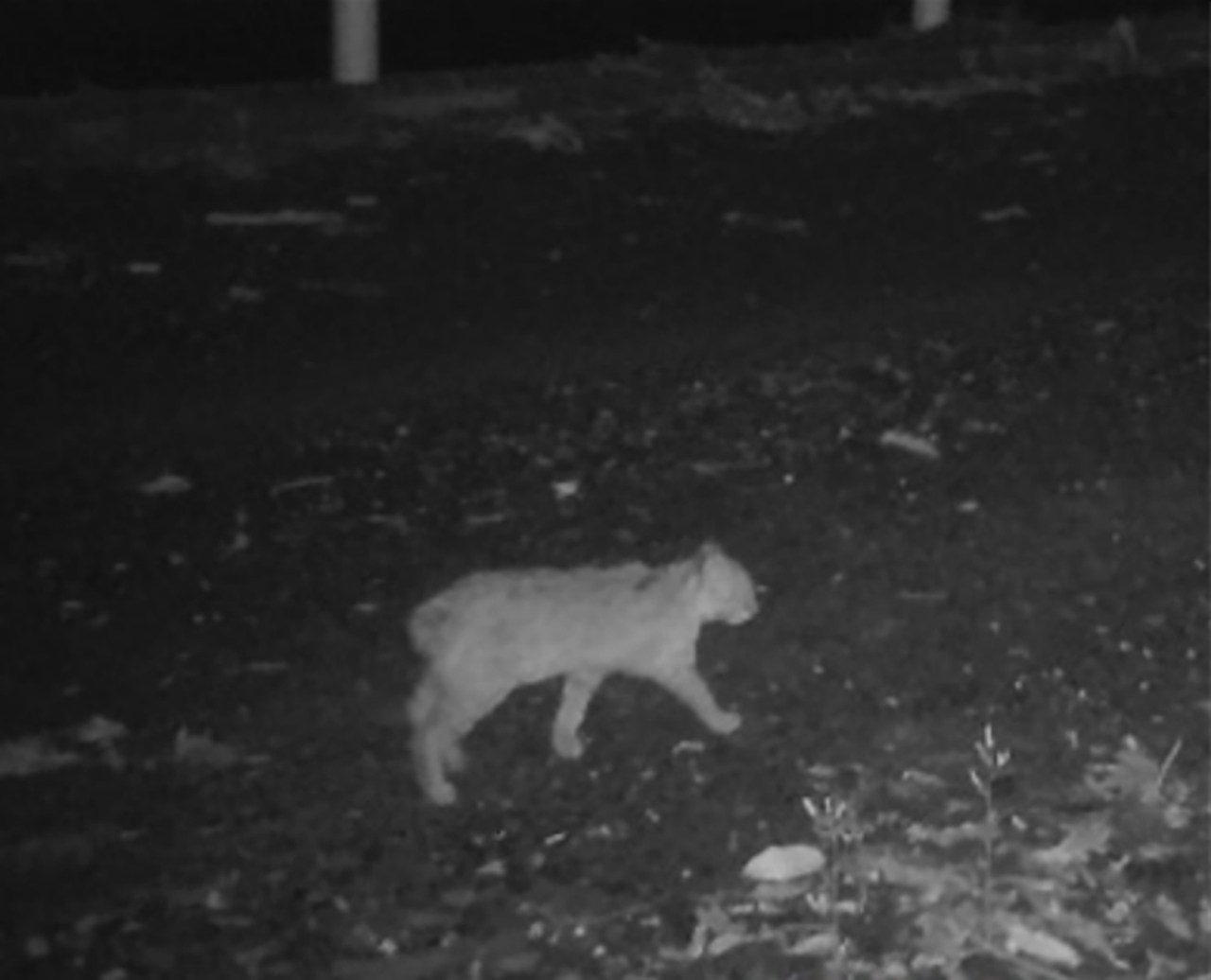
Whether set up in your backyard or strategically placed deep inside a forest, wildlife cameras are bound to capture at least a couple of novel sights—such as footage of the first short-tailed Tsushima leopard cat, spotted by a team from the Tsushima Wildlife Conservation Center in Japan.
The Tsushima leopard cat is only found on the Japanese island of Tsushima, and there are just 150 or so of them in existence according to field surveys. Using camera traps, local experts spotted at least three such leopard cats with shortened tails—but their surprise quickly turned to concern.
Read more: “Was the Saber-Toothed Cat Doomed by Its Signature Fangs?”
While short tails have never been seen before in Tsushima leopard cats, they’re relatively common in domestic cats. If the two groups had started interbreeding, with the low numbers of leopard cats on the island, it could mean the species dying off relatively quickly. The idea is that with such a small population, domestic cat DNA would spread rapidly through breeding and successive generations, dissolving the distinct leopard cat identity and leaving no way of getting it back.
To investigate further, researchers captured a short-tailed leopard cat and compared its genome data with 15 additional leopard cats—five domestic cats from Tsushima island and four continental Amur leopard cats as an external wild reference.
The results, published in the journal Global Ecology and Conservation, were a relief: There was no evidence of breeding between leopard cats and their domestic relatives (technically known as introgression), so the species is safe for now.
“Appearance alone can be misleading when managing endangered wildlife,” study first author Yuki Matsumoto said in a statement. “By combining long-term field observations, veterinary examination, and genome-wide data, we can make conservation decisions on the basis of genetic evidence rather than phenotype alone.”
The question remains, though: How are some leopard cats developing shorter tails?
Developmental abnormalities and traumatic injuries are two possibilities mentioned in the paper, but further study is needed. To that end, the Tsushima Wildlife Conservation Center team is currently working on non-invasive genetic monitoring that could track the animals without physically capturing them (this typically involves collecting hair or feces left behind).
In better news, the leopard cats recently expanded to the Shimojima region of Tsushima in the south, with 17 individuals counted in a recent government survey. Now it’s back to the camera traps to see what the conservationists can spot next. 
Enjoying Nautilus? Subscribe to our free newsletter.
Lead Image: Ministry of the Environment, Tsushima Wildlife Conservation Center