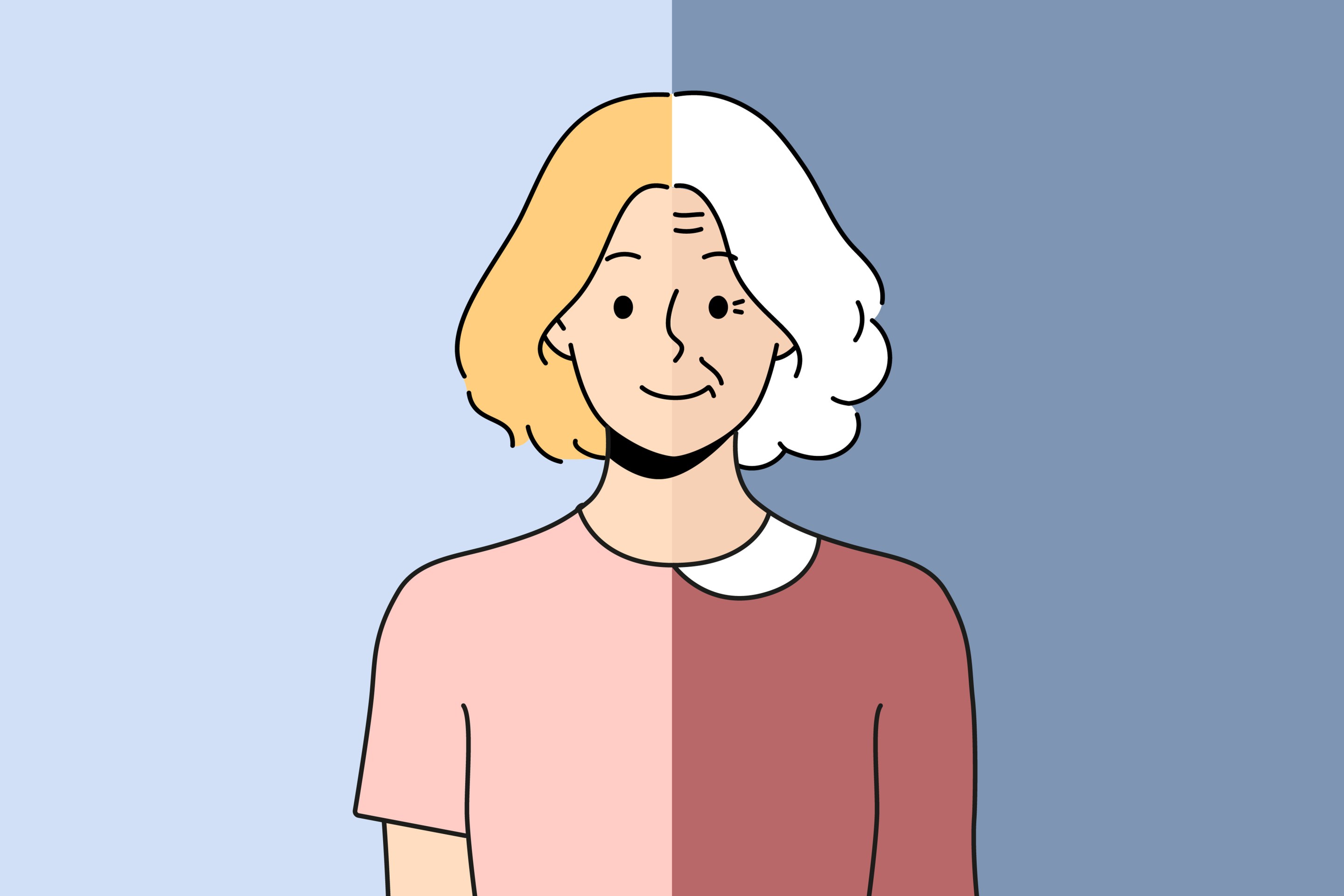
Speech contains a lot of information in it besides just the content of your words. Pauses, tone, emphasis, and more can convey a lot of meaning on their own. But according to a new paper published in Science Advances, these extralexical features of speech may contain even more information about our aging brains.
Researchers led by a team of neuroscientists from Chile’s Adolfo Ibáñez University recruited nearly 3,000 Spanish-speaking adults from Argentina, Chile, Colombia, Mexico, and Peru—some of whom were healthy and some of whom had frontotemporal dementia, Alzheimer’s disease, and other forms of mild cognitive impairment.
Read more: “How Conversations Can Shape Reality”
Using machine learning, they analyzed their speech patterns taking into account hundreds of variables including acoustic measures like rate, pauses, and pitch as well as more sophisticated linguistic measures like vocabularies, semantic precision, and the organization of their verbal output. The machine-learning models were then able to estimate not only the speaker’s chronological age, but also their speech age gap—the difference between their actual age and how old they “sounded” to the model.
The team then estimated the participants’ biological age using a variety of epigenetic clocks, and took a look inside their brains using MRI scans. They discovered that those with more pronounced speech age gaps also showed signs of accelerated biological aging, both in body and brain. The bigger the gap, the worse they scored on measures of global cognition, executive function, and other forms of memory.
This allowed the team to distinguish between healthy people from those with more severe cognitive impairments, like dementia. In those with Alzheimer's disease, a bigger speech age gap was linked to higher circulating levels of p-tau217, a form of the protein that accumulates in the brain of people who suffer from the disease.
“Our voice appears to contain much more information about aging than we previously recognized,” study author Agustin Ibanez of the Trinity College Dublin said in a statement. “It captures both the passage of chronological time and signals coming from cognition, the brain, systemic biology, and even our accumulated social environment.”
According to the researchers, these findings could pave the way for more accessible measures of aging. Those without access to MRIs, blood tests, and other pricey medical technology could simply record a sample of their voices.
Or as Ibanez put it, “If confirmed longitudinally and across populations, speech could ultimately become one of the most scalable tools for monitoring healthy and accelerated aging—potentially transforming an everyday human behavior into a window onto the biology of aging.” 
Enjoying Nautilus? Subscribe to our free newsletter.
Lead Image: MarLein / Shutterstock