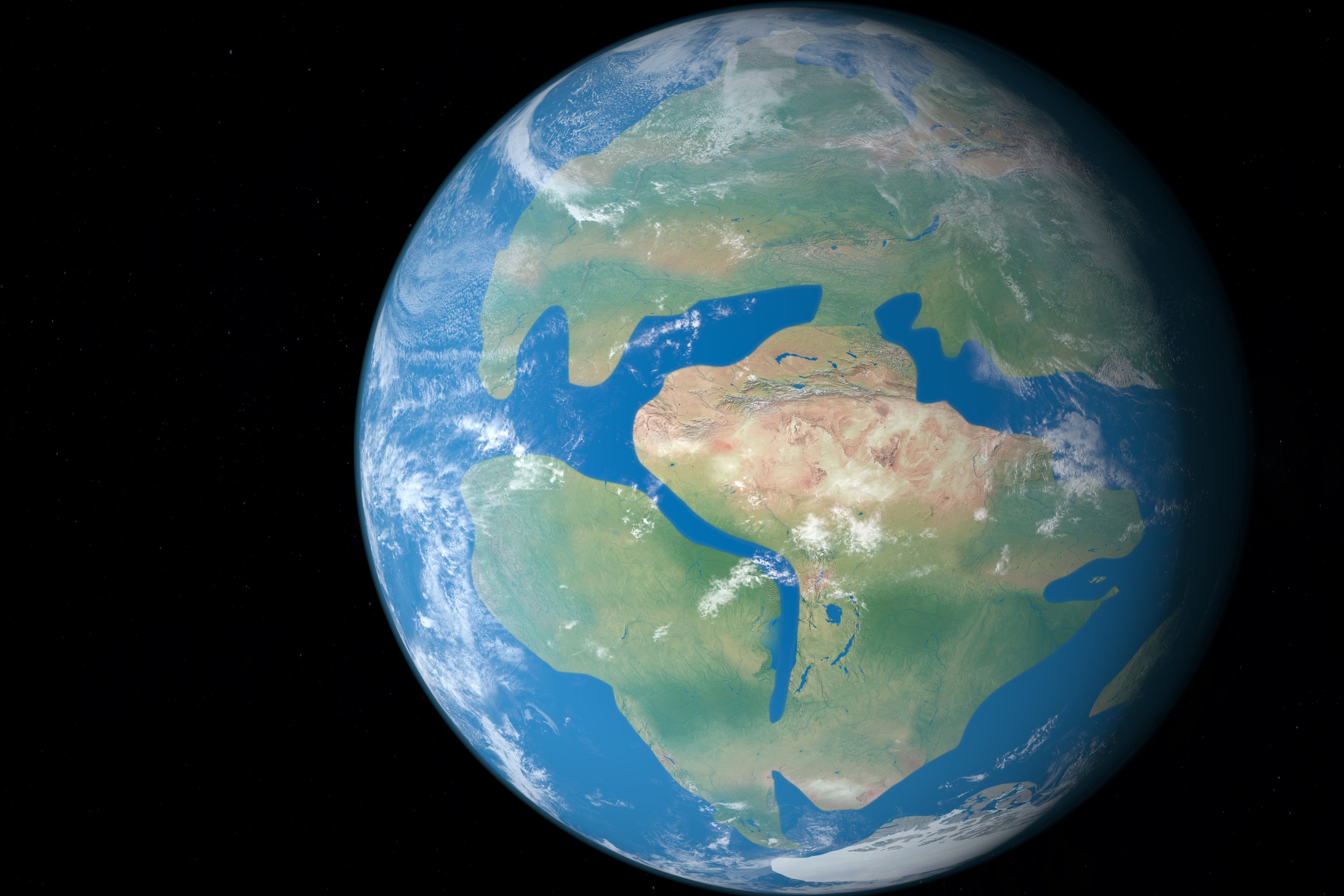
Based on the fossil record, animals exploded onto the scene nearly 600 million years ago. While that may seem like a long time, Earth had already been around for almost 4 billion years. By looking back at the conditions leading up to animal evolution, scientists better understand how complex life came about. In a recent study published in PNAS, earth scientists obtained the most precise snapshots ever of Earth’s early atmosphere during the Mesoproterozoic, and it opened more questions than it answered.
Dubbed the “Boring Billion,” the Mesoproterozoic spans the period from about 1.8 to 0.8 million years ago, when things appear to have been relatively static with no huge physical or biological changes. Researchers from Rensselaer Polytechnic Institute (RPI) and Lakehead University, Ontario, obtained samples of rock salt crystals dated to 1.4 billion years old. They analyzed pockets of fluids and gases trapped in the halite rocks to determine the chemical composition of the atmosphere at the time.
“It’s an incredible feeling, to crack open a sample of air that’s a billion years older than the dinosaurs,” said lead study author and RPI graduate student Justin Park in a statement.
Read more: “The Bacteria That Revolutionized the World”
The data showed that the Mesoproterozoic atmosphere was oxygen-rich, containing several times (3.7 percent) the oxygen level today. Carbon dioxide was about 10 times as abundant as it is now, which would make for a warm climate, despite the sun being young and not yet as hot. The study authors estimate that, with the sun being at about 70 percent of its current output, temperatures would have been around 88 degrees Fahrenheit.
So, if oxygen levels and climate were suitable for animal life, it begs the question of why animals didn’t show up on Earth until hundreds of millions of years later. “[This data] may reflect a brief, transient oxygenation event in this long era that geologists jokingly call the ‘boring billion,’” explained Park.
On the other hand, noted the study authors, red algae showed up during this period, adding oxygen to the atmosphere via photosynthesis. The high oxygen levels might reflect that photosynthetic algae were diversifying and becoming more abundant, a preview of the role they still play today in today’s global oxygen cycle.
So, the tiny time capsules that preserved ancient conditions in halite rocks provided evidence about how Earth’s atmosphere and life evolved. Knowing what the Earth looked like 1.4 billion years ago could also give us a better understanding of what to look for when we search for life on other planets. 
Enjoying Nautilus? Subscribe to our free newsletter.
Lead image: Kuttelvaserova Stuchelova / Shutterstock